CubeSpace Custom ADCS Solutions is a Aerospace company establishment in Stellenbosch, Western Cape, South Africa
CubeSpace Custom ADCS Solutions: Turn-Key Attitude Determination and Control Systems for Small Satellites
CubeSpace (CS) operates as a dedicated aerospace developer and supplier of Attitude Determination and Control Systems (ADCS) for small satellites, with a strong emphasis on modular, flight-proven technology. Based in Stellenbosch, Western Cape, South Africa, the company positions itself as a global standard-setter for satellite control solutions designed for spacecraft up to approximately one tonne. The business highlights its decades of flight heritage, a broad portfolio of space-proven products, and a commitment to rapid, repeatable production suitable for constellations and frequently deployed missions.
The core offering is a Turn-Key ADCS platform that remains a central feature across CubeSpace’s product family. The Turn-Key ADCS is described as a plug-and-play, integrated solution with closed-loop control algorithms that have been refined through substantial flight lineage. This modular architecture supports seamless integration with a customer’s onboard computer (OBC), is adaptable to a wide range of satellite mechanics and electronics, and can accommodate distributed node architectures and third-party hardware as needed. The design enables straightforward firmware upgrades, including updates to bootloaders, and is presented as a reliable choice for diverse missions.
CubeSpace markets a comprehensive Product Suite built around core ADCS capabilities and a selection of mission-critical subsystems. The range includes:
- Integrated Turn-Key ADCS: Space-proven, customisable, plug-and-play solutions with distributed architectures.
- Actuators: High-performance reaction wheels for precise momentum control and control authority.
- Actuators: Magnetorquer rods for compact, efficient magnetic torque generation.
- Sensors: Magnetometers, including compact, temperature-calibrated and deployable options.
- Sensors: Fine Sun Sensor for high-precision sun reference measurements.
- Sensors: Earth Horizon Sensor (IR) for horizon determination in low-light scenarios.
- Sensors: Star Trackers offering high performance in compact form for accurate attitude estimation.
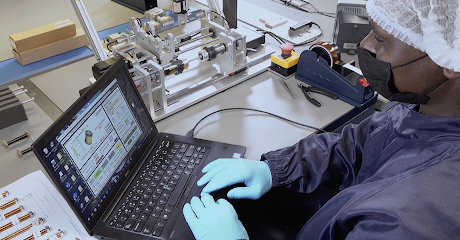
Beyond hardware, CubeSpace emphasises a practical approach to delivery and production. The company operates from a sizeable, purpose-built facility featuring a dedicated cleanroom and extensive production space. In-house testing capabilities are notable, with specialised equipment such as dark sensor tunnels, thermal chambers, vacuum and vibration testing facilities, and precision measurement and inspection tools. This integrated environment supports a culture of repeatable quality, fast lead times, and rigorous verification aligned with international standards.
Quality and risk management form a central pillar of CubeSpace’s offering. The organisation follows recognised space industry standards during component manufacture, assembly, integration, and testing. In particular, ECSS (European Cooperation for Space Standardization) and NASA’s GEVS (General Environmental Verification Standard) are referenced as guiding frameworks for product qualification. A dedicated storeroom and stockholding strategy aim to mitigate long-lead procurement risks, supporting a “COTS-like” approach that helps reduces lead times and stabilise production schedules.
CubeSpace’s team comprises more than 65 professionals, including a substantial engineering cadre with extensive aerospace experience. The company stresses its engineering and technical expertise, backed by IPC Class 3 training and a robust support structure extending from sale through to commissioning. The leadership highlights a customer-centric ethos, designed to deliver tailored solutions at competitive prices, with a focus on modularity and manufacturability to support large-scale or repeat programmes.
Customer feedback highlights the strength of CubeSpace’s post-sale support and documentation. Independent reviewers describe the provider as one of the few in the field that keeps promises and maintains strong ongoing support after purchase, with responsive and competent handling of questions and documentation. Reviews emphasise professionalism, reliability, and a high level of technical competence in ADCS hardware suitable for CubeSats and small satellite platforms. Several reviewers note a positive workplace culture, reflecting well on the company’s people and operational ethos.
Typical project engagements involve integration with a customer’s mission architecture, leveraging CubeSpace’s modular ADCS to deliver a scalable solution suitable for small satellites and constellations. The company’s public materials point to a focus on rapid production for high-volume requirements, with recent communications illustrating expansions in reaction wheel capabilities, and European and international expansion initiatives designed to enhance regional access to proven ADCS technology.
Practical tips for customers planning to engage with CubeSpace include: prepare clear spacecraft bus specifications early, particularly regarding payload, power, communication interfaces, and OBC compatibility; discuss the intended mission scale (single satellite versus constellation) to determine the optimal mix of ADCS modules and redundancy; consider potential third-party hardware integrations at the design stage to maximise flexibility; and take advantage of the company’s in-house testing capabilities by aligning validation plans with ECSS/GEVS-like verification paths. Leading offices and production facilities are located in Stellenbosch, with ongoing global expansion noted to improve regional access and local support for ADCS solutions.
Stellenbosch
Western Cape
South Africa
Sorry, no records were found. Please adjust your search criteria and try again.
Sorry, unable to load the Maps API.
Aerospace Services in Stellenbosch, Western Cape
Stellenbosch, situated in the Western Cape of South Africa, hosts aerospace firms that provide a range of engineering and support services to the aviation sector. The local landscape combines technical capability with proximity to research institutions and a growing network of suppliers. This setting supports activities from design and manufacturing support to maintenance and exploratory testing, framed by strict safety and quality expectations characteristic of the aerospace industry.
One common offering concerns engineering support for aircraft and propulsion systems. Firms often provide mechanical, structural, and systems engineering services that help external partners advance components, assemblies, and subsystems. Such services may include concept design reviews, feasibility assessments, stress analyses, weight optimisation, and firmware or software integration planning for avionic and control systems. The emphasis tends to be on meticulous documentation, traceability, and collaboration with wider supply chains to ensure compatibility with airworthiness standards and customer specifications.
Maintenance, repair, and overhaul (MRO) activity is another important pillar. Local providers may assist operators with routine servicing, equipment fault diagnosis, component replacement, and preventative maintenance planning. In practice, this can involve schedules aligned with airworthiness directives, shelf-life management for consumables, and coordination with approved repair facilities or sub-contractors. Even when several tasks are performed off-site, the overarching goal is to minimise aircraft downtime while preserving safety, reliability, and performance.
Manufacturing support constitutes a further notable area. Aerospace organisations often offer subcontracted fabrication, assembly, or machining services for structural parts, fittings, and assemblies. The nature of these services places emphasis on precision, material compatibility, and inspection during and after production. Facilities may operate under stringent quality control regimes and rely on calibrated measurement tools to verify conformance to customer drawings and international standards. Location within the Western Cape can facilitate access to skilled machinists, technicians, and local suppliers while maintaining reasonable lead times for international and domestic customers alike.
Systems integration and testing are frequently represented as core capabilities. Projects may involve integrating avionics, control software, propulsion components, or environmental systems into existing platforms or prototype builds. Testing activities aim to validate performance under representative conditions, with data collection supporting optimisation and risk mitigation. In practice, such work requires careful project management, safety planning, and clear communication with clients to align objectives, milestones, and acceptance criteria.
Customers can expect a practical, collaborative approach. Typical engagements begin with a scoping discussion to understand technical requirements, constraints, and timelines. From there, technical teams develop concepts, present feasibility options, and propose phased work plans. Throughout the process, documentation, progress reporting, and quality assurance play central roles. Ethical procurement and compliance with local regulations, environmental considerations, and workplace safety standards are integral to operations.
Practical considerations for engaging an aerospace provider in Stellenbosch include evaluating the breadth of capabilities, proximity to complementary suppliers, and the ability to support flexible scheduling for project milestones. It is prudent to consider the availability of technical personnel, access to testing facilities, and the ability to manage sensitive information securely. While names of specific certifications or awards are not assumed, prospective clients are advised to discuss quality systems, containment of intellectual property, and any required regulatory approvals during initial consultations.
Overall, aerospace firms in Stellenbosch offer a blend of design, maintenance, manufacturing support, and systems integration services suitable for regional and international customers. The emphasis remains on high-quality engineering practice, reliable delivery, and clear collaboration to support safe and efficient aviation operations.
- Engineering support (mechanical, structural, systems)
- Maintenance, repair, and overhaul coordination
- Manufacturing and fabrication support
- Systems integration and testing