AXSport Aviation is a Aircraft manufacturer establishment in Cape Town, Western Cape, South Africa
AXSport Aviation: Precision Constant-Speed Propellers for Experimental and Light Sport Aircraft
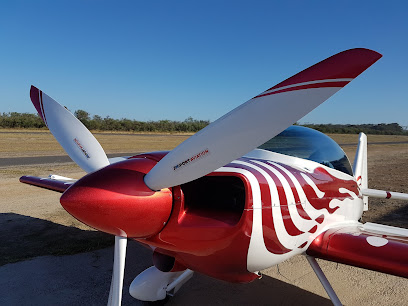
AXSport Aviation, based in Cape Town, Western Cape, specialises in lightweight, three-blade electric and hydraulic constant-speed propellers designed for non-type certified aircraft. The company's proposition centres on delivering stronger take-off performance, improved cruise efficiency, and stable RPM across a range of operating conditions. The propellers are aimed at experimental and light sport aircraft, offering a practical upgrade option that balances durability, performance, and affordability.
From the outset, the core offering highlights a focus on strength and precision. The propeller systems are designed for 80hp to 160hp Rotax engines and derivatives, with hydraulic and electric options available for Lycoming engines up to 180hp. Built around ASTM specifications for light sport aircraft, the propellers are engineered to reduce vibration and wear while simplifying operation. This combination is presented as delivering dependable performance without the complexity or fragility that can accompany some traditional constant-speed solutions.
The range features a carbon fibre blade and spinner construction paired with a robust aerospace-grade aluminium hub. In-house CAD/CAM design and CNC machining ensure tight tolerances that influence smooth operation and perceived vibration. AXSport emphasises a design philosophy that prioritises durability over weight reduction, asserting that improved resilience leads to lower maintenance needs and longer service life. The result is a propeller system described as easier to maintain, with fewer moving parts and lower operating costs compared with many alternatives.
Customer experience is framed around practical, in-flight performance and real-world reliability. The propellers are marketed as simple to operate, with automatic blade pitch adjustment managed by a microprocessor controller to maintain a chosen RPM, regardless of engine torque or airspeed. This autonomy is pitched as enabling maximum take-off power, efficient cruise operation, and effective propeller braking during landing, thereby contributing to a more predictable flight envelope for pilots of experimental or sport aircraft.
AXSport presents its products as “engineered for strength and durability” and stresses that propulsion upgrades have been demonstrated through extensive real-world testing. The company claims thousands of flight hours across hundreds of aircraft, with some top-hour units approaching 1,000 hours and ongoing validation beyond standard ASTM F2506 requirements. This emphasis on proven performance in aerobatic, STOL, cross-country, and high-altitude flying forms part of the narrative around long-term value and reliability.
The service approach is described as on-condition maintenance, with a structured inspection schedule that aligns with standard aviation practice. Routine checks occur before every flight, with more thorough inspections at 25, 50, and 100-hour milestones, followed by annual or 1-year checks and longer-term overhauls at 1,000 hours or five years. The maintenance framework is supported by the lifecycle expectations outlined in the propeller operations manual corresponding to each serial number, reinforcing a safety-focused, procedural approach to upkeep.
AXSport’s value proposition is reinforced by a commitment to affordability and reduced operating costs. By combining strong materials, low vibration, and simplified systems, the company positions its propellers as a practical upgrade for serious pilots who value reliability without unnecessary complexity. The emphasis on in-house manufacturing and precision tolerances further underlines a quality-control narrative that appeals to aviation enthusiasts seeking predictable performance and long-term value.
Typical services and customer experience
- Supply of 3-blade electric and hydraulic constant-speed propellers for experimental and sport aircraft
- Compatibility guidance for 80–141 hp Rotax engines and up to 180 hp Lycoming engines
- On-condition maintenance approach with clearly defined inspection intervals
- In-house design and CNC machining to ensure precision tolerances and low vibration
- Real-world performance validation beyond certification standards
Practical tips for customers
- Check compatibility with the aircraft’s engine type and horsepower rating (Rotax or Lycoming) before selecting a propeller option.
- Review the maintenance schedule in the propeller’s operations manual and log required inspections at 25, 50, and 100 hours, plus annual checks and longer-term overhauls.
- Expect improvements in take-off thrust and controlled RPM, with reduced engine wear due to lower vibration.
- Maintain documentation of serial-number-specific service intervals to ensure compliance with the manufacturer’s guidance.
Location and opening context
AXSport Aviation operates from Cape Town, serving pilots and aircraft owners within South Africa’s Western Cape region and beyond, with communications channelled through the provided contact details.
Western Cape
South Africa
Sorry, no records were found. Please adjust your search criteria and try again.
Sorry, unable to load the Maps API.
Aircraft Manufacturer Services in Cape Town, Western Cape
Cape Town, located in the Western Cape of South Africa, is recognised for its diverse engineering and manufacturing capabilities within the aviation sector. The city acts as a hub for a range of aircraft manufacturer services that support the lifecycle of aircraft, from initial design and fabrication to assembly, testing and ongoing support. Buyers and operators obtain access to specialised engineering know‑how, precision manufacturing, and integrated support solutions in a coastal setting with access to regional and international supply chains.
Typical services offered in this category cover several core areas. Engineering and design assessment involves feasibility studies, structural analysis, systems integration, and aerodynamic assessments conducted by qualified engineers. These services help customers evaluate performance targets, weight considerations, and compatibility with existing fleets or future projects. Manufacturing capabilities may include machined components, composite fabrication, airframe sub‑assembly, and component refurbishment. Precision manufacturing emphasises accuracy, durability, and compliance with aviation standards.
Maintenance, repair and overhaul (MRO) represents a major pillar of activity. Facilities often provide inspection programmes, corrosion control, non‑destructive testing (NDT), material replacement, and repairs to airframes, engines, and auxiliary systems. Some operations may specialise in certain aircraft platforms or component groups, while others provide broader support across multiple aircraft types. In addition, post‑manufacture support can extend to logistics planning, parts provisioning, and field service interventions to minimise aircraft downtime.
Testing and certification form another essential service dimension. Component tests, bench testing, rigging, and flight‑worthiness checks ensure that assemblies meet required specifications before integration into airframes. Certification processes typically align with national and international aviation standards, subject to oversight by relevant authorities. While exact certification routes may vary, the emphasis rests on traceability, quality control, and auditable documentation to support airworthiness claims and regulatory compliance.
Integrated systems work is common, incorporating avionics, electrical systems, flight controls, and propulsion interfaces. This involves seamless system integration, software calibration, and compatibility assessments with existing aircraft architectures. Given the complexity of modern aircraft, cross‑discipline collaboration is central, with engineers, technicians, and project managers coordinating through structured workflows to meet timelines and budget constraints.
Customer expectations in Cape Town typically include responsive project management, transparent pricing for engineering and fabrication, and clear milestones for delivery and installation. Facilities may be equipped to support rapid prototyping alongside larger‑volume production runs, with an emphasis on quality assurance and robust handling of sensitive materials such as composites and advanced alloys. Environmental and safety considerations are routinely addressed through compliant waste management, emissions control, and secure handling procedures for potentially hazardous materials.
Practical considerations for selecting aircraft manufacturer services in Cape Town include assessing the breadth of capabilities, accreditation and quality systems, proximity to suppliers and transport links, and the availability of skilled technicians. South Africa’s aviation sector benefits from a regional network of suppliers and service providers, enabling relatively efficient logistics for components, tooling, and specialised equipment. Prospective customers may also weigh the total cost of ownership, including maintenance cycles, lead times for customised parts, and the potential for on‑site versus off‑site manufacturing or assembly.
Overall, the region offers a combination of technical proficiency, adaptable manufacturing capacity, and regulatory awareness that supports a range of aircraft manufacturing needs. Clients can expect professional handling of complex projects, a focus on safety and quality, and a pragmatic approach to delivering end‑to‑end solutions within the Western Cape’s dynamic aviation landscape.