Sanbona Wildlife Reserve Airstrip is a Airstrip establishment in Albertinia, Western Cape, South Africa
Sanbona Wildlife Reserve: Airstrip Access and Guest Experience in the Little Karoo
Sanbona Wildlife Reserve operates as a private, conservation‑driven sanctuary in the Western Cape’s Little Karoo, offering a high‑end, mindfulness‑led safari experience. Spanning 62,000 hectares of protected ecosystems, the reserve positions itself as a malaria‑free destination that blends expansive plains, sculpted mountain scenery and endangered flora with authentic wildlife encounters. While the primary offerings revolve around luxury accommodation, guided safaris and nature‑based experiences, the site presents a strong emphasis on conservation and responsible tourism as core to the guest journey.
For visitors seeking an airstrip component, the available information on the official site centres on the overarching guest experience and access by road from Cape Town (a roughly three‑ to three‑and‑a‑half‑hour drive along Route 62). The content does not specify an operational airstrip as a standard service, nor does it assign particular air‑travel arrangements to guests. Accordingly, the emphasis remains on land‑based arrival and the seamless integration of lodging with wilderness exploration upon arrival. This approach aligns with the reserve’s philosophy of enabling focused wildlife viewing and conservation engagement from the outset of a guest’s stay.
The accommodation portfolio comprises three distinctive nodes, each designed to match different guest preferences while ensuring a consistent standard of hospitality and environmental stewardship. Dwyka Tented Lodge offers secluded luxury in a dramatic Karoo ravine setting, where guests can enjoy privacy, romance and the ambience of rock‑concealed lodges. Gondwana Family Lodge presents a contemporary Karoo farmhouse aesthetic, family‑friendly by design, with facilities and activities tailored to younger travellers and “Kids on Safari.” Tilney Manor provides a Cape Georgian‑style homestead ambience, emphasising privacy, tranquillity and expansive views. Across all options, the lodges emphasise the reserve’s conservation ethos, with guest stays contributing to ongoing environmental and community initiatives.
Experiential offerings are aligned with conservation priorities and natural history. Twice‑daily game drives, guided nature walks, San rock art tours and birdwatching form the core of day‑to‑day activities, while stargazing and photography sessions enable guests to engage with the Karoo night sky and wide horizons. The experiences programme also highlights flora and fauna appreciation, eco‑exploration for younger guests, and interpretive tours that illuminate the region’s biodiversity. In practice, guests are invited to observe the rewilding efforts that have helped restore rare and endangered species within the reserve and to witness how habitat restoration and biodiversity management translate into tangible wildlife sightings on safari days.
From a guest‑experience perspective, reviews present a consistently positive picture of the reserve as a place where wildlife, scenery and hospitality come together. Visitors frequently mention encounters with the Big Five and other wildlife, attentive guiding, high‑quality accommodation, excellent food, and the overall sense of being in a pristine, story‑driven landscape. A honeymooning couple described their stay at Dwyka Tented Lodge as a highlight, praising the guiding, wildlife proximity, and the sensory luxury of the lodgings. The combination of dedicated rangers, comfortable interiors, and opportunities to observe wildlife up close contributes to a memorable, immersive safari ethos that is reinforced by the region’s natural beauty and star‑filled skies.
Practical tips for prospective guests include planning for a malaria‑free safari and preparing for Karoo‑style weather, which can range from dry heat to cooler evenings. Given the reserve’s emphasis on sustainable travel, visitors should expect a curated, conservation‑forward itinerary that prioritises viewing wildlife in its natural habitat, minimal environmental impact and educational storytelling from knowledgeable guides. Booking options are highlighted on the site, with direct booking suggested for best rates and a guest enquiry pathway for those not yet ready to commit. The site also signals family‑friendly features at the Gondwana Family Lodge, making the reserve accessible to travellers with children who wish to participate in Eco‑Explorers and other educational activities.
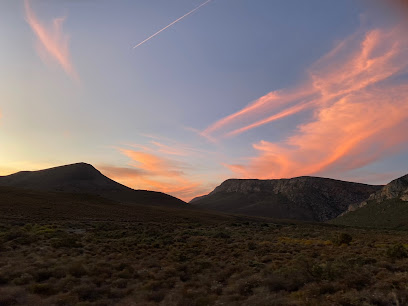
Location and accessibility notes point to the reserve’s core base in the Little Karoo near Montagu, with the nearest major urban centre being Cape Town. The landscape features a mix of open plains, mountain scenery and Renosterveld vegetation, framed by the Warmwaterberg Mountains, which collectively offer a distinctive backdrop for safaris and nature appreciation. For visitors with interests in photography, astronomy, birding or rock art interpretation, Sanbona provides structured programmes and expert guidance to maximise discovery while supporting conservation outcomes.
In summary, Sanbona Wildlife Reserve presents a refined, conservation‑led high‑end safari offering rooted in land travel and immersive wildlife experiences. While specific information about an airstrip is not detailed on the site, the overall guest journey—encompassing strategic lodging, guided wildlife activities, and a commitment to rewilding and habitat restoration—defines the authentic experience available in this Western Cape sanctuary.
Albertinia
Western Cape
South Africa
Sorry, no records were found. Please adjust your search criteria and try again.
Sorry, unable to load the Maps API.
Airstrip Services in Albertinia, Western Cape
Albertinia in the Western Cape hosts discreet airstrip facilities that support a range of aviation activities typical of rural and coastal regions. The airstrip environment is characterised by a simple, functional layout designed for small aircraft operations. It provides a practical hub for light aviation needs, including private flying, local charter arrangements, and support for agricultural or emergency services in the vicinity. Visitors should expect a straightforward, no-fruss atmosphere where safety and efficiency are emphasised alongside basic logistical considerations.
Services commonly associated with airstrips in this area include private and charter flights for business, recreation, and family travel. Operators may offer short-haul trips to nearby towns or regional centres, subject to weather and air traffic restrictions. The appeal lies in the flexibility of access, enabling swift point-to-point travel without relying on larger, busier airports. It is important for prospective passengers to confirm availability, operating hours, and booking procedures with the individual airstrip operator or local aviation service providers, as arrangements can vary between sites.
Aerial work forms a notable part of the activity profile in rural Cape landscapes. Agricultural aviation services, such as fertiliser and pesticide applications, are commonly conducted from regional airstrips, with pilots trained to perform precision work over farms and fields. This mode of operation supports efficient crop management and can reduce ground traffic on farm roads during critical periods. Photographic and surveying flights may also be undertaken from such airstrips, offering opportunities for land assessment, environmental monitoring, and mapping in the surrounding countryside.
Emergency and medical transport considerations are sometimes part of the wider regional framework. Small airstrips can facilitate rapid response by air ambulance or standby support in time-critical situations, subject to availability of suitably equipped aircraft and trained personnel. Prospective users should be aware that such services depend on local capacity, weather conditions, and regulatory clearances, and are not guaranteed at every site.
Practical considerations for visitors and operators include runway characteristics, lighting, and surface conditions. Many rural airstrips in the Western Cape are designed for daylight operation with weather windows that can vary seasonally. Pilots typically assess wind direction, visibility, and surface conditions before departure or arrival. Ground handling may be modest and rely on dedicated staff or local contractors for tasks such as parking, refuelling, and basic maintenance. It is advisable to arrive well in advance of planned activities to allow time for documentation, safety briefings, and any necessary ground transport arrangements.
Access and connectivity are important factors for users. Road access to the airstrip is usually straightforward but can differ from season to season due to road works or agricultural activity nearby. Nearby support services, such as fuel, maintenance facilities, and accommodation, may be limited in rural areas, so planning ahead is essential. Weather reporting and local guidance play a crucial role in scheduling, with pilots and operators reliant on accurate conditions to manage sorties or charters effectively.
In summary, airstrip services in Albertinia provide practical, small-scale aviation opportunities aligned with rural Western Cape needs. The typical service mix emphasises private and charter flights, agricultural aerial work, and potential emergency support within the constraints of local infrastructure and climate. Customers can expect a straightforward operational environment, clear communication from operators, and careful, safety-conscious handling of flight activities. For those seeking efficient access to the region or tailored aerial services, direct enquiries with local operators yield the most reliable information on availability, pricing, and logistical requirements.