Eagle1 Flight Academy is a Aviation training institute establishment in Germiston, Gauteng, South Africa
Eagle1 Flight Academy – Aviation Training Institute in Rand Airport, Gauteng
Located at Rand Airport near Germiston, Eagle1 Flight Academy presents itself as a professional aviation training institution focused on safety, airmanship and high standards. The academy emphasises a structured, integrity-driven approach to flight training with a long-standing track record of preparing pilots for professional careers. The facility markets itself as more than a training organisation, positioning itself as a family-orientated aviation community that supports students from initial flying interests through to airline-ready qualifications.
The core offering is a comprehensive range of pilot licences and related ratings designed to support various career paths in aviation. Initial entry points include the Private Pilot Licence (PPL), which is described as the first major step for those pursuing flying either as a hobby or as a precursor to further training. For those aiming to fly commercially, the Commercial Pilot Licence (CPL) and the Instrument Rating are positioned as key milestones. Ambitions to work with airlines are addressed through the Airline Transport Pilot Licence (ATPL) as the apex in the standard pathway, with multi-engine ratings supplementary to broader career options. In addition, the school delivers specialised instructor training to support experienced pilots seeking flight instruction credentials.
Experience is a notable feature of Eagle1 Flight Academy, with instructors collectively boasting over 60 years of teaching and more than 50,000 flight hours. The team’s experience is framed as a major asset for student progress and confidence, reinforcing the organisation’s emphasis on safety and professionalism throughout the training journey.
The academy operates from Rand Airport, which is described as a favourable environment for flight training due to continuous access to a dedicated air space and a flight-focused community. The location is highlighted as well-suited for training, offering proximity to facilities and services that support pilots, such as shops and refuelling services, and the airport’s emphasis on safety aligns with the academy’s safety-centric ethos.
A distinctive feature of Eagle1 Flight Academy is its accommodation offering. The school claims on-site serviced accommodation, reducing logistical considerations for students during their training. When accommodation is fully booked, the academy notes support in locating nearby options, illustrating an end-to-end student housing approach to ease transition and reduce travel time.
Booking and scheduling are supported by a digital system described as user-friendly, designed to prevent double bookings and streamline aircraft availability. This infrastructure aims to maximise training time and provide clarity for students coordinating lessons, flights and instructor availability. The academy also highlights experience supporting international students, including visa assistance, which broadens access for non-South African learners seeking SACAA-approved qualifications.
Main courses and training pathways
- Private Pilot Licence (PPL) – initial private flying permissions with solo options after sufficient training and regulatory authorisation.
- Night Rating – enables night-time flight operations after meeting specified experience and testing requirements.
- Commercial Pilot Licence (CPL) – professional, paid-flight capability following a minimum flight hour requirement and examinations.
- Airline Transport Pilot Licence (ATPL) – highest-level license for airline pilots.
- Multi-Engine Rating – expands capability to fly aircraft with more than one engine.
- Instrument Rating – precision navigation and control under instrument meteorological conditions, typically a prerequisite for CPL progress.
- Instructor Rating – prepares graduates to teach and build flight hours while instructing.
Course-specific timelines and prerequisites are outlined via individual course pages, detailing medical requirements, flight hours, examinations and SACAA processes. Notably, the academy’s materials reflect the SACAA accreditation framework and the broader ICAO-aligned licensing pathway, indicating suitability for students seeking internationally recognised qualifications.
Typical student experience and outcomes
Visitor testimonials describe a warm, professional environment with attentive instructors and well-maintained aircraft. Reviews emphasise a supportive culture, clear organisation, and positive initial experiences, including discovery flights and ongoing progression to more advanced training. The presence of long-serving staff and a strong emphasis on safety are recurrent themes in customer feedback.
Fleet and facilities
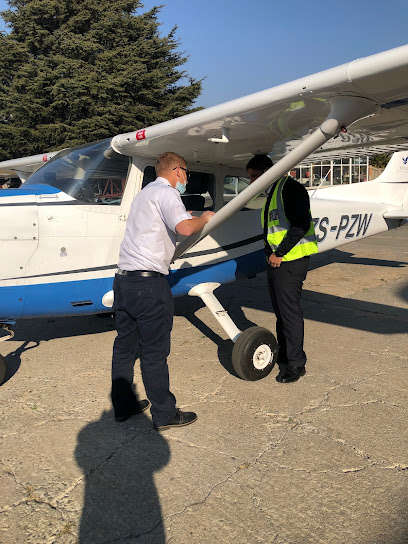
The fleet comprises multiple Cessna 172M trainer aircraft, identified by several registrations, chosen for their reliable training characteristics. The aircrafts’ consistent performance and approachable handling are aligned with Eagle1’s emphasis on building a solid flying foundation for students.
Practical tips for customers
- Take advantage of the on-site accommodation to minimise travel needs and maintain training consistency.
- Utilise the online booking system to check fleet availability and secure flight slots efficiently.
- Consider early engagement with visa support services if international study is planned.
- Expect a safety-focused environment with experienced instructors and well-maintained training aircraft.
- Plan around Rand Airport’s local facilities to maximise convenience during training breaks.
Service delivery concentrates on structured teaching approaches, clarity of progression, and a supportive culture aimed at turning students into qualified pilots ready for professional opportunities. The Rand Airport location situates Eagle1 Flight Academy within a dedicated aviation community, potentially offering a one-stop training experience for aspiring pilots in Gauteng.
Germiston
Gauteng
South Africa
Sorry, no records were found. Please adjust your search criteria and try again.
Sorry, unable to load the Maps API.
Aviation Training Institute Services in Germiston, Gauteng
In Germiston, Gauteng, aviation training institutes provide a range of programmes designed to prepare aspiring aviators and aviation professionals for active roles within the industry. Typical offerings cover pilot training, aircraft operations, safety management, and regulatory compliance. The emphasis across programmes is on practical instruction complemented by classroom theory, with facilities that approximate real-world aviation environments to varying extents.
Prospective students and industry entrants should expect a structured progression, often beginning with foundational courses that cover basic aviation knowledge, navigation concepts, meteorology, and air law. These programmes frequently extend into more advanced modules focused on aircraft performance, flight planning, and simulator sessions. Practical components are central to the curricula, enabling hands-on experience under supervision to build the competencies required for subsequent licensing or qualification stages.
Inst centres in Germiston commonly arrange access to simulators, where learners can practise procedures, assess decision-making under simulated conditions, and develop familiarity with cockpit workflows. For those pursuing professional paths, the institutes may support pathways into commercial pilot training, air traffic support roles, maintenance administration, and aviation safety roles. The exact mix of courses can vary, but the overarching aim is to deliver transferable skills applicable to local and regional aviation contexts.
Quality assurance and safety are frequent emphases. Students can expect instruction aligned with established aviation safety frameworks, alongside instruction in risk assessment, incident reporting, and best practices for operational readiness. Organisations in this sector typically emphasise adherence to structured training plans, regular assessments, and opportunities for student progress reviews. While specific certifications and regulatory authorisations are not uniform across institutions, many programmes are designed to align with recognised industry standards and national aviation requirements.
Practical considerations for trainees include the duration of programmes, entry requirements, and the availability of flexible scheduling. Part-time options may be offered to accommodate employed individuals or those balancing study with other commitments. Access to modern facilities, vehicle and simulator time, and adequate instructor-to-student ratios are commonly highlighted as indicators of a quality learning environment. In Germiston, proximity to transport links and convenient access to training facilities can influence daily attendance and progression timelines.
When evaluating aviation training in Germiston, potential students are advised to consider several point-by-point factors. These include:
- Curriculum structure and the balance between theory and practical work
- Availability of flight simulators or equivalent operational training tools
- Qualified instructional staff with relevant aviation experience
- Facilities such as classrooms, briefing rooms, and maintenance laboratories
- Support services, including career guidance, licensing assistance, and internship opportunities
- Programme duration, start dates, and scheduling flexibility
Students can typically expect a organised intake process, with prerequisites such as prior educational qualifications or medical assessments where applicable. Depending on the programme, some modules may require practical demonstrations, examinations, or flight or simulator assessments to validate competence. It is prudent to verify the scope of the offered services, including any collaboration with external aviation bodies or certified training partners, to ensure that the pathway aligns with long-term professional objectives. In Germiston, the combination of academic instruction, practical training, and a local aviation ecosystem can provide a solid foundation for individuals pursuing a career in the broader aviation sector.