Av8tor Safety is a Aviation training institute establishment in Beestekraal, North West, South Africa
Av8tor Safety: Aviation Safety Training in Beestekraal, North West
Av8tor Safety operates as a dedicated provider of practical safety solutions for the aviation sector, with a focus on equipping pilots and flight instructors with techniques to improve survivability in emergency situations. Based in Beestekraal, North West, the organisation emphasises methods that extend beyond conventional flight training by concentrating on how to manage energy and reduce injury risk during forced landings or high-stress scenarios.
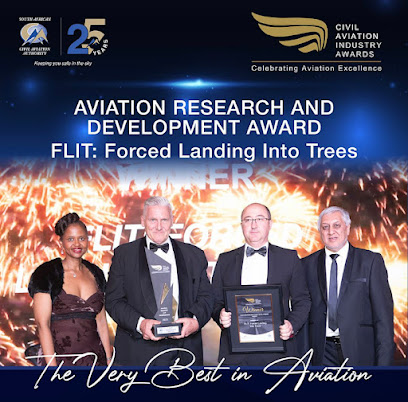
The core offering centres on the FLIT concept—Forced Landing Into Trees—a distinctive survival approach that aims to increase the odds of walking away from an emergency landing. The training articulates how to decelerate the aircraft’s energy, control deceleration forces, and position the aircraft to absorb impact more safely. Beyond the theory, Av8tor Safety provides practical materials, case studies, and videos that illustrate the physics behind forced landings and the execution of a successful FLIT strategy. This includes guidance on landing into high-energy environments with minimal fuel-tank rupture risk, and the real-world implications of maintaining a largely horizontal orientation at impact when obstacles are encountered.
In addition to FLIT, the portfolio includes a set of complementary tools and concepts designed to augment a pilot’s decision-making toolkit. Notable examples are:
- Go-Around-Joe — a Visual Glideslope and Go-Around Indicator intended primarily for GA pilots flying VFR. The device provides a visual reference for establishing the correct glideslope and clearing final-approach obstacles, helping pilots assess landing options while maintaining awareness of runway boundaries.
- V DMMS — the Defined Minimum Manoeuvring Speed concept, a parameter intended to assist pilots in managing airspeed during critical phases of flight and to inform safer energy management strategies in emergencies.
Course and programme structures on the Av8tor Safety site outline a progression from introductory safety concepts to formal certification. The FLIT online training is presented as a comprehensive primer that includes videos, crash-test demonstrations, and case studies, with a stated pathway to a FLIT certification programme for pilots, flight instructors, and flight schools. The online training is described as a prerequisite for the annual FLIT Certification, suggesting an integrated approach to ongoing professional development within the broader FLIT framework.
Visitor and participant feedback on the site’s materials highlights the organisation’s emphasis on practical survival techniques and real-world applicability. Personal accounts and testimonials underscore a belief that traditional GA training may not sufficiently address survivability in constrained or obstructed forced-landing scenarios. The emphasis on reducing kinetic energy, strategic energy management, and the utilisation of natural obstacles as energy-absorbing features is a recurring theme in user commentary, as are references to the educational value of energy-focused theory and hands-on demonstrations.
Requests for information or course access are typically routed through the site’s online presence, with details and sign-up options for FLIT and related programmes published on the Av8tor Safety website. The site also presents downloadable contents and supplementary materials related to FLIT, including contents lists and reference documents, aimed at pilots and instructors seeking a deeper understanding of the methodology before enrolling.
Typical job types and engagements associated with Av8tor Safety are training-focused rather than maintenance or aircraft operations. They include pilot safety instruction, instructor certification, and flight school affiliation programmes centred on integrating FLIT principles into standard operating procedures and training curricula. The organisation asserts a commitment to practical safety outcomes rather than purely theoretical knowledge, advocating a mindset shift toward intentional safety practices and energy management during emergencies.
Practical tips for prospective customers include familiarising with the FLIT concept before attempting any live‑environment training, reviewing the physics of energy absorption in impact scenarios, and understanding the supportive role of tools like Go-Around-Joe in enhancing situational awareness on final approaches. Prospective buyers are encouraged to explore case studies and videos that illustrate how real-world emergencies have been managed using the FLIT framework and related safety technologies.
Beestekraal and the surrounding North West region serve as the geographic focus for Av8tor Safety, with offerings targeted at GA pilots, flight instructors, and affiliated training organisations seeking to broaden their safety repertoire beyond traditional flight training. The available content suggests an emphasis on empowering pilots to make informed, energy-conscious decisions during emergencies, thereby contributing to safer outcomes in the broader aviation community.
North West
South Africa
Sorry, no records were found. Please adjust your search criteria and try again.
Sorry, unable to load the Maps API.
Aviation Training Institute Services in Beestekraal, North West
Aviation training institutes in Beestekraal offer a broad spectrum of programmes designed to prepare prospective pilots, air traffic staff, and aviation professionals for local and international skies. These facilities typically combine classroom instruction with practical flight training, enabling students to progress through recognised stages of qualification within South Africa’s regulatory framework. The emphasis is on safety, sound decision making, and adherence to established aviation standards while reflecting the regional character of North West Province.
The core offerings usually include ground school and theory courses that cover aerodynamics, meteorology, navigation, aircraft systems, aviation law, and flight operations. Theoretical training is designed to build a solid foundation before hands-on flying begins, with assessments aligned to the requirements of the South African Civil Aviation Authority (SACAA) and international aviation traditions. Students can expect access to experienced instructors who translate complex concepts into practical understanding, emphasising risk assessment and procedural discipline.
Practical flight training forms a central pillar of the curriculum. Depending on the institute, training may span private pilot licences, commercial pilot licences, or specialised tracks such as instrument flying or flight instructor preparation. Trainees are guided through the process from foundational flight theorems to solo flights and, where applicable, cross-country exercises. The programme structure generally integrates aircraft familiarisation, systems operation, navigation planning, and performance calculations, all conducted under mandatory safety protocols.
State-of-the-art training tools are commonly employed to reinforce learning. Even in regional settings, many institutes incorporate flight simulators and mock-ups to practise standard operating procedures, emergency procedures, and radio communications without the immediate risks of real flight. This practical equipment complements in-air sessions and provides opportunities to repeat scenarios until competencies are demonstrated to the required standard.
Ground handling and support services often accompany flight training. Students benefit from access to aviation-grade facilities such as briefing rooms, maintenance workshops, and relevant logistics for scheduling flights. Administrative support helps with course enrolment, progress tracking, and compliance documentation, while safety officers ensure that all training adheres to regulatory requirements and industry best practices. For prospective entrants, information is typically available on entry requirements, medical examinations, age limits, and language proficiency, all of which influence progression timelines.
The local environment in Beestekraal can present both advantages and considerations for aviation training. The region’s open spaces and airspace characteristics may provide suitable conditions for training flights, subject to prevailing weather patterns and regulatory permissions. Learners should anticipate seasonal variations in weather, which influence flight planning and assessment schedules. Practical considerations include aircraft availability, maintenance standards, insurance implications, and transport arrangements to and from training facilities.
A typical student journey involves initial eligibility checks and theory enrolment, followed by a structured sequence of flight lessons and examinations. Progress is monitored through periodic assessments, with milestone certifications that reflect adherence to SACAA standards. Where progression stalls are possible, guidance and remedial planning are usually available to help trainees realign with their programme goals. Overall, aviation training institutes in Beestekraal aim to deliver rigorous, safety-conscious education that equips graduates with the competencies required to pursue further aviation opportunities or pursue responsible roles within the wider aviation sector.