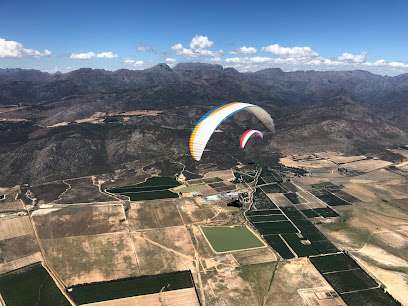
Airborne Paragliding is a Aviation training institute establishment in Porterville, Western Cape, South Africa
Porterville
Western Cape
South Africa
Sorry, no records were found. Please adjust your search criteria and try again.
Sorry, unable to load the Maps API.
Aviation Training Institute Services in Porterville, Western Cape
In Porterville, Western Cape, aviation training institutes provide a range of educational programmes designed to prepare aspiring pilots, engineers, and aviation professionals for the demands of the industry. These organisations operate from compact flight schools to larger training centres that blend classroom theory with practical flight experience. They typically collaborate with regulatory authorities to ensure training standards align with national aviation requirements, while emphasising safety, professionalism, and hands‑on skills.
Most institutes offer a progression of programmes that cater to different career paths within aviation. For pilots, commonly available licences include a Private Pilot Licence (PPL), a Commercial Pilot Licence (CPL), and the Airline Transport Pilot Licence (ATPL) later in the training journey. Endorsements and ratings, such as for multi‑engine aeroplanes or instrument flying, are often available as add‑ons to broaden qualifications. For aviation mechanics and maintenance personnel, engineering and component maintenance courses cover theoretical knowledge and practical tasks needed to service, inspect, and repair aircraft systems. Ground operation training is another core area, focusing on airside operations, safety procedures, and efficient management of flight support services.
Training typically blends several components. Instruction may include formal theory classes covering aviation law, meteorology, navigation, flight planning, and human factors; practical flight or simulator sessions to develop hands‑on competencies; and assessment periods to verify progress. The teaching approach often emphasises scenario‑based learning, enabling students to apply knowledge to simulated flight situations, emergency drills, and decision‑making under pressure. Practical sessions may take place in local airfields, with access to aircraft and, where available, high‑fidelity simulators that replicate cockpit environments and instrument readings.
Students can anticipate a structured pathway from introductory courses to more advanced credentials. Initial courses commonly focus on fundamental aeronautical knowledge and basic flight ability, advancing to more complex operations, navigation planning, and passenger or cargo handling. Safety, risk assessment, and regulatory compliance are woven throughout, reflecting the responsibilities that accompany operating aircraft and maintaining airworthiness. Weather assessment, communication protocols, and airspace rules form essential components of the curriculum, helping learners develop disciplined, professional behaviours aligned with industry expectations.
Facilities at Porterville‑based institutes often include well‑equipped classrooms, briefing rooms, maintenance workshops, and access to aircraft for practical flying experience. While the scale of offerings varies, many centres collaborate with local aerodrome facilities, enabling real‑world exposure to flight operations, ground handling, and routine maintenance activities. Instructors are typically experienced professionals with operational backgrounds, and many programmes incorporate mentorship or career guidance to assist graduates in navigating the job market within the aviation sector.
When considering a training provider in Porterville, prospective learners should evaluate several practical aspects. Availability of training slots and aircraft, the mix of theory vs. practical instruction, and the level of supervision during solo flights are important. Learners may also wish to understand the progression routes between programmes, any required medical examinations, and the typical timeframes for achieving each licence or rating. Geographical convenience and weather considerations in the Western Cape can influence scheduling, with seasonal conditions affecting flying time and training density.
In summary, aviation training institutes in Porterville offer comprehensive learning pathways that combine theoretical knowledge with practical flight or simulation experience. They aim to establish solid technical competence, safety consciousness, and regulatory awareness, preparing students for professional roles in aviation and related fields across the Western Cape and beyond.
- Typical services include: theory instruction, flight training, simulator sessions, licence and rating programmes, maintenance and engineering courses, ground operations training, safety and regulatory education, and career guidance.
- Practical considerations emphasise safety culture, regulatory compliance, weather and airspace awareness, and a clear progression pathway through increasingly advanced credentials.