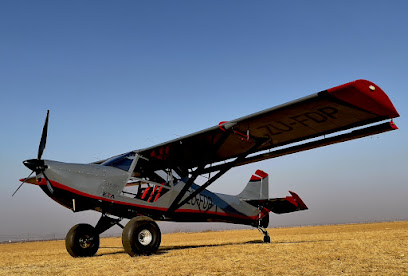
Bushflying Africa (Pty) LTD is a Flight school establishment in Benoni, Gauteng, South Africa
Benoni
Gauteng
South Africa
Sorry, no records were found. Please adjust your search criteria and try again.
Sorry, unable to load the Maps API.
Flight School Services in Benoni, Gauteng
Benoni, situated on the eastern edge of the Gauteng province, hosts a range of flight training providers offering practical aviation instruction for aspiring pilots. The airstreams and runways in the region support training programmes for private pilots, commercial pilots, and instrument rating, commonly integrated with ground school and theory classes. These services are designed to equip students with the skills and knowledge required to operate light aircraft safely and competently, while situating training within the local airspace and weather patterns.
Typical offerings span several core elements. Practical flight instruction is accompanied by rigorous ground training covering aerodynamics, meteorology, navigation, aviation law, and operational procedures. Training aircraft are often of mixed types appropriate for early solo flights through more advanced training, with maintenance standards governed by standard aviation requirements. The aim is to build a solid flight safety culture, emphasising decision-making, crew resource management, signal interpretation, and routine pre-flight checks.
Students commonly progress through a structured curriculum that may include:
- Private Pilot’s Licence (PPL) training, including solo flights under supervision and controlled cross-country exercises.
- Commercial pilot training for those seeking to fly as a profession, typically extending from initial licences to more advanced ratings.
- Instrument rating (IR) and multi-engine considerations where offered, enabling operations under instrument meteorological conditions and with varied aircraft configurations.
- Theory instruction in areas such as navigation, meteorology, air law, and operational procedures, often complemented by simulators or classroom sessions.
- Ground handling, navigation planning, and flight planning simulations to reinforce practical sessions.
Potential students should anticipate a phased approach. Entry requirements commonly include age thresholds, medical fitness assessments, and the ability to meet language and comprehension standards for safety-critical communications. Training typically blends scheduled flight lessons with study periods, allowing for practice outside flight hours and assessment preparation. Progress is usually measured through check-rides, ongoing evaluations, and theory examinations aligned with national aviation authorities’ standards.
Facilities in Benoni are typically located near or within easy reach of local airfields. Learners should consider the practical aspects of training location, such as approach and departure corridors, air traffic density, and available weather information. Accessibility to theory classrooms, maintenance on site, and the ability to schedule lessons around weather windows all influence the training experience. For many trainees, proximity to accommodation, transport links, and affordable access to flight hours are practical factors that shape the overall plan.
What customers can expect from a Benoni flight school includes professional instruction delivered by qualified instructors, a focus on safety best practices, and a structured timetable designed to accommodate both full-time and part-time learners. Students may receive assistance with flight hour tracking, logbook completion, and progression records, while the day-to-day experience tends to combine in-air practice, ground school, and occasional simulations. It is common for schools to emphasise hands-on experience with a range of aircraft within the cohort, enabling exposure to different handling characteristics and performance profiles.
In choosing a flight school in Benoni, prospective pilots are advised to verify instructor qualifications, fleet maintenance standards, and adherence to regulatory requirements. A visit to the premises can provide insight into airfield operations, training environments, and the overall culture of safety and professionalism. While price ranges and package details vary, the overarching objective remains consistent: to cultivate competent, responsible pilots who can operate with confidence in South Africa’s local airspace and beyond.