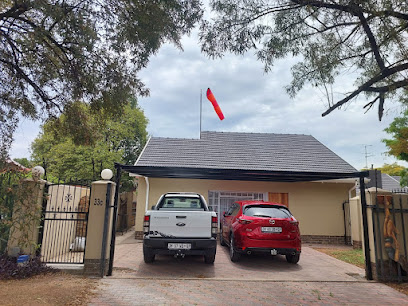
Air Safety Pilot Academy and Windsock Shop is a Housing complex establishment in Germiston, Gauteng, South Africa
Air Safety Pilot Academy and Windsock Shop – Windsocks, Poles and Related Accessories
Operating within the Windsock Shop offering, this overview examines the services and customer experience described for a business that supplies windsocks, poles, fixtures and branding options. The emphasis is on practical wind-monitoring products used in industrial, safety and sporting contexts, with attention to how orders are typically handled and what customers can expect during their buying journey.
The primary product range is built around a wide selection of windsocks in various sizes and colours, including orange, yellow, red and white variants. The product list spans multiple sizes from small 250 mm diameter windsocks to larger 900 mm models, with corresponding lengths suited to different installation environments. These windsocks are presented in full sets, including branded and unbranded options, and come in straightforward configurations such as the small, medium and large formats, as well as specialised variants like custom, orange and white combinations, and dual‑coloured (e.g., red & white, orange & white) models. Several versions are identified as suitable for specific applications, including general aviation, helipads, marine use and industrial settings such as factories and mines.
In addition to windsocks, the catalogue highlights accessories and installation hardware designed to facilitate quick setup and durable operation. Items include bearing rings (standard and heavy‑duty variants), extension poles for easy transport and installation, and lightweight or robust poles with options for galvanised finishes. There is an emphasis on portability and ease of assembly, with products delivered as kits that include the necessary hardware, pictorial assembly instructions and tools such as an Allen key. These features suggest a focus on practical, field‑ready solutions that can be deployed with minimal specialist knowledge.
The Windsock Shop promotes branded windsocks as a key feature for promotional and corporate use. Branded windsocks are positioned as an attention‑grabbing way to display a company logo, making them suitable for advertising, events and wayfinding in large outdoor spaces. The branding option is marketed as a value‑add for organisations looking to extend their visual presence through durable, high‑visibility signage in windy environments.
Customer experiences, as reflected in visitor reviews, acknowledge the efficiency and reliability of service. Review snippets describe quick service and a responsive approach, with several reviewers noting that the business is “on the ball” and that service is provided promptly. The remarks point to a generally positive perception of the team’s responsiveness and execution, with customers indicating satisfaction in terms of speed and attentiveness to needs.
Typical project types and industries implied by the product range include safety and health implementations (Health & Safety applications), industrial facilities (factories and mines), sports settings, and aviation or aviation‑adjacent contexts (helipads and general aviation). The equipment is described as suitable for both temporary and more permanent installations, depending on the chosen pole, bearing ring and support structure. This breadth makes the shop a practical source for organisations seeking a visible windsock presence across a variety of outdoor operational environments.
How requests usually work appears to be email‑driven, with product pages offering an “E‑Mail Us” option for inquiries and orders. This suggests a personalised order process, where customers can request quotes, discuss custom sizes, branding needs and delivery logistics before finalising purchases. The site presents a structured range of standard options while also signalling that customised and branded solutions are available on request, with price on application for some items.
Practical tips for customers planning a windsock project include:
- Identify the intended application (e.g., factories, helipads, general aviation) to select the appropriate windsock size and colour scheme.
- Consider branding needs early—custom windsocks and branded options are highlighted as effective promotional tools.
- Review hardware options (bearing rings and poles) to ensure compatibility with installation height, wind exposure and any lighting requirements.
- Ask for installation guidance or diagrammatic instructions if undertaking on‑site setup, especially for heavier or lighted poles.
- Prepare a basic installation plan and measurement sheet to share when requesting quotes or product recommendations.
The business appears to serve a broad area with a focus on practical, ready‑to‑use equipment for outdoor wind visibility. While specific operating hours or local service boundaries are not stated in the available content, the emphasis remains on accessible product lines, straightforward order processes via email, and a support approach that aligns with quick turnaround and reliable delivery expectations.
Germiston
Gauteng
South Africa
Sorry, no records were found. Please adjust your search criteria and try again.
Sorry, unable to load the Maps API.
Housing Complex Services in Germiston, Gauteng
In Germiston, a residential housing complex typically provides a range of services designed to maintain safety, security, and a comfortable living environment for residents. These services are usually coordinated by a dedicated management team or approved committee, serving as a point of contact for residents and suppliers alike. While offerings can vary, several core services are commonly encountered across complexes in Gauteng’s East Rand region.
Security is a central feature of most housing complexes. Public areas are often monitored by controlled access points, regular patrols, and CCTV to deter trespass and enhance safety. Gatehouses or concierge desks may be present to assist residents with visitor management, deliveries, and access for tradespeople. Access control systems, such as intercoms and secure key fobs, help regulate who enters the site, while well-lit walkways and clear signage contribute to a sense of security after dark.
Maintenance and facilities management are essential for keeping common areas functional and presentable. Routine upkeep covers landscaping, lawn care, pruning, and waste removal from communal spaces. Building fabric maintenance includes repairs to ceilings, painting, roofing inspections, and monitoring of plumbing and electrical systems in shared areas. Some complexes employ in-house teams, while others contract specialists on a regular schedule to address preventative maintenance and urgent fixes.
Cleaning and housekeeping services are often extended to shared facilities, such as foyers, stairwells, lifts, and communal laundry rooms. Depending on the size of the development, there may be daily cleaning in high-traffic zones, with more periodic deep-clean intervals to sustain hygiene standards throughout the site. Pest control is typically scheduled to manage common residential pests and to preserve a healthy living environment.
Property management in Germiston housing complexes frequently encompasses administrative duties related to leases, security deposits, and resident communications. This can include the handling of service requests, rental payments, and notices about policy updates or planned maintenance works. Clear communication channels help residents understand expected response times and the process for requesting help with issues in their units or common areas.
Utilities and energy management are practical considerations in the Gauteng climate. While individual units usually handle their own electricity and water usage, some complexes oversee metering for shared facilities, such as lighting in common areas or communal pools. Complexes may provide information about water conservation, energy-efficient practices, and waste recycling programmes to encourage responsible consumption among residents.
Common facilities vary by development. Many housing complexes in Germiston feature amenities such as landscaped courtyards, playgrounds for children, and sometimes recreational rooms or function spaces. In larger properties, one might encounter a gym, a swimming pool, or sporting courts; availability depends on the size of the community and the management’s capital plans. Rules and etiquette typically govern the use of these facilities to ensure fair access and maintenance standards for all residents.
Residents should consider practical matters when choosing a housing complex. Levy or service charges are a regular part of ownership or tenancy, contributing toward maintenance, security, and shared services. It is prudent to review the house rules, pet policies, and parking arrangements, as well as any restrictions on renovations within units. Understanding the process for submitting maintenance requests and the expected timeline for responses helps set realistic expectations. In Germiston’s urban setting, access to reliable transport links, proximity to essential services, and the reliability of utility services are practical factors impacting daily living within a complex.
Overall, housing complexes in Germiston, Gauteng, aim to provide safe, well-maintained environments with a focus on convenience and community living. The efficiency of service delivery often hinges on clear governance structures, transparent communication, and cooperative engagement between residents and management teams.