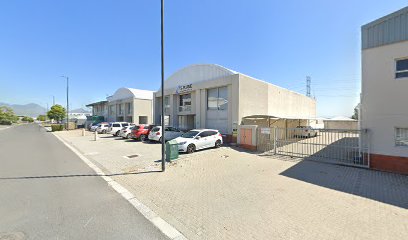
S-PLANE Automation is a Manufacturer establishment in Somerset West, Western Cape, South Africa
S-PLANE Automation: Airborne Control, Ground Control, Communication and Simulation Solutions
As an independent observer notes, S-PLANE Automation is positioned in the Somerset West region of the Western Cape and operates as a manufacturer supplying comprehensive automation and control systems for aviation. The company presents a broad offering designed to equip both certified and uncertified manned, unmanned, and optionally piloted aircraft with advanced automation and control capabilities. The emphasis across the portfolio is on delivering certification‑ready solutions that can transform existing airframes into fully automated or fly‑by‑wire platforms, while also supporting ground operations and mission planning through integrated software and hardware packages.
The core portfolio is anchored in four interlinked families of capability. First, Airborne Control and Automation Solutions are presented as the central enabling technology, transforming aircraft into fly‑by‑wire and fully automated aviation platforms suitable for unmanned, optionally piloted, or mixed‑operation configurations. These solutions cover flight control, power distribution, and automation logic that would underpin a safety‑critical system for both research and commercial applications. In parallel, Ground Control Solutions provide flexible Ground Control Station (GCS) options designed to support a range of configurations and aircraft applications, including manned, unmanned, and optionally piloted platforms. These ground systems are positioned to integrate with onboard automation for mission management, telemetry, and operator interfaces. The third pillar, Communication Solutions, focuses on reliable RF connectivity for LOS and BVLOS missions, ensuring robust link performance for control, telemetry, and data exchange. Finally, Simulation Solutions offer an end‑to‑end environment for development, testing, and training, emphasising acceptance, verification, validation, qualification, and integration testing across system and subsystem levels.
Product lines emphasise a suite of hardware and software tools designed to support automation and mission operations. Notable offerings include a range of flight control and mission computer components, alongside advanced human‑machine interface software and piloting units. These products appear to be engineered to support both practical deployment in aerial platforms and integration into broader air system architectures. The combination of hardware units, control software, and simulation capabilities suggests a holistic approach intended to streamline development cycles, supplier integration, and certification processes for aviation customers.
In terms of typical applications, the company highlights projects across manned ISR aircraft, advanced air mobility (AAM) systems, and optionally piloted aircraft. The documentation indicates a focus on payload management, navigation and communication integration, and ground‑support tooling tailored to ISR missions and other security or research‑oriented operations. The reference to AAM underscores an interest in next‑generation urban and regional air mobility concepts, implying a readiness to support safety‑critical functions such as automated flight control, remote piloting, and power distribution in complex flight regimes.
Customer experiences and project journeys are generally described in terms of collaborative development, system integration, and the deployment of certification‑ready components. The breadth of the product map—ranging from avionics to simulator interfaces—points to an engagement model that spans device selection, software configuration, testing, and on‑site or remote support as required by the programme. The company’s activity in recent news items, including collaborations and the deployment of specific components on notable platforms, signals ongoing industry engagement and practical experience with real‑world aviation programmes.
How requests typically work
- Initial scoping and capability matching: potential customers provide mission requirements, aircraft type, and certification needs to determine suitable airborne, ground, and simulation solutions.
- Technical design and integration: engineers map hardware and software components to the intended airframe and ground infrastructure, aligning with safety, reliability, and certification standards.
- Testing and validation: a structured workflow supports acceptance, verification and validation, qualification, and integration testing to ensure readiness for flight operations.
- Deployment and support: post‑integration service may include training, documentation, and ongoing support to maintain system performance and respond to evolving mission demands.
Practical tips for customers
- Clarify certification goals early: determine whether the project targets validated flight‑worthy status or research‑scale experimentation to guide solution selection.
- Assess integration scope: map how airborne, ground, and simulation components will interoperate to avoid gaps in data flow and control authority.
- Plan for testing: leverage simulation solutions to de‑risk mission profiles before aircraft flight tests, particularly for complex autonomous or remotely piloted operations.
- Engage with regional providers: projects in the Western Cape and broader South Africa may benefit from local collaboration and service support aligned with regulatory or operational requirements.
- Consider future scalability: select solutions that can grow with evolving AAM concepts and expanding BVLOS capabilities.
Geographically, the organisation is positioned to serve clients in South Africa’s Western Cape region, with a focus on Somerset West and nearby areas within the broader locale. The company’s public material and recent activity highlight a commitment to innovation in airborne automation, robust ground‑control capabilities, and reliable communications, supported by simulation and HIL (hardware‑in‑the‑loop) testing environments that help de‑risk complex aviation programmes.
For more information, the company presents its solutions under categories including Airborne Control and Automation, Ground Control, Communication, and Simulation Solutions, with product highlights such as advanced HMI platforms, remote piloting units, and multi‑domain flight control hardware. These elements collectively position S‑PLANE Automation as a manufacturer focused on end‑to‑end aviation automation and control solutions for a diverse mix of airborne platforms.
Somerset West
Western Cape
South Africa
Sorry, no records were found. Please adjust your search criteria and try again.
Sorry, unable to load the Maps API.
Manufacturer Services in Somerset West, Western Cape
Somerset West, perched on the foothills of the Helderberg and within the Western Cape, hosts a range of manufacturing services that cater to diverse local industries. From small-batch production to small‑scale contract manufacturing, these operations are typically equipped to support sectors such as consumer goods, construction, engineering, and horticultural industries that benefit from nearby logistics and a skilled workforce. The landscape emphasises practical capability, reliability, and a collaborative approach to project delivery.
Common service offerings across this area include precision machining and fabrication, metalworking, and assembly solutions. Businesses may provide metal fabrication (including cutting, bending, welding, and finishing), alongside machining services such as CNC milling and turning, which are well suited to components requiring tight tolerances. Sheet metal work, fabrication of powder-coated or painted assemblies, and basic to intermediate level mechanical assembly frequently form part of the core offering. In addition, light engineering, welding of structural or component parts, and prototype or small‑batch production are routine for orders that require rapid turnaround or customised specifications.
Clients typically engage these manufacturers for product development support, process optimisation, or end-to-end production. A standard workflow often begins with a consultative assessment of technical requirements, followed by design clarification, quotation, and lead-time planning. Where feasible, preliminary prototyping or sample parts are produced to validate dimensions, materials, and fit. Once a production run is approved, manufacture proceeds with quality checks throughout the process to ensure consistent output and adherence to agreed specifications. Final inspection, packaging, and delivery are commonly arranged to align with customer schedules and logistics considerations.
Quality assurance is a recognised priority within manufacturer services. Local facilities frequently implement basic but robust inspection regimes, employing calipers, micrometres, or other measurement tools to verify critical dimensions. Some operations maintain documentation routines to support traceability, including material certificates or batch records where applicable. Practical considerations include selecting materials appropriate to the South African climate and local regulations, managing corrosion resistance for coastal environments, and planning for energy and water efficiency given regional resource pressures.
Customers can expect responsive service levels characterised by clear communication, transparent pricing, and realistic lead-times. While exact timelines vary with workload, capacity, and the complexity of parts, manufacturers in the region aim to provide reliable scheduling and the ability to accommodate changes where feasible. Access to a network of local suppliers and subcontract partners can aid in sourcing raw materials, coatings, or specialised finishing services, though specific supplier names are typically not disclosed in general service descriptions.
Practical considerations for engaging a Somerset West manufacturer include evaluating proximity for easier logistics, understanding the range of finishing options (such as painting, powder coating, or galvanising), and confirming whether the facility can handle both prototyping and production quantities. Environmental and safety practices are commonly observed, with adherence to local regulations regarding waste management, emissions, and worker safety. For enterprises seeking regional support, these manufacturers offer a convenient hub for collaboration, custom fabrication, and scalable production aligned with South Africa’s Western Cape business environment.
- Precise machining and metal fabrication
- Welding, assembly, and light mechanical integration
- Prototype development and small-batch production
- Quality control and dimensional inspection
- Material sourcing and finishing options