Pioneers of Aviation Museum Kimberley is a Museum establishment in Kimberley, Northern Cape, South Africa
Pioneers of Aviation Museum Kimberley – Summary
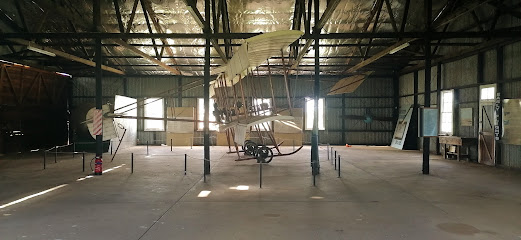
The Pioneers of Aviation Museum in Kimberley, Northern Cape, is presented as a historic site dedicated to the early days of flight in South Africa. Located on the site of the original flying school, the museum places emphasis on Kimberley’s role as a cradle of aviation. The site houses a life‑size replica of the Compton-Paterson biplane, which was historically used for pilot training and is linked to the nucleus of the future South African Air Force. The collection and interpretation aim to recount the early aviation story, including the pioneering work of notable figures connected with the Alexandersfontein flying school and the broader aviation community in the country’s formative years.
Key elements highlighted by the museum include the first aviation milestones in Kimberley, such as John Weston’s 1911 flight and the establishment of Compton Paterson’s flying school in 1913. The site also commemorates the contribution of early aviators who trained there and went on to form part of the South African Air Force. A National Monument on the site encompasses a memorial, a reconstructed hangar, and a replica of the Compton-Paterson aircraft used in early flight training. These features position the museum as a focused homage to South Africa’s aviation heritage and its regional roots in Kimberley.
The visitor experience is anchored by two central experiences: a historical narrative presented through the museum emplacements and the physical components that visitors can observe, such as the replica aircraft and the memorial structures. The site’s interpretation highlights the historic training environment, the evolution of pilot training, and the individuals who contributed to the country’s early air power. This framing is designed to offer context about how Kimberley contributed to national aviation history and to commemorate the pioneers who played pivotal roles in the development of the South African Air Force.
In terms of access and pricing, the site lists entry fees of R40 for adults and R20 for children. The museum’s presentation is complemented by a focus on heritage protection and commemoration, aligning with its status as a National Monument and a repository of local aviation memory. The combination of a living historic site and a curated interpretation makes the experience relevant to visitors interested in military history, regional heritage, and the broader story of flight in South Africa.
Customer feedback from recent visitor reviews indicates a mixed range of experiences regarding booking and accessibility. Several reviewers note that appointments or reservations are recommended or required to visit, with some mentions of the site appearing neglected or requiring notification in advance. Other observations describe positive reactions to the authenticity of the site and the potential of the collection when accessed under appropriate arrangements. These opinions underscore the importance of planning ahead and aligning expectations with the practicalities of visiting a heritage site that operates with specific access arrangements.
Overall, the Pioneers of Aviation Museum Kimberley functions as a heritage site that preserves and communicates the early aviation story connected to Kimberley. It offers a combination of historical artefacts, interpretive elements, and commemorative structures that together illuminate the region’s role in South Africa’s aviation chronology. The museum’s focus on training pioneers, its life‑size aircraft replica, and its National Monument status position it as a meaningful stop for those exploring Kimberley’s historical landscape and the broader development of aerial exploration in South Africa.
Practical tips for visitors
- Appointment or booking: Plan ahead, as some visitors report that a reservation is necessary to gain access.
- Expectations: The site may present a heritage‑focused and modest visitor experience; some reviews note perceived neglect in certain moments, so arriving prepared for a quiet, contemplative visit is advisable.
- Entry fees: Adults – R40; Children – R20. Budget for a short visit to explore the memorial, hangar reconstruction, and the aircraft replica.
- Location: The museum is situated on the historic aviation site in Kimberley, in the Northern Cape, and forms part of the region’s historic attractions.
- Accessibility: Enquire in advance about opening hours and accessibility arrangements, particularly for groups or school visits.
For those planning a day’s itinerary in Kimberley, the Pioneers of Aviation Museum provides a compact, heritage‑focused perspective on the city’s early aviation story, its notable pilots, and the founding moments of South Africa’s air services. The site’s monuments, reproduced aircraft, and enduring commemorations offer a tangible link to a pivotal era in South African aviation history.
Kimberley
Northern Cape
South Africa
Sorry, no records were found. Please adjust your search criteria and try again.
Sorry, unable to load the Maps API.
Museum Services in Kimberley, Northern Cape
In Kimberley, the Northern Cape, museum services typically comprise a blend of curatorial care, public programming, and community engagement. These institutions function as custodians of regional history, culture, and natural heritage, offering visitors a structured experience that blends storytelling with artefact preservation. The range of services is designed to be informative for occasional visitors and deeply useful for researchers, educators, and local organisations seeking context for the area’s distinctive past.
Core offerings often include permanent and temporary exhibitions that present artefacts, documents, photographs, and multimedia displays in an interpretive sequence. Curatorial teams assemble displays that reflect Kimberley’s industrial heritage, colonial history, indigenous cultures, and natural surroundings, subject to ethical and professional standards for handling sensitive material. When rotating exhibitions are shown, planning typically aligns with community events or scholarly anniversaries, bringing fresh perspectives to familiar narratives. Visitors can expect clear signage, informative labels, and staff or guides available to answer questions during peak times.
Conservation and collection care constitute another essential service. Museums in Kimberley frequently provide basic conservation work, condition reporting, and preventive measures such as appropriate storage conditions, exhibit mounts, and handling protocols. While major restoration tasks may involve external specialists, in-house teams endeavour to preserve artefacts for future generations and to maintain their integrity for study and display. Catalogue and archive work underpins both display and research, enabling researchers to access item histories, provenance, and related documentation under established procedures.
Educational programmes form a prominent component of museum activity. Local institutions typically offer school visits, guided tours, and structured learning experiences that align with curricula and focus on critical thinking, inquiry, and civic pride. Public lectures, demonstrations, craft sessions, and family-friendly activities are commonly scheduled to encourage broad community participation. Partnerships with schools, libraries, and cultural organisations help extend learning beyond the gallery walls and support lifelong learning across age groups.
Visitor services and facilities are designed to enhance the experience for both casual guests and dedicated researchers. Expected features include accessible entrances, friendly reception staff, and well-signposted interiors. Practical considerations often emphasise safety, climate-conscious environments for sensitive objects, and security measures to protect collections. Arrangements surrounding opening hours, ticketing, and group bookings vary, with some venues offering guided tours, workshops, or lifelong learning programmes on a chargeable or complimentary basis. A small shop or café may be present, supplying interpretive materials, locally themed gifts, and refreshments for visitors who spend longer exploring the site.
For travellers and local residents alike, transport and accessibility play a role in planning visits. Kimberley’s museums are typically reachable by car with available parking near the venue, while public transport options may be more limited in certain areas. Seasonal variations in tourism can influence crowds and available programming, so checking current schedules ahead of a visit is prudent. Visitors should also be prepared for general gallery etiquette, including photography policies and handling guidelines for sensitive displays. While each institution operates within its own framework, common expectations centre on informative interpretation, respectful engagement with artefacts, and opportunities to gain deeper insight into the Kimberley region’s multifaceted heritage.
- Permanent exhibitions
- Temporary or rotating exhibitions
- Conservation, cataloguing, and archive access
- Educational programmes and public events
- Guided tours, workshops, and researcher assistance
- Accessibility and visitor facilities
- Gift shop and refreshment options
Overall, museum services in Kimberley provide a balanced mix of cultural education, professional stewardship, and community involvement, emphasising responsible presentation of the region’s rich historical and natural heritage for diverse audiences.