43 Air School is a Flight school establishment in Port Alfred, Eastern Cape, South Africa
43 Air School: Integrated Pilot Training in Port Alfred
43 Air School is presented as Africa’s premier ab‑initio flight training facility, based in Port Alfred on the Eastern Cape’s Sunshine Coast. The school emphasises an integrated, three‑license training pathway designed to fast‑track learners into the aviation industry. The programme combines both practical flight instruction and on‑site ground school, with a commitment to delivering a comprehensive, all‑inclusive learning experience.
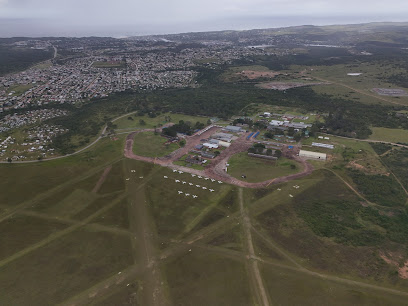
Operationally, the school highlights a substantial scale of resources and personnel. The Port Alfred campus hosts a fleet said to number over 50 fixed‑wing aircraft, ranging from single and multi‑piston to turbine‑engine types, complemented by glass cockpit trainers on selected platforms. A large simulator suite supports training from entry to advanced levels, including an A320 full‑motion or fixed‑base style environment. With more than 75 instructors and a dedicated cadre of safety officers, the institution asserts a personalised approach to student development, ensuring close supervision and substantial hands‑on flying time.
The core offering is an Integrated Training Programme that enables learners to acquire three licences within one streamlined course. This structure aims to produce multi‑certified pilots who graduate prepared for roles in the general aviation sector, as well as airline environments. The school also promotes a strong operational and safety ethos, supported by on‑campus facilities and a dedicated team tasked with quality control and compliance. On‑campus amenities include a Pilot Shop, canteen and a pub fashioned from aircraft parts, as well as unrestricted campus Wi‑Fi to support study and coordination of training activities.
In addition to flight training, 43 Air School emphasises a structured ground‑school component as part of the curriculum. Learners live on campus, reinforcing immersion in the training environment and facilitating networking with peers and staff. The facility positions itself as a graduate‑producing institution, noting that graduates have progressed to positions with major airlines globally, and that the school maintains partnerships with the broader aviation industry through its training standards and course design.
The school’s courses span several recognisable aviation tracks. These include the Private Pilot Licence (PPL), integrated Commercial Pilot Licence (ICPL), Integrated Airline Pilot Training (IATPL) and IATPL with enhancements such as Airline Ready and APS MCC components. There is also a course focused on Aerodrome Flight Information Services (AFIS) for those pursuing AFIS controller roles, and a Technical Training stream for aircraft maintenance mechanics. The breadth of programmes is complemented by clear branding around being Jeppesen and Boeing approved, and the ability to deliver an iATPL with potential additions that align with airline entry requirements.
Enrolment and admissions are described with a practical process. Prospective students are encouraged to request a call back or complete an enrollment form. The intake process requires documents (identity, passport, medical cover, school leaving or tertiary qualifications) and confirmation of a deposit. For non‑South African residents, a 24‑month study visa is required, with the school providing a visa letter to assist the application. The enrolment guidance also notes the importance of medical trauma cover for flying training and visa applications. The school emphasises transparent, all‑inclusive pricing without hidden costs, and it outlines deposit payment procedures and timelines for confirmation of intake placements.
Visitor feedback broadly reflects a positive sentiment about the on‑site experience. Reviewers frequently praise the campus setting, the quality of training facilities, and the professionalism of staff. Comments sometimes highlight the friendly atmosphere and the value offered by the campus amenities and instructional team. Several reviewers specifically commend the well‑maintained aircraft fleet, the breadth of programmes, and the supportive environment for aspiring pilots and mechanics.
Main services offered
- Integrated training programmes covering multiple pilot licences within one course
- A broad fleet portfolio (over 50 aircraft) and a range of flight simulators including advanced level systems
- On‑campus ground school, full‑service student support, and safety supervision
- AFIS, Private Pilot Licence (PPL), Integrated CPL (ICPL), IATPL and IATPL+ Airline Ready tracks
- Aircraft maintenance technician training and related technical courses
- On‑site pilot shop, canteen, leisure facilities, and student accommodation
Typical job pathways described by the school and reflected in alumni outcomes include general aviation roles, airline pilot careers, and maintenance/technical roles in aviation sectors. The school presents a long‑term outcome focus, asserting that graduates move into positions with major airlines and aviation organisations worldwide.
Tips for prospective students
- Prepare a complete enrolment file, including proof of deposit, identification, medical cover, and educational certificates, to expedite intake processing.
- Allow sufficient time for visa applications if not a South African resident; obtain the visa letter early to support the application.
- Consider the all‑inclusive pricing model to understand the total cost of training and on‑campus living arrangements.
- Familiarise with the school’s integrated curriculum and plan to maximise practical flight hours and ground school study for efficient progress.
- Take advantage of the simulators and diverse fleet to gain exposure to different aircraft types and flight scenarios.
Location and coverage note: 43 Air School is based in Port Alfred, Eastern Cape, and serves learners within the region and beyond who seek a fast‑tracked, integrated path to airline readiness. The campus environment and facilities are designed to support a comprehensive aviation education, with emphasis on practical exposure, safety, and networking within the student community.
Port Alfred
Eastern Cape
South Africa
Sorry, no records were found. Please adjust your search criteria and try again.
Sorry, unable to load the Maps API.
Flight school services in Port Alfred, Eastern Cape, South Africa
Flight training in Port Alfred combines practical flying instruction with ground theory to guide aspiring pilots through various licensing routes and skill development. at the heart of the offering is exposure to coastal and inland airspace, with instructors emphasising safe decision-making, navigation, and flight planning. The environment supports learners who are seeking initial flight experience, professional pilot training, or time-building hours for advancement.
Typical services in this category include introductory flights, where prospective students experience a first flight under supervision and gain a sense of aerodynamics, controls, and aircraft handling. These sessions are commonly conducted in light aircraft suitable for training, often followed by a debrief that covers basic safety concepts and personal impressions of the flight. For those considering a longer journey, structured programmes provide a clear progression from introductory flight through to more advanced certificates and ratings.
Ground school and theory instruction form a core component. Students can expect a combination of classroom or online sessions covering aviation theory, navigation, meteorology, flight planning, weight and balance, and aviation regulations. Ground instruction supports practical flying by developing the knowledge required to make informed decisions in the cockpit, understand airspace structures, and apply standard operating procedures.
Practical flight training typically encompasses several stages. Initial solo flights under close supervision establish a student’s ability to handle an aircraft independently. Supervised dual flights build proficiency in takeoffs, landings, climbs, descents, turns, and emergency procedures. After achieving defined milestones, more complex phases such as cross-country navigation, instrument correlation, and night flying may be introduced, depending on the programme and local regulations. Training aircraft are maintained to safety standards, and instructors prioritise a measured pace that suits individual progression while ensuring comprehensive skill acquisition.
Licence options commonly pursued include private pilot licence and various endorsements that enable broader mission capability. The pathway may also support certificate-based qualifications or hours-building, essential for those aiming to progress to professional aviation routes. Each route emphasises a combination of flight time, theoretical understanding, and practical competence. Assessments, written examinations, and flight checks are standard milestones within the process, with guidance provided on how to prepare effectively.
What customers can expect in Port Alfred includes access to locally based instructors, mid-sized training fleets, and facilities that support both flying and related administrative tasks. Learners should anticipate a focus on safety culture, routine aircraft maintenance awareness, and orderly record-keeping for training hours and achievements. Given the region’s coastal climate, weather considerations and seasonal patterns inform scheduling, with contingency plans commonly in place for adverse conditions.
Practical considerations for prospective students include understanding local airspace rules, mandatory medical examinations, and the typical time commitments required to reach each licensing milestone. Availability of aircraft types, the density of training activity, and the proximity to maintenance facilities can influence scheduling and continuity of lessons. It is advisable to discuss expectations regarding training pace, theoretical load, and the degree of hands-on time versus classroom study to ensure alignment with personal goals and financal planning.
For those weighing the decision, Port Alfred offers a focused environment that combines coastal geography, accessible training infrastructure, and a commitment to foundational safety and competence. The result is a structured pathway for acquiring pilot skills, whether pursued as a hobby, a stepping stone toward professional aviation, or a fulfilment of personal interest in flight.