Aerocare Flying Ambulance is a Ambulance service establishment in Bloemfontein, Free State, South Africa
Aerocare Flying Ambulance — Ambulance Service in Bloemfontein, Free State
Aerocare Flying Ambulance operates as a private emergency aeromedical service with its headquarters in Bloemfontein and a secondary base in Kimberley. Serving nationally and extending into several sub‑Saharan countries, the organisation specialises in air medical transport and related ground support, delivering rapid, professional care for critically ill patients and inter‑facility transfers. The operation centres on a fleet of fixed‑wing aircraft configured as airborne intensive care units, designed to bring advanced medical capabilities directly to the patient in the most time‑efficient manner possible.
The service emphasises readiness and availability, advertising a 24/7/365 standby model. This commitment underpins’’ activation efficiency, with missions typically staffed by a doctor and/or an Advanced Life Support (ALS) paramedic as standard practice. The accompanying crew and equipment are arranged to ensure rapid mobilisation from the moment a request is received, aiming to reach destinations across South Africa and into neighbouring countries with minimal delay.
Main services offered
- Air Ambulance — A dedicated aeromedical transport service using fixed‑wing aircraft with in‑flight medical personnel. The fleet is described as able to carry patients and relatives alongside specialists, with capacity planned for comprehensive clinical care during transit.
- Sub‑Saharan Ambulance — An extended regional service operating from central South Africa to multiple sub‑Saharan countries, including Mozambique, Uganda, Zimbabwe, Zambia, Kenya, and beyond. The service is framed as suitable for long‑distance transfers and remote missions requiring hospital‑to‑airport movement or inter‑facility care.
- Aeromedical professionals — A team of flight doctors and flight nurses with experience in Medevac operations, A&E and ICU settings. Staff are described as highly qualified and trained for aviation medicine, supported by mission coordinators and customer support to manage complex transfers.
Typical job types and deployments
The organisation positions its core work as inter‑facility transfers, emergency medical evacuations, and medical charters for time‑sensitive needs. Typical missions involve transporting patients between hospitals or care facilities, sometimes accompanied by relatives, with medical personnel providing continuous in‑flight care. The Sub‑Saharan service broadens the scope to regional evacuations and long‑range missions, including operations in remote or high‑risk locations where swift access to critical care is essential.
How requests usually work
Initial contact is supported by online forms for quotations and booking, encouraging clients to provide detailed information to enable an appropriate response. The company highlights fast replies and convenient channels such as online booking, quotes, and WhatsApp communications. The process emphasises rapid assessment, flight planning, and the deployment of the appropriate medical and aviation resources to match the patient’s clinical needs and destination requirements.
Aircraft and capability
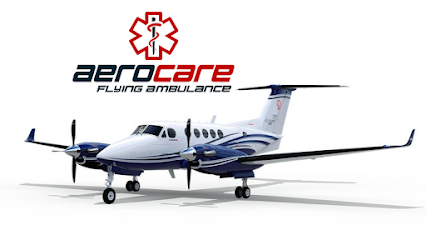
Aerocare operates a fleet centred on the King Air 200, a fixed‑wing platform configured for aeromedical care. The aircraft accommodate two pilots, two medical crew, one patient, and up to two escorts. The aircraft’s performance specifications include a substantial range and cargo capacity suitable for carrying ICU‑level equipment and personnel, with design features intended to ensure cabin pressurisation and patient safety across varying flight profiles.
Quality and patient experience
Independent observations point to a focus on safety, comfort, confidentiality, and professional conduct. Pilots are described as experienced, with training aligned to aviation medicine standards and night‑landing capabilities where applicable. Customers frequently highlight rapid responses, courteous flight crews, and a caring approach to patient accompaniment, underscoring Aerocare’s commitment to dignity and clinical excellence during critical transfers.
Locations served and accessibility
Locally, Aerocare is based at Bloemfontein International Airport, with a secondary base in Kimberley. The reach extends across South Africa and into selected Sub‑Saharan countries, including Uganda and Mozambique, reflecting a regional footprint designed to support urgent medical transport across national borders when required.
Practical tips for customers
- Provide as much clinical detail as possible when requesting a quote to enable accurate planning and faster mobilisation.
- Be prepared to share patient history, current condition, and any special equipment needs (for example incubators or ventilation requirements) to ensure in‑flight readiness.
- Confirm the timing and destination logistics, including ground transfer arrangements at both origin and destination to minimise ground time.
- Check the chargeability and coverage details for inter‑facility transfers and longer regional missions, as pricing plans may vary with distance and aircraft requirements.
- Note that the organisation operates 24/7, so urgent requests can be submitted at any time for immediate assessment.
Practical information
Base locations: Bloemfontein (Gate 11, Bloemfontein Airport) and Kimberley. Contact channels include telephone and WhatsApp, with email options available for inquiries. The service covers national operations within South Africa and selected Sub‑Saharan routes, offering rapid response capability for critical medical transport outside and within the region.
Bloemfontein
Free State
South Africa
Sorry, no records were found. Please adjust your search criteria and try again.
Sorry, unable to load the Maps API.
Ambulance services in Bloemfontein, Free State
In Bloemfontein, the capital city of the Free State, ambulance services operate as an essential component of the public health and emergency response framework. The landscape typically comprises both public, municipal or provincial resources and private providers, all aimed at delivering rapid medical assistance and patient transport when illness or injury occurs. The emphasis is on quick assessment, clinical care en route to a hospital, and safe patient conveyance to appropriate facilities.
Typical offerings in this category include emergency response for life-threatening conditions, where paramedics deliver on-sceneFirst Aid and point-of-care treatment. Ambulances are equipped to manage a range of priorities, from cardiovascular emergencies and trauma to obstetric and paediatric care. In many instances, response teams may provide stabilisation, monitoring, oxygen therapy, bleeding control, and basic wound care, with the capacity to escalate to advanced life support procedures if required. The objective is to bridge the gap between the incident moment and hospital care, ensuring continuity of clinical management during transport.
Beyond primary emergencies, ambulance services in Bloemfontein commonly handle inter-facility transfers. This involves moving patients between hospitals or specialised medical centres when ongoing treatment, imaging, or rehabilitation is planned. Transfers prioritise patient safety and staff expertise, with attention to equipment needs such as infusion therapy, immobilisation devices, and appropriate monitoring during transit. Availability for non-urgent transfers can vary by provider, but patient safety remains the central concern.
Operational aspects and expectations for service users include the following considerations. Ambulance crews typically operate around the clock, capable of responding to emergencies at any time of day or night. Dispatch and response times are influenced by factors such as traffic, location, and the severity of medical need. When feasible, dispatch systems prioritise the most critical cases to ensure rapid access to advanced clinical care. Followers of the local health system should anticipate that ambulance teams collaborate with hospital emergency departments and, where necessary, may coordinate handovers to medical staff upon arrival.
Ambulance services also focus on patient safety and comfort during transport. Careful attention is given to securing the patient, maintaining airway patency if needed, and monitoring vital signs throughout the journey. Where longer journeys or special conditions exist, teams may utilise equipment such as stretchers with appropriate restraints, clinical monitoring devices, and portable oxygen delivery. The patient experience is generally aimed at minimising distress while ensuring that clinical needs are addressed en route to definitive care.
Practical considerations for residents and visitors include understanding how to access urgent medical help quickly. In South Africa, the local emergency number is the most common route to activate ambulance services, with callers providing location details and a brief description of the medical situation. It is prudent to have essential information ready, such as address, nearby landmarks, and any known medical conditions. Upon arrival at the hospital, the receiving facility assumes responsibility for ongoing treatment and discharge planning, with ambulance staff offering transfer notes and relevant patient information where appropriate.
- Emergency response capabilities, including basic and advanced life support
- Inter-facility patient transfers requiring monitored transport
- Timely dispatch and coordination with hospital emergency departments
- On-scene assessment, stabilisation, and patient safety during transit
- Availability across Bloemfontein and surrounding areas, with 24/7 readiness