Air Conditioning and Refrigeration Academy KwaZulu Natal is a Training centre establishment in Durban, KwaZulu-Natal, South Africa
The Air Conditioning and Refrigeration Academy KwaZulu Natal (ACRA) operates as a fully accredited training and trade test centre based in Durban, KwaZulu-Natal. Its role is to deliver comprehensive education across the air conditioning and refrigeration sectors, with an emphasis on adult training, as well as the development of apprentices, artisans and technicians. The Durban facility supports a wide range of programmes designed to equip learners with practical competencies for the industry.
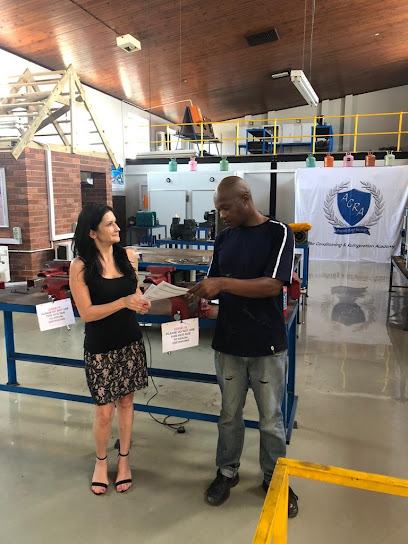
Central to ACRA’s offering is a large, dedicated training environment: a 2,800 square metre workshop that accommodates a broad spectrum of courses. Learners can participate in training across air conditioning, refrigeration, ventilation and related technologies, alongside formal apprenticeships and trade testing. The academy positions itself as a practical, hands-on centre where theory is integrated with real-world application, ensuring learners gain exposure to live or closely modelled systems.
One notable strength highlighted by the academy is its established network of industry clients. This network provides access to fully operational air conditioning and refrigeration plants, including large-capacity installations. Such access enables meaningful, practical training and robust assessments, positioning the centre as a pioneer in practical exposure. When a workplace site does not possess all required equipment for training or assessments, ACRA helps address the shortfall to ensure learners receive complete exposure and meet qualification standards.
ACRA’s course catalogue spans several tiers and specialisations. Core offerings in Air Conditioning & Refrigeration cover Technology One (Basic), Technology Two (Intermediate), Technology Three (Intermediate/Advanced) and Technology Four (Diploma). The centre also delivers niche programmes such as Vehicular Air Conditioning for automotive, earthmoving and mining equipment, as well as practical courses on installation, fault finding, maintenance and repair of split, console and window units. In addition, there are safety-oriented courses under SAQCC/SARACCA for authorised practitioner training and renewals, including gas handling and ammonia safety modules.
Beyond technical courses, the academy provides an assortment of electrical and piping training relevant to the field. Electrical modules address basic electricity principles, single-phase and three-phase electrical concepts, while piping and welding/brazing/cutting courses support the installation and maintenance of air conditioning and refrigeration systems. This breadth reflects a holistic approach to the trade, enabling learners to develop an integrated skill set.
Apprenticeships and trade qualifications form a cornerstone of the Durban offering. Enrolments align with sets of industry standards, including merSETA progression for refrigeration mechanics and related competence assessments. The centre offers Trade Test Assessment and Revision programmes, designed to prepare candidates for formal testing. The Durban branch also hosts trade test assessments as part of its decentralised testing capability, subject to the appropriate SETA approvals and scheduling. This structure supports a structured pathway from learning through to recognised certification.
Visitors to the academy can expect a process-oriented experience: initial enrolment in a suitable course or apprenticeship, followed by access to practical workshops and subsequent assessment. The centre emphasises the ability to arrange practical exposure and to schedule training or assessment dates in line with SETA or SARACCA timelines. For prospective learners, timelines and availability are typically communicated in relation to the specific course or trade test, with dates arranged in accordance with regulatory requirements.
Practical tips for prospective students and employers include: verify the specific courses and levels offered at the Durban branch, confirm whether equipment is available on-site or requires workplace access, and check whether additional safety qualifications (such as SARACCA/SaqQcc) are required for particular roles. It is advisable to review the course brochure for 2026 to understand the schedule of modules, outcomes and assessment formats. For those pursuing trade testing, ensure that applications are submitted through the appropriate SETA channels and be aware of portfolio submission deadlines after course completion.
Operational details such as business hours and peak visiting times are not explicitly stated on the Durban page. Visitors should plan to align with the course or assessment timetable and to allow sufficient time for any registration or documentation required for enrolment or trade testing. The Durban campus serves a regional audience within KwaZulu-Natal and benefits from a national framework, with related branches and services described across the ACRA network.
- Main services: air conditioning and refrigeration training, ventilation training, apprenticeships, trade testing, safety and compliance courses (SAQCC/SARACCA), electrical and piping modules.
- Typical job types addressed: installation technicians, service engineers, apprentices, trade test candidates, ammonia and gas safety practitioners.
- How requests usually work: prospective learners or employers identify an appropriate programme, confirm enrolment and dates, and engage with SETA-aligned processes for trade tests and assessments; if equipment is unavailable at a workplace, the academy assists by fully addressing training exposure requirements.
- Practical tips: check the 2026 course brochure for structure and dates; verify equipment availability; confirm SAQCC/SARACCA and other safety prerequisites; plan ahead for trade test assessments through the relevant SETA.
In summary, the Air Conditioning and Refrigeration Academy KwaZulu Natal in Durban offers a comprehensive suite of practical and theory-based training designed to prepare professionals for the HVAC/R industry. By combining a substantial workshop, industry access to operational systems, and pathways that lead to recognised qualifications, the centre supports learners from entry-level through to trade certification.
Durban
KwaZulu-Natal
South Africa
Sorry, no records were found. Please adjust your search criteria and try again.
Sorry, unable to load the Maps API.
Training Centre Services in Durban, KwaZulu-Natal
Durban, a coastal city in KwaZulu-Natal, hosts a range of training centres that address the needs of a diverse workforce. These facilities specialise in practical skills development, professional programmes, and customised corporate training, serving individuals seeking career progression as well as organisations pursuing workforce upskilling. The environment typically combines structured classroom learning with hands-on exercises, simulations, and real-world applicability that reflects local industries and markets.
A core focus across Durban’s training centres is vocational and technical instruction. Prospective learners can expect programmes that cover trades, hospitality, healthcare support, information technology, and business administration. Courses are often designed to equip participants with attainable qualifications or recognised certificates aligned with sector requirements. In many cases, training centres collaborate with local industry bodies to ensure relevance to current trends, such as customer service excellence in the hospitality sector or practical ICT skills for small-to-mid sized enterprises.
In addition to formal courses, Durban facilities frequently provide short courses and modular offerings. These can address time-sensitive needs, such as introductory sessions on essential software, workplace safety, or first aid, allowing professionals to refresh competencies or gain focused know-how without committing to lengthy programmes. Short courses are typically structured to accommodate working adults, with flexible scheduling and blended delivery models that combine on-site sessions with online components where appropriate.
Practical considerations form a central part of the experience at Durban training centres. Learners can expect well-equipped classrooms, training workshops, and, when relevant, simulated environments that mirror real-life tasks. The availability of essential resources, including access to equipment, tools, and software relevant to the discipline, is a common feature. Many centres emphasise a learner-centred approach, offering guidance from instructors who blend theory with practical exercises, case studies, and supervised practice to build competence and confidence.
Assessment and progression are standard elements of the training process. Evaluation methods may include practical demonstrations, written assessments, assignments, and project work. Some centres provide guidance on career progression, advising on how to translate new skills into workplace performance or further study opportunities. While exact certification and accreditation details vary by programme and institution, many courses are designed to support local job markets and may align with national or provincial qualification frameworks.
Administrative considerations are also a part of the Durban training centre experience. Applicants should expect clearly defined intake periods, eligibility criteria, and reasonable prerequisites for specific programmes. Availability of financial assistance or funding options varies by centre and programme, with some offering bursaries or flexible payment arrangements. Support services such as learning advisory, tutoring, and career guidance are commonly offered to help learners navigate the path from enrolment to completion and employment.
For organisations seeking training solutions, Durban's training centres often tailor programmes to specific business needs. Customised training may address workforce development plans, skills audits, and competency mapping. In such cases, planners work with the centre to design modules that align with organisational objectives, ensure measurable outcomes, and minimise disruption to day-to-day operations. The focus remains on practical capability building, transfer of skills to the workplace, and delivering tangible improvements in performance and productivity.
Overall, training centre services in Durban, KwaZulu-Natal, are characterised by practical applicability, accessible delivery, and a connection to local industry needs. Learners and employers alike can anticipate a balanced offering that blends foundational knowledge with hands-on practice, supported by advisory and progression options suited to the regional job market.