AM Risk And Training (Pty)Ltd. is a Aviation training institute establishment in Kempton Park, Gauteng, South Africa
AM Risk And Training (Pty) Ltd — Aviation Training Institute, Kempton Park
AM Risk And Training (Pty) Ltd is positioned as a South African-based aviation training specialist located in Kempton Park, Gauteng. The organisation presents itself as a consulting-focused training provider that combines local expertise with international trainers to deliver risk and hazard management training custom-fit to the aviation sector. The emphasis placed on bespoke training suggests programmes are designed to address the specific challenges and operational contexts of each client, while drawing on global best practices and proven methodologies.
Core offerings revolve around practical, skills-oriented courses intended to enhance safety and operational reliability within aviation operations. The training portfolio includes aviation fire training, hazardous materials (HAZMAT) training, first aid training, rescue training, general fire training, and broad safety training. This range positions AM Risk And Training as a provider that covers both incident response capabilities and preventive safety education, aligning with industry requirements for aircraft ground handling, emergency response readiness, and workplace safety compliance.
A notable aspect of the company’s approach is its consultancy side. It promotes Highly Skilled and Experienced Safety Consultants who deliver workplace health and safety services, indicating a dual focus on hands-on training delivery and strategic safety advisory. The combination of training courses and consultancy suggests an integrated offer for organisations seeking both operational learning and risk management guidance.
In terms of the student and client experience, the organisation highlights its use of both local and international trainers. This blend signals a commitment to diverse expertise, potentially allowing for a mix of regional relevance and international standardisation in training delivery. The presence of a dedicated Training Courses section on the website implies a structured path for learners to access aviation-focused education, with “Aviation Fire Training,” “HAZMAT Training,” “First Aid Training,” “Rescue Training,” “General Fire Training,” and “Safety Training” listed as key modules.
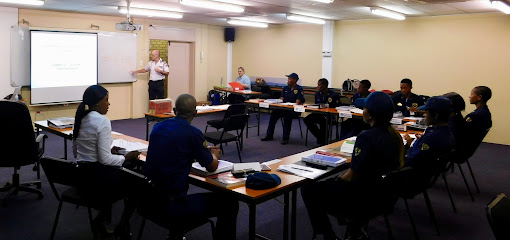
Visitor feedback captured on public pages presents a broadly positive picture of the practical training experience. Some reviewers describe attending sessions as a “great day” with indications of willingness to undertake further training, pointing to a satisfactory training environment and perceived value. These snapshots suggest that hands-on instruction, realistic scenarios, or clear instructional delivery contribute to favourable learner impressions, though individual experiences may vary by course and trainer.
For potential clients, the typical workflow for engaging AM Risk And Training appears to hinge on the organisation’s online resources. The site features sections dedicated to training courses and consultancy services, implying that inquiries and programme design begin through online exploration of available offerings. Given the emphasis on bespoke solutions, it is likely that initial discussions focus on client objectives, regulatory requirements, and desired outcomes before a tailored programme is proposed and delivered, whether on site at a client’s premises or in suitable training facilities.
Practical tips for customers include planning ahead to align training with regulatory timelines and operational calendars, given the aviation sector’s stringent safety and compliance demands. It is prudent to verify the scope of each course (for example, specific rescue techniques or fire response procedures) and to confirm whether training is accredited or aligned with recognised safety standards. As the organisation leverages both local and international instructors, clients may benefit from asking about trainer backgrounds and real-world aviation experience to ensure the training matches their operational context.
The company is based in Kempton Park, Gauteng, which places it within the Gauteng aviation corridor and near Johannesburg’s business and transport networks. While the site does not explicitly state the full geographic reach, the blend of local and international trainers suggests services are accessible to organisations across South Africa, with potential outreach to international partners where appropriate. For those planning visits, practical considerations include checking the site’s latest information for any updates on business hours or preferred contact methods, and coordinating with the programme administrators to confirm venue and scheduling details.
Overall, AM Risk And Training (Pty) Ltd presents a comprehensive aviation safety and risk management offering, combining hands-on training in specialised areas with strategic consultancy. The customer experience appears to be emphasised through practical instruction and a responsive approach to bespoke needs, underpinned by a network of trainers drawn from both local and global aviation spheres.
Kempton Park
Gauteng
South Africa
Sorry, no records were found. Please adjust your search criteria and try again.
Sorry, unable to load the Maps API.
Aviation Training Institutes in Kempton Park, Gauteng
Within Kempton Park, Gauteng, aviation training institutes provide a spectrum of programmes designed to prepare aspiring pilots and aviation professionals for practical operation and safety-focused careers. Located in close proximity to major aviation facilities and the transport hub at OR Tambo International Airport, these institutes commonly blend theoretical instruction with hands‑on flight experiences to reflect real‑world aviation environments.
Typical offerings cover several core areas. The initial pathway often comprises aviation theory courses that build foundational knowledge in air law, meteorology, navigation, aircraft systems, and operational procedures. These modules establish the intellectual framework required for more advanced training and are usually complemented by study support, exams, and progress assessments to track competence over time.
Practical flight training forms a central element of the programme mix. Learners may undertake introductory and private pilot training, progressing to more advanced certificates as permitted by the regulatory framework in the country. The training commonly includes flight planning, pre‑flight checks, in‑flight procedures, emergency handling, and post‑flight analysis. In addition, many institutes operate simulators to replicate cockpit environments, enabling essential skills development in a controlled setting before or alongside actual flight time.
Specialist courses frequently present opportunities beyond pilot training. These can include cabin crew preparation, aviation safety and security awareness, air traffic services concepts, and introductory aeronautical maintenance awareness. Some institutes also offer customised programmes for corporate clients, aviation operations personnel, or ground handling staff, focusing on industry best practices, safety culture, and regulatory compliance.
Practical considerations for prospective students include assessing the quality and scope of facilities, the proximity to airfields, and the availability of suitably qualified instructors. The geographic location in Kempton Park provides reasonable access for local residents and those travelling from neighbouring Gauteng towns, with potential benefits relating to scheduling flexibility and cost management. Students should look for clear information on course duration, progression routes, and assessment methods, while being mindful that training requirements and licensing pathways are defined by national aviation authorities and industry regulators.
Prospective learners commonly inquire about prerequisites such as age, medical fitness, and prior educational background. Training institutions typically outline entry criteria and recommended preparation, along with guidance on financial planning, funding options, and possible scholarship opportunities. It is prudent to enquire about the total duration of programmes, the balance between theory and practice, and the availability of staggered intake periods to fit individual circumstances.
When engaging with an aviation training institute in Kempton Park, visitors can expect a focus on safety, disciplined operational procedures, and a clear progression framework. Prospective students should consider visiting the campus or arranging a tour to observe facilities, meet instructors, and understand how the timetable aligns with personal commitments. Emphasis on hands‑on experiences, regular assessments, and constructive feedback can help learners gauge readiness for subsequent training stages and professional aviation roles.
- Ground theory and practical flight instruction
- Simulator-based training and scenario practice
- Specialist aviation safety, security, and operations courses
- Career pathways into piloting, cabin crew, and aviation support roles
- Guidance on regulatory requirements, licensing progression, and professional development