Apex Flight Academy is a Flight school establishment in Klerksdorp, North West, South Africa
Apex Flight Academy – Flight School in Klerksdorp, North West
Apex Flight Academy operates as part of Bucephalus Air, an aviation training organisation with bases in Klerksdorp, Potchefstroom, and Parys. The Klerksdorp location is one of three academies under the Bucephalus Air umbrella, delivering a clear focus on practical pilot training across a range of licensing and rating courses. The organisation emphasises safety, professional standards, personalised student support, and a commitment to developing pilots who meet high industry expectations. The Apex Flight Academy profile highlights a pathway from beginner flight training to more advanced certificates, aligned with industry objectives and regional needs in aviation training within the North West province and broader South African aviation education network.
Core training offerings at Apex Flight Academy (as part of Bucephalus Air) cover foundational licences and additional aviation ratings. The Private Pilot Licence (PPL) is presented as a popular entry point for those who want to fly light aircraft for recreation or who intend to progress toward professional credentials. For aspiring professional pilots, the Commercial Pilot Licence (CPL) is described as enabling the transport of passengers and cargo, preparing graduates for broader aviation roles in professional environments. Alongside these, the National Pilot Licence (NPL) supports recreational and light-sport flying under Part 62 of the Civil Aviation Regulations, suitable for microlights and light sport aircraft. Together, these courses reflect a tiered structure designed to support different levels of ambition and time commitments.
The academy also provides a selection of aviation rating courses that extend practical capability beyond initial licences. Instrument Rating training introduces pilots to flying in instrument meteorological conditions, building navigation and landing proficiency under instrument flight rules. Night Rating training expands operations into after-dark flying, a practical step that increases pilot versatility and is a requirement for CPL qualification. Additional ratings focus on expanding command and capability, including Initial Turbine Rating (for first exposure to turbine-powered aircraft), Multi-Engine Rating (to operate aircraft with more than one engine), and the Instructors Rating (to qualify graduates to teach PPL and CPL). These courses collectively underscore the academy’s emphasis on widening flight operations skills and career potential for graduates.
In terms of the student journey, the site presents a structured approach to progression, with course details outlining duration and the path from initial training to advanced qualifications. The training philosophy emphasises safety, high standards of instruction, and personalised support to help students achieve performance objectives. The team section identifies key personnel who contribute to the programme, including roles focused on flight instruction, safety management, and administration, reflecting a collaborative environment designed to support learners from entry to graduate levels.
Requests and engagement at Apex Flight Academy typically unfold through the Bucephalus Air network. Prospective students can access information about courses, fleet, and locations via the main Bucephalus Air site, with direct links to individual course details and campus pages. While the exact process for initiating training (enrolment steps, assessment prerequisites, or start dates) is not exhaustively detailed on the public pages, the site indicates that information is available through the academy’s contact channels associated with each location, including Apex Flight Academy in Klerksdorp, Potchefstroom, and Parys. The three academies collectively present a coordinated offering, suggesting a streamlined pathway for applicants who may be considering cross-location study within the Bucephalus system.
Practical tips for prospective students include confirming the specific prerequisites for the chosen licence or rating (for example, English language proficiency and radio proficiency, which are noted across the broader course catalogue). Visitors may also benefit from reviewing both the course duration and the expected flight hours for each programme, to gauge time commitments and planning needs. It is advisable to check the fleet details and training aircraft available at the Klerksdorp base, as aircraft type and availability influence scheduling and hands-on experience. Given the emphasis on safety and professional training, prospective learners should also prepare for a learning environment that prioritises safety protocols, regulatory compliance, and ongoing assessment of skills and performance.
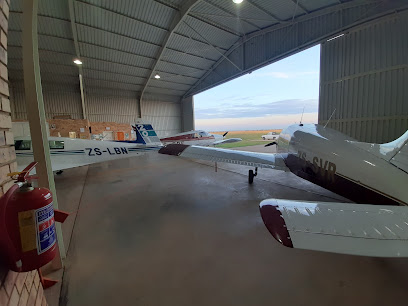
Operational notes for customers visiting or contacting Apex Flight Academy include the location details on Bucephalus Air’s contact pages, which place the Klerksdorp site at Hangar 39, Airport Road, Klerksdorp Airport, North West, along with a regional mapping reference. While business hours are not explicitly listed in the accessible content, potential students are advised to refer to the contact page for the most current information and to use the provided phone number or email address to inquire about enrolment, course availability, and intake dates. The Klerksdorp base serves the North West region and connects with Bucephalus Air’s broader network of aviation training facilities, facilitating opportunities for geography-friendly access to flight training within the province.
Klerksdorp
North West
South Africa
Sorry, no records were found. Please adjust your search criteria and try again.
Sorry, unable to load the Maps API.
Flight School Services in Klerksdorp, North West
Flight schools in Klerksdorp offer professional aviation training designed to prepare aspiring pilots for a range of licensed qualifications. The programmes generally combine ground instruction with practical flight training, delivered from local aerodromes in the North West province. Students can expect a structured pathway that covers civil aviation regulations, meteorology, navigation, aircraft performance, and flight safety, delivered by instructors with experience in general aviation and, where available, regional air traffic procedures.
Typical services include introductory flights that allow prospective students to experience flight first-hand, followed by progression courses that build towards private pilot licences and beyond. Training centres commonly provide access to theory classes, study materials, and examination preparation tailored to the relevant licensing category. Ground school sessions often address aviation law, navigation planning, flight planning, weight and balance, and human factors, helping candidates develop a solid theoretical foundation before or alongside practical flight work.
Practical flight training is the core service. Students fly with qualified instructors to practise take-offs, landings, circuit patterns, and standard manoeuvres. Training aircraft are usually selected for reliability, cost-efficiency, and suitability for beginning pilots, with availability of additional aircraft types for advanced phases where appropriate. The schedule is typically flexible to accommodate working students and school holidays, while prioritising safety and regulatory compliance. Instructors monitor progress through regular evaluations, keeping detailed logs of flight time, competencies demonstrated, and areas requiring further development.
Ground handling and ancillary services are commonly offered to support students throughout the training journey. These may include assistance with medical examinations required for pilot licensing, regulatory readiness checks, and guidance on the practicalities of flying in the region. Some flight schools also provide access to simulators, which can supplement live flight hours, and maintenance support to ensure aircraft are in airworthy condition for training missions. Administrative services such as flight planning documentation, documentation of flight hours, and certificate readiness are typically coordinated by the school staff to help candidates stay organised and compliant with licensing authorities.
Practical considerations for those pursuing flight training in Klerksdorp include the local climate and weather patterns, which influence flight scheduling and training fatigue management. Prospective students should consider the availability of regional airspace and nearby airfields for diversified practice, as well as the cost of training, fuel prices, and potential membership or access to club facilities that may assist in reducing overall expenditure. It is also common for flight schools to emphasise a safety-first culture, with clear procedures for weather restrictions, medical conditions, and incident reporting.
Typical milestones within a flight training journey include:
- Initial briefing and medical assessment
- Ground school and theory examination preparation
- Early flight lessons focusing on basic airmanship and take-off/landing drills
- Progression through more complex manoeuvres, navigation exercises, and cross-country flights
- Formal licensing assessments and practical exams
Overall, flight schools in Klerksdorp aim to provide a supportive environment where students can learn at a steady pace, receive personalised coaching, and progress towards recognised aviation qualifications. Prospective trainees are encouraged to inquire about instructor qualifications, aircraft availability, and the school’s approach to safety and regulatory compliance, ensuring a transparent and well-supported training experience.