Cape Aerospace Technologies is a Engineer establishment in Bellville, Western Cape, South Africa
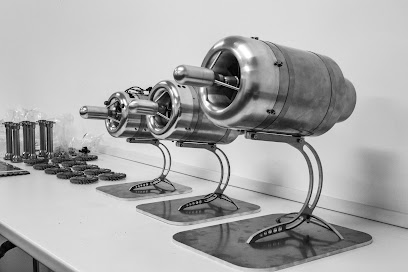
Cape Aerospace Technologies (CAT) operates as a specialist propulsion systems designer and maker in Bellville, Western Cape. Serving the micro- and small gas turbine sector, CAT focuses on high-performance propulsion solutions for a range of aviation projects, including model aircraft, high-speed target drones, unmanned systems, experimental aircraft and full‑size gliders. The company emphasises precision, reliability and the integration of advanced technology across design, manufacture and testing disciplines.
Main services offered
- Propulsion system design and manufacture: CAT develops compact gas turbines with excellent thrust-to-weight characteristics and low specific fuel consumption. The in‑house process covers the full lifecycle from concept to finished, tested engines.
- Engine control and integration: Each turbine is equipped with an Engine Control Unit (ECU), Ground Support Unit (GSU) and the necessary ancillaries, enabling integrated operation of the propulsion package.
- Turbine software and simulation: The company employs advanced turbomachinery CFD tools and other software to optimise aerodynamic and thermodynamic performance across engine cycles.
- In-house testing and verification: A dedicated laboratory in the CAT factory facilitates real‑world testing of turbines and subsystems, ensuring market readiness through rigorous data collection and validation.
- Electronic controls and subsystems: In addition to core turbines, CAT designs and manufactures associated electronic control systems and ancillary equipment required for flight operation.
- Fuel and ignition technology: CAT pioneered a direct kerosene start system for micro gas turbines and later implemented a fuel atomising plasma ignition system, enabling rapid starts and reliable relight at altitude.
Typical job types and industries
- Model aircraft and unmanned systems: Turbines designed for small-scale aircraft and experimental platforms.
- High‑speed drones and aerospace research: Systems and subsystems crafted to meet demanding performance and reliability criteria.
- Educational and research collaborations: CAT supports students and researchers, notably with the University of Stellenbosch, in turbomachinery studies and testing.
- Prototype and customised propulsion packages: Engine integration tailored to client specifications, with emphasis on precision manufacturing and performance optimization.
How requests usually work
CAT operates through a design‑to‑manufacture pipeline that begins with understanding client specifications and project goals, followed by in‑house design, engineering analysis, and controlled manufacturing. The process culminates in comprehensive testing within the CAT facility, producing a market‑ready propulsion system accompanied by integrated controls and ancillaries. Ongoing knowledge transfer with academic and research partners supports continuous improvement and innovation in micro gas turbine technology.
Practical tips for customers
- Clarify application scope early: Provide details on fuel type, power requirements, start‑up time targets and altitude operating conditions to align the design with performance expectations.
- Discuss integration needs: Ensure ECU, GSU and ancillary systems are specified to match the aircraft’s electrical, telemetry and flight‑control requirements.
- Prepare for testing: Plan on incorporating CAT’s experimental test laboratory into the development timeline for empirical validation and performance verification.
- Engage in knowledge sharing: If collaborations with academic institutions are desired, coordinate with CAT’s ongoing university partnerships to access research resources and expertise.
- Review maintenance and support needs: Consider lifecycle considerations, spare parts, and calibration requirements when finalising the propulsion package.
Location and community footprint
CAT is situated on industrial premises in Stikland, Bellville, within the Western Cape. The business serves clients domestically and internationally, reflecting a reputation for innovation and technical excellence in propulsion systems for micro to small gas turbines.
Highlights and context from the business community
Visitors and industry observers note CAT’s notable achievements in gas turbine development, including pioneering ignition systems and rapid start capabilities. The organisation’s collaborative approach with local universities and support for aviation outreach initiatives, such as Sakhikamva, illustrate a broader commitment to developing South Africa’s aerospace ecosystem. Reviews emphasise CAT’s technical quality, precision engineering, and the value of their specialised contracting capabilities within the micro‑turbine sector.
Contact and availability
For further information about capabilities, CAT can be reached through the published contact details at the Bellville address and general contact channels listed on the company’s website.
Bellville
Western Cape
South Africa
Sorry, no records were found. Please adjust your search criteria and try again.
Sorry, unable to load the Maps API.
Engineering Services in Bellville, Western Cape
Bellville, situated in the Western Cape, forms part of the Cape Town metropolitan area and hosts a diverse range of engineering practices. Local firms offer a spectrum of services across civil, mechanical, electrical and multidisciplinary disciplines, catering to commercial, industrial, and residential clients. The following overview describes typical capabilities, what clients can expect, and practical considerations when engaging engineering services in this region.
Typical services span several core areas. Civil and structural engineers commonly undertake site assessments, feasibility studies, risk analysis, drainage and pavements design, and site development planning. Electrical engineers often cover electrical servicing design, load calculations, power distribution, lighting schemes, and coordination with municipal authorities. Mechanical engineers may be involved in HVAC (heating, ventilation and air conditioning), piping systems, energy efficiency, and equipment specification. Multidisciplinary engineers frequently deliver integrated design solutions, combining elements of civil, electrical and mechanical disciplines to support building projects, factories or industrial upgrades. In many instances, consulting engineers provide project management, technical oversight, and procurement advice to help clients navigate budgets, timelines and compliance requirements.
Clients in Bellville can expect a professional approach grounded in local conditions. Engineers consider the regional climate, water management, soil characteristics, and the urban infrastructure network. They also factor in South African standards and local regulations when designing and reviewing systems. Practical considerations include site access, utility connections, and coordination with municipal and utility providers. Many projects require compliance with building regulations, electrical codes, and safety guidelines, with engineers providing documentation to support regulatory submissions and permit applications where applicable.
Engagements typically follow a practical workflow, even without relying on specific platform features. An initial consultation or briefing involves understanding the client’s objectives, budget, and timeline. A site visit may be conducted to gather measurements, assess existing conditions, and identify constraints. Based on this information, engineers prepare a scoping document and approximate budget range, followed by a detailed design proposal or feasibility report. Once approved, the design enters the development phase, encompassing technical drawings, calculations, system specifications, and procurement recommendations. Throughout execution, engineers may provide project management support, contractor coordination, site supervision, and quality assurance to ensure work aligns with plans, codes and safety standards. Final stages typically involve system testing, commissioning, handover of documentation, and guidance on maintenance and performance monitoring.
Practical considerations for clients seeking engineering services in Bellville include evaluating the firm’s local experience and capacity to handle scale, as well as the ability to collaborate with other professionals such as architects, quantity surveyors, and contractors. It is prudent to discuss deliverables, milestones, and any required site access in advance, along with potential permitting timelines. Clients should also consider energy efficiency opportunities and long-term operating costs, which engineers are well placed to assess and quantify. In terms of maintenance, ongoing support arrangements, warranties on design work, and a clear point of contact for post-project issues are sensible considerations when finalising an engagement.
Overall, engineering services in Bellville typically combine technical expertise with practical project delivery. Clients can expect informed design, rigorous analysis, and collaborative problem-solving aimed at achieving safe, compliant and efficient outcomes for a range of building, infrastructure and industrial projects.