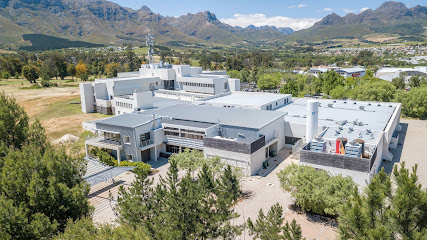
Dragonfly Aerospace is a Aerospace company establishment in Stellenbosch, Western Cape, South Africa
Dragonfly Aerospace, based in Stellenbosch in the Western Cape, South Africa, positions itself as a leader in high-performance imaging satellites and payloads. The company emphasises turnkey solutions that bring strategic assets to operation in orbit with minimal time, cost, and risk. From its core offerings to its satellite platforms, Dragonfly presents a cohesive ecosystem designed to support Earth observation, scientific missions, and commercial ventures in space.
Core services span a spectrum of satellite technology, from flexible satellite buses to specialised imaging payloads. The business markets two primary pillars: satellite platforms (buses) and satellite cameras, supported by a range of components and data products. The satellite buses are designed to enable rapid deployment of CubeSats and MicroSats into low Earth orbit (LEO) up to about 500 kilometres, with modular, scalable configurations to suit different mission profiles. This approach is presented as cost-effective, with shorter pre-launch preparation times, increased payload capacity, and an aim to extend in-orbit service life. The platform strategy includes lightweight, medium, and heavyweight categories, each engineered to optimise payload mass and performance while maintaining reliable operation in space.
Dragonfly’s imaging capabilities are notable across CubeSat and Microsatellite platforms. The CubeSat cameras include models such as Gecko, Mantis, Chameleon, Chameleon SWIR, Caiman, and Komodo, designed for integration into small satellites with various spectral capabilities and compact form factors. For larger missions, Dragonfly offers more capable imager systems like DragonEye and Raptor for high-resolution Earth observation. The imagery portfolio includes Panchromatic, Multispectral, and Hyperspectral options, delivered with varying ground sampling distances (GSD) to support diverse applications—from urban planning and agriculture to environmental monitoring and scientific research. A key claim across the product literature is the ability to achieve precise spatial resolution and broad spectral coverage at competitive weights and sizes suitable for small to mid-sized satellites.
Additionally, Synthetic Aperture Radar (SAR) payloads are highlighted as a core capability, enabling all-weather, day-and-night surface observation. This complements optical payloads by broadening the potential use cases to include consistent surface monitoring under challenging conditions, such as cloud cover or darkness. The combination of SAR and optical payloads supports a wide range of civil, commercial, and scientific missions, including agriculture, forestry, geology, and disaster response.
In terms of project experience, the company frames its approach as delivering “the minimum time, cost, and risk” to operational status. This suggests a focus on integrated, end-to-end solutions that cover design, manufacturing, testing, and deployment of satellite systems. The product pages emphasise standardised yet flexible platforms, with an emphasis on rapid procurement, scalable production, and repeatable performance across multiple missions. The emphasis on a modular architecture—enabling serial production and shared production costs—positions Dragonfly as a partner for customers seeking repeatable, reliable space assets.
Typical job types or use cases include Earth observation for environmental monitoring, agricultural management, road and urban planning, and natural resource tracking, all supported by high-resolution optical cameras and SAR payloads. The CubeSat and Microsatellite camera ranges are described as suitable for small-satellite constellations and high revisit rates, enabling persistent views of the Earth, which can support timely decision-making for clients in government, industry, and academia.
From a customer experience perspective, the literature highlights an emphasis on reliability, data quality, and performance. The imaging payloads are positioned as having robust storage, high-speed data handling, and flexible downlink options, with a focus on automated attitude and orbit control (AOCS) and efficient data management. The narrative also notes a commitment to sustainable Earth observation, with imaging solutions designed to help users monitor forests, water bodies, soils, and urban environments while advancing scientific and commercial goals.
Practical tips for customers engaging with Dragonfly Aerospace include:
- Clarify mission goals early to select the most appropriate satellite bus size (μDragonfly, Dragonfly, or ηDragonfly) and imaging payload combination.
- Consider orbit height and revisit requirements when choosing imager types and spectral capabilities to balance data volume and latency.
- Evaluate data storage and downlink needs, including on-board storage capacity and downlink bandwidth, to ensure timely access to imagery.
- Assess integration needs for CubeSats versus larger microsatellites, noting that CubeSat cameras are designed for compact platforms with scalable storage options.
- Engage with SAR capabilities to enable all-weather monitoring where optical imagery may be limited by clouds or lighting.
Dragonfly operates within a global context of space technology and imaging solutions. While specific hours or visiting details are not listed in the public material, the company’s offerings are framed as globally applicable, with a focus on enabling rapid, cost-efficient access to advanced Earth observation capabilities from its Stellenbosch base and beyond.
Stellenbosch
Western Cape
South Africa
Sorry, no records were found. Please adjust your search criteria and try again.
Sorry, unable to load the Maps API.
Aerospace Company Services in Stellenbosch, Western Cape
An independent observer examines the range of aerospace services commonly offered by firms in Stellenbosch, a town noted for its technical talent and proximity to Cape Town’s aviation ecosystem. These organisations typically operate across design, manufacturing support, maintenance planning and consultancy, serving clients that range from manufacturing suppliers to research institutions and private aerospace ventures. The setting benefits from access to skilled engineers, specialised workshops and regional logistical networks that support both domestic and southern African operations.
Core services usually provided include design, testing and integration support for aerospace components and assemblies. Engineering teams may work on structural design, avionics integration, propulsion interface considerations and subsystem optimisation. Projects often involve multidisciplinary collaboration, where mechanical, electrical and software engineers align to achieve system compatibility, certification readiness and performance targets. Companies in Stellenbosch frequently partner with universities or research centres to access advanced simulation tools, wind tunnel data, and prototyping facilities while maintaining a pragmatic emphasis on cost efficiency and timely delivery.
Manufacturing and assembly services are another hallmark of the local sector. Service providers may offer precision fabrication, sheet metal work, machining, composite fabrication and assembly support for small to mid-scale production runs. Quality assurance is a critical element, with inspection regimes that verify tolerances, material specifications and traceability. Prototyping and rapid iteration are emphasised in many firms, enabling customers to test concepts, validate design choices and refine interfaces before committing to full production or flight testing.
Maintenance, repair and overhaul (MRO) is a common offering, particularly for aviation authorities and commercial operators seeking dependable support within a regional supply chain. MRO activities typically cover component refurbishment, non-destructive testing, corrosion protection, lubrication regimes and simple repair work on airframe and systems components. Depending on the facility, some organisations may provide field service support or on-site assessments, while others focus on controlled workshop environments with calibrated equipment and documented procedures.
Engineering consultancy and regulatory advisory services form another important facet. Clients often require guidance on airworthiness requirements, compliance pathways, risk assessment, durability planning and lifecycle management. Consultancy can extend to project management, supplier qualification, documentation control and readiness for audits. The emphasis is on practical, evidence-based advice that helps customers navigate complex standards and integrate best practices into their programmes.
Operational considerations for aerospace firms in Stellenbosch include adherence to local and national regulatory frameworks, industry standards, and safety requirements. Businesses typically maintain secure facilities, appropriate permitting for restricted materials or processes, and documented environmental controls. Collaboration with suppliers across the Western Cape and beyond supports access to materials, tooling and subcontracted services while maintaining reasonable lead times. Companies may invest in community relations, training pipelines for apprenticeships, and partnerships with technical institutions to sustain a skilled workforce.
Clients engaging with Stellenbosch-based aerospace firms can expect a pragmatic focus on feasibility, reliability and value. Initial engagements often involve scoping discussions, technical briefings and a proposal outlining anticipated milestones, deliverables and quality controls. Projects proceed through design reviews, prototyping or manufacturing stages, and ongoing testing or verification activities. Transparent communication, clear documentation and adherence to agreed schedules are standard expectations, accompanied by a reliance on professional engineering ethics and robust safety practices.
For organisations considering collaboration, local aerospace firms provide a convenient hub for technical services within a supportive South African context. While specifications and engagements vary, the prevailing pattern centres on multidisciplinary engineering, precision manufacturing support, maintenance planning and regulatory compliance, all coordinated to help customers realise reliable aerospace solutions in the Western Cape and neighbouring regions.