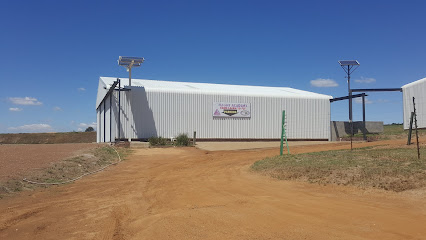
Flight Academy is a Flight school establishment in Centurion, Gauteng, South Africa
Centurion
Gauteng
South Africa
Sorry, no records were found. Please adjust your search criteria and try again.
Sorry, unable to load the Maps API.
Flight School Services in Centurion, Gauteng
Within Centurion and the wider Gauteng region, flight schools offer a range of practical and theoretical programmes designed to prepare aspiring pilots for professional and private flying. The services are typically structured to guide learners from initial exposure to aircraft handling through to more advanced licences and ratings. Training locations benefit from proximity to major airfields, experienced instructors, and access to diverse airspace that supports both standard training patterns and cross‑country preparation.
Most flight schools provide a mix of ab initio and modular training pathways. Ab initio programmes are aimed at those beginning their pilot journey, usually combining theory exams with initial flight lessons to establish solid fundamentals in aircraft control, navigation, and communication. Modular routes allow students to complete licences and ratings in stages, fitting study around work or other commitments. The common progression often includes a private pilot licence, followed by an instrument rating, a commercial licence, and potentially an instructor rating for those seeking a teaching path. In Centurion, these programmes are supplemented by guidance on practical flight timings, weather considerations, and airspace procedures relevant to the Pretoria‑Johannesburg corridor.
Ground school is a standard component, covering aviation theory, meteorology, navigation, aircraft systems, and flight planning. Theory work typically culminates in national examinations overseen by the relevant aviation authority. Instructors bring aviation knowledge to life with classroom delivery and homework support, complemented by self‑study materials. Students learn the practical aspects of pre‑flight planning, risk management, and decision making, which are essential for safe operating procedures both locally and on longer cross‑country legs.
Practical flight training forms the core offering. Trainees fly a fleet of light aircraft appropriate for introductory training and progression, with lessons focusing on take-offs, landings, climbs, descents, turns, and en‑route navigation. Instructors emphasise consistent technique, stick and rudder feel, engine management, radio communication, and the orderly development of flight discipline. The training also includes simulated exercises or real‑world scenarios to build situational awareness and handling of adverse conditions within the contingency framework taught at each stage.
Specialised services commonly available include instrument flight training for precision navigation and flight under instrument meteorological conditions, night rating courses for operations after dark, and cross‑country flying to build long‑range navigation skills. Some schools offer the option to pursue instructor ratings for those aiming to teach aviation, as well as introductory flight experiences for prospective students exploring aviation as a career or hobby.
Facilities and safety are key considerations. Training campuses usually provide dedicated briefing rooms, theory classrooms, and well‑maintained hangars. A well‑managed flight school outlines clear safety policies, maintenance standards for aircraft, and regular service checks. Students can expect coaching on airfield procedures, air traffic control phraseology, and efficient turnaround practices between lessons. The overall environment emphasises professionalism, adherence to regulatory requirements, and an emphasis on personal responsibility for safety and decision making both in the air and on the ground.
Practical considerations include scheduling flexibility, the availability of a reliable maintenance partner for the fleet, and nearer access to a variety of local airfields and controlled airspace. Learners are encouraged to plan training around weather windows common to Gauteng, where rapid changes can occur. Financial planning is also important, with typical costs linked to the chosen training path, aircraft availability, and the number of flight hours necessary to progress through each licence stage. Prospective students should obtain clear information about progress benchmarks, licensing timelines, and assessment criteria before committing to a programme.
Overall, flight schools in Centurion and the surrounding Gauteng area offer a structured gateway into aviation, balancing practical flight hours with rigorous theoretical study. The emphasis remains on safe, disciplined training that equips students to meet the requirements of the aviation authority and to pursue either private enjoyment of flight or a professional career in the skies above South Africa.
- Ab initio pilot training
- Private pilot licence courses
- Instrument rating programmes
- Commercial pilot licence progression
- Night rating and cross‑country training
- Flight instructor and teaching credentials
- Ground school and theory examination preparation
- Simulators and practical flight sessions
- Aircraft maintenance and safety briefing
- Regulatory and safety compliance guidance