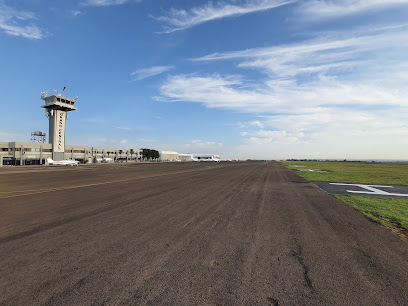
Grand Central Airport is a Airport establishment in Midrand, Gauteng, South Africa
Grand Central Airport: Services, Facilities and Customer Experience
Nestled in Midrand, between Pretoria and Johannesburg, Grand Central Airport functions as a boutique aviation hub with a diverse range of offerings that extend beyond visible runways. The site presents itself as a multi-purpose venue for both aviation professionals and the general public, with a focus on accessibility, comfort and practical facilities. The airport markets a combination of services including food and aviation retail, car rental, chartered flights, flight schools, aviation maintenance operations and corporate rental facilities. This blend supports a steady flow of both private pilots and commercial operators, alongside organisations seeking workspace within a distinctive aviation environment.
A key element of the Grand Central experience is its emphasis on business and leasing opportunities. Within the terminal building, a central information desk supports tenants and visitors, while the airport’s letting programme details office space and hangar options. A number of retail and office suites are advertised for let, reflecting the airport’s character as a community hub for aviation-related businesses. This leasing model underlines the airport’s role as a home base for multiple tenants, ranging from maintenance firms to aviation service providers and suppliers.
The on-site facilities are designed to accommodate both private and charter passengers as well as pilots. The Executive Departures Lounge offers a dedicated, comfortable space with easy access to the apron, self-service refreshments, air conditioning and a quiet environment for up to 15 guests. For larger meetings or presentations, the 16‑seater boardroom facility provides a private on-site option with optional refreshments and air conditioning. These facilities are positioned to support client engagements, pilot briefings and formal business discussions in a convenient, self-contained setting.
Practical operations at Grand Central are complemented by a detailed range of airport fees and landing arrangements. The site provides a structured tariff schedule covering ground services such as vehicle parking, landing and aircraft parking fees, and related charges. This framework reflects the airport’s dual role as a public facility and a living operating base for aircraft, with charges indexed to vehicle time on site and aircraft weight. The inclusion of per-landing and per-month options indicates an openness to both casual aviation activity and longer-term operational engagement.
The airport’s ecosystem is reinforced by a comprehensive tenant directory featuring a broad set of aviation and support businesses. The directory includes major operators in aircraft maintenance, flight training, aircraft simulation, cargo and logistics, and aviation service providers. The presence of car rental outlets, fuel and hospitality amenities further anchors Grand Central as a practical stop for crews and visitors alike. The directory structure suggests a well-integrated community where tenants can collaborate and service clients within a single, aviation-centric environment.
Customer experiences highlighted in visitor commentary tend to favour the approachable, friendly atmosphere and the mix of amenities. Review snippets frequently mention courteous staff at multiple touchpoints—from information desks and gate teams to restaurant staff and cafe operators. The Harvard‑branded restaurant and other dining options are commonly cited as convenient features, with visitors noting reasonable pricing and a family-friendly, casual environment. The airport is described as clean, well-kept and welcoming to members of the public who come to observe training activities or enjoy meals and shopping in a compact, accessible setting.
Operational and experiential tips for visitors and prospective tenants include practical considerations such as parking logistics, enjoying the on-site dining options, and utilising the executive lounge or boardroom for professional gatherings. The compact scale of Grand Central means it is feasible to plan a short visit to observe training activity, arrange a meeting, or explore the available lease spaces. Those seeking to rent office suites or hangars are advised to connect through the letting opportunities page for tailored packages that reflect specific requirements and branding needs.
Geographically, Grand Central is positioned in Midrand and serves the wider Gauteng region as a practical aviation community hub. The site acknowledges ongoing aviation activity and community engagement, making it a notable stop for flight schools, maintenance operators and related aviation services within the area. While there is no indication of international flight operations in the public materials, the airport remains a recognised, locally focused facility with a variety of services designed to support both aviation professionals and enthusiasts.
- Main services offered: food and aviation retail, car rental, chartered flights, flight schools, aviation maintenance operations, corporate rental facilities.
- Typical activities and facilities: private and charter passenger services, executive lounge, 16-seat boardroom, office and hangar lettings, tenant directory.
- How requests usually work: enquiries related to leasing and spaces can be directed to the information desk; a structured tariff and fees framework governs aviation and ground services; on-site facilities are bookable (boardroom, lounge).
- Practical tips: consider parking arrangements and early access for timed visits; take advantage of dining options and the executive lounge for a comfortable wait; review the tenant directory to identify potential aviation and support services in residence.
Midrand
Gauteng
South Africa
Sorry, no records were found. Please adjust your search criteria and try again.
Sorry, unable to load the Maps API.
Airport Services in Midrand, Gauteng, South Africa
Airport-related services in Midrand, Gauteng, form a comprehensive network designed to support both travellers and logistics operations. The area benefits from proximity to major aviation hubs in the region and provides a range of facilities and support services that cater to passenger movements, cargo handling, and business travel alike. Visitors can expect a practical blend of regulatory compliance, customer assistance, and logistical convenience that reflects South Africa’s dynamic urban transport landscape.
Typical offerings fall into several broad categories. Passenger processing services include check‑in assistance, security screening coordination, and baggage handling support, aimed at smooth transitions through terminals. There are also immigration and customs procedures where applicable, with dedicated guidance to streamline routes for travellers arriving from or departing to international destinations. Lounges, information desks, and retail concessions are commonly found nearby, contributing to a more comfortable and efficient journey from arrival to onward transfer.
Freight and logistics services form another important pillar. These facilities handle freight forwarding, warehousing, customs clearance, documentation processing, and specialised handling for time‑critical shipments. Operators may manage cargo consignments in transit, provide palletised storage, and coordinate with trucking or rail connections for onward distribution within Gauteng and beyond. Such services are designed to optimise supply chains while maintaining security and regulatory compliance for cross‑border trade.
Vehicle and passenger access experiences are shaped by the surrounding infrastructure. Car hire, ride‑hailing drop points, and official parking areas are typically designed to accommodate short visits and longer stays, with clear signage and trained staff to assist travellers. Accessibility features, security fencing, and on‑site management contribute to a safe environment for both individuals and goods. In many cases, business travellers benefit from convenient meeting spaces or designated client areas near the transport precincts, offering a pragmatic setting for discussions and planning before or after flights.
Operational workflows commonly observed in Midrand reflect a need for efficiency and resilience. Documentation verification, invoicing, and service tracking are standard elements across service providers, with emphasis placed on timely processing and accurate records. Transit routes may be arranged to minimise waiting times, and contingency plans are often in place to handle peak periods or unexpected delays. Customers seeking these services should anticipate some variability in processing times based on flight schedules, security requirements, and the scale of shipments or passenger volume.
Practical considerations for travellers and businesses include confirming hours of operation, especially for freight facilities that may operate around the clock. Currency and payment methods are often flexible, yet it remains prudent to verify accepted forms of payment for terminal services or cargo handling. Accessibility to reliable transport options from Midrand to nearby airports, skilled interpretation of documentation for customs, and awareness of licensing or regulatory expectations are all prudent steps for smooth engagement with airport services in the area.
In terms of delivery, airport services in Midrand typically work by aligning customer needs with the appropriate specialist teams. A client seeking passenger support may be directed toward check‑in coordination and terminal assistance, while a company requiring freight solutions would engage with a logistics or customs team to arrange handling, storage, and delivery. Across all sectors, safety, regulatory compliance, and clear communication underpin the experience, ensuring that both individual travellers and businesses can move efficiently through the aviation ecosystem surrounding Midrand and Gauteng at large.
- Passenger processing and terminal assistance
- Freight forwarding, warehousing, and customs clearance
- Car hire, parking, and ground transportation coordination
- Information desks, lounges, and retail services