Groblersdal Airfield FAGL is a Airstrip establishment in Groblersdal, Limpopo, South Africa
Groblersdal Airfield FAGL – Airstrip in Groblersdal, Limpopo
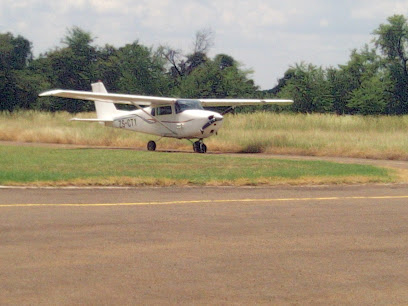
Groblersdal Airfield FAGL occupies a storied corner of Limpopo aviation history, emerging from the efforts of a local flying community to establish an aerodrome in the Groblersdal area. The site is closely associated with the Groblersdal Flying Club, whose narratives and newsletters document decades of aircraft operation, camaraderie and informal training. The venue is presented as a rooted, community-focused airstrip rather than a large, commercial facility, emphasising personal experience, small-crew flying and local storytelling about airborne adventures.
From the available material, the airfield’s primary draw appears to be its welcoming atmosphere for pilots and aviation enthusiasts alike. Visitor-driven reminiscences describe a “beautiful little airstrip” set within the surrounding hills and savanna, contributing to a distinctive flight experience in a rural setting. The airfield is noted for its compact footprint and a paved runway that is described as short and sloping, with practical advice shared by visitors about approach and departure angles. This combination tends to attract pilots who enjoy low-key operations, fly-ins and informal gatherings rather than high-volume, schedule-driven traffic.
Main services offered
Evidence from visitor commentary highlights several practical services commonly expected at a community airstrip of this nature:
- Runway access and basic airfield facilities, including a paved strip suitable for light aircraft and microlight operations.
- Club infrastructure associated with the Groblersdal Flying Club, including a clubhouse area and shaded seating near the runway, designed for pilots and visitors to relax between flights.
- Fuel access and straightforward ground support typical of smaller airfields, noted by visitors as a positive convenience when preparing for or returning from flights.
- Community events and fly-ins that foster a sense of local aviation culture and offer opportunities to observe a range of aircraft in operation.
Typical flight operations and activities
Historically, the airfield has served as a focal point for a diverse range of aviation activities within the Groblersdal community. Narratives recount the early days of the Groblersdal Flying Club, including air shows and social gatherings that helped establish the airstrip’s enduring identity. The club’s history also touches on training activities and the acquisition of aircraft to sustain local flying opportunities. While there are no current service specifications visible online regarding flight hours, certifications or commercial operations, the site and accompanying reviews imply a focus on recreational and instructional flying, rather than large-scale commercial aviation.
Typical job types and industries (as inferred from sources)
Sources describe a historical pattern of aviation-related pursuits typical of small, regional airstrips. These include:
- Flight training and pilot development within a club setting, supported by experienced instructors and enthusiastic local volunteers.
- Aerobatic training and light sport aviation activities, evidenced by historical reference to different aircraft types used in training and aerobatic display.
- Crop-spraying operations and agricultural aviation activity within the broader Groblersdal region, as indicated by historic club members who diversified into agricultural aviation services.
How requests usually work
Given the community-focused nature of Groblersdal Airfield FAGL, engagement typically flows through informal channels via the flying club environment. Pilots planning a visit or a fly-in would likely coordinate through local members or existing informal networks associated with the Groblersdal Flying Club, leveraging the airfield’s layout, nearby amenities and the shared knowledge of fellow aviators who familiarise visitors with local procedures and safety considerations.
Practical tips for customers
- Plan for a compact, rural airstrip experience: brief, well-prepared flight plans are advisable for unfamiliar airfields with short runways and potential terrain features.
- Be mindful of approach notes shared by visitors: some runways are downhill on one end and require altitude management on finals to ensure safe clearance of nearby obstacles.
- Note potential hazards: historical references mention a powerline near the end of one runway during certain approaches; maintaining adequate altitude on approach is recommended.
- Enjoy the setting: the airstrip is described as nestled in hills with shaded seating where observers can watch activities, making it suitable for family-friendly fly-ins and community days.
Hours, location and area served
Groblersdal Airfield FAGL is situated in Groblersdal, Limpopo, South Africa. The available content does not specify formal business hours or a published schedule, but visitors are encouraged to observe local community events and to align their plans with the timing of fly-ins and club activities as described in historical narratives and visitor reviews.
Nearby and notable remarks from visitors
Reviews describe a warm, informal atmosphere with a strong sense of community. Observers highlight the scenic backdrop, the ease of access to the airfield’s facilities, and the enjoyable experience of attending a fly-in or casual aviation gathering in a rural setting. Practical advice from reviewers emphasises situational awareness on the short, inclined runway and the value of enjoying the surrounding natural beauty during a visit.
Groblersdal
Limpopo
South Africa
Sorry, no records were found. Please adjust your search criteria and try again.
Sorry, unable to load the Maps API.
Airstrip Services in Groblersdal, Limpopo
Airstrip services in Groblersdal, situated within Limpopo, South Africa, encompass a practical mix of aviation-related offerings designed to support local travel, agricultural operations, and tourism. The presence of an airstrip in or near Groblersdal typically serves as a focal point for light aircraft activity, with services tailored to small and medium-sized aircraft rather than large commercial operations. The setting combines rural accessibility with regional connectivity, allowing pilots and passengers to reach neighbouring towns, farming precincts, and nature-based destinations with relative ease.
Regular expectations for airstrip services in this region cover several core elements. First, there is typically a maintained strip or runway suitable for light aeroplanes and some utility aircraft. The surface condition, length, and any weight limits influence the types of aircraft that can operate from the airstrip and the daily schedule. Second, there are often basic, on-site facilities or nearby amenities intended to support pilots, crew, and occasional passengers. These may include a dedicated area for pre-flight checks, a simple shelter or clubhouse, and ground handling arrangements. Third, helicopter or fixed-wing operations may be accommodated depending on the layout and permissions available at the site, with a focus on efficient turnarounds and safe navigation within local airspace.
Customers engaging with airstrip services typically encounter a straightforward workflow. Before arrival, pilots plan according to published patterns or standard operating procedures appropriate for small airfields. Upon arrival, the aircraft is guided to a suitable parking area and a brief safety briefing or per-flight checklist is undertaken. Ground staff or the airstrip operator may assist with basic services such as securing the aircraft, arranging fuel if available, and coordinating with local ground transport providers or accommodation if required. Departures follow a similar path, with attention to secure parking, a final pre-flight check, and the orderly release of the aircraft for the next leg of the journey. In many cases, airstrip operations emphasise minimal administrative overhead, prioritising practical safety protocols, clear radio communication where applicable, and adherence to local regulations governing aviation activities in the Limpopo region.
Practical considerations for users of Groblersdal airstrip services include weather awareness, the suitability of the airstrip for the intended aircraft, and the proximity of services such as fuel, maintenance, or emergency infrastructure. Weather conditions in Limpopo can vary with the seasons, influencing visibility and runway usability. Prospective users should assess whether the airstrip can accommodate the anticipated payload and range, and whether any ground support or tie-down facilities are available. It may also be necessary to plan for remote or partial services, as on-site amenities are commonly modest at smaller airfields. Coordination with local authorities, air traffic information centres, or regional aviation organisations can provide updated guidance on airspace restrictions, noise considerations, and permissible operating hours.
For those involved in agricultural operations, the airstrip can support crop monitoring flights, aerial spraying, or relief logistics, subject to appropriate permissions and coordination with agricultural service providers. Tourism-related activities may leverage the airstrip as a gateway for scenic flights or access to nearby attractions, while ensuring that any flight schedule aligns with the pace of rural life and the surrounding community’s needs. In all cases, safety remains the principal priority, with emphasis on clear communication, proper handling of aircraft, and compliance with local and national aviation standards.
Potential travellers and operators should approach airstrip services in Groblersdal with sensible expectations: facilities are practical and scaled to regional needs, weather and terrain are influential, and the experience centres on reliable, low-frills aviation support rather than comprehensive commercial aviation infrastructure. By recognising these attributes, users can plan effectively and engage with airstrip services in a manner that respects the local context and enhances safe, efficient aviation activity in Limpopo.
- Typical facilities: basic shelter or clubhouse, parking area, and simple ground handling arrangements
- Operational focus: safety, efficient aircraft movement, and clear communication
- Common activities: light aircraft operation, aerial work related to agriculture, and small-scale transport