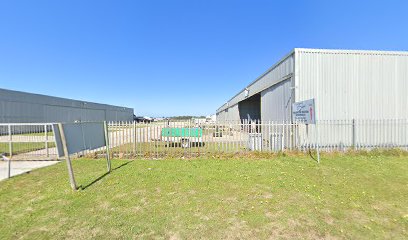
Hanger 51 Aviation is a Aviation consultant establishment in Gqeberha, Eastern Cape, South Africa
Gqeberha
Eastern Cape
South Africa
Sorry, no records were found. Please adjust your search criteria and try again.
Sorry, unable to load the Maps API.
Aviation Consultant Services in Gqeberha, Eastern Cape
Aviation consultant services in Gqeberha (Port Elizabeth) and the broader Eastern Cape provide organisations with expert guidance across the aviation value chain. Local professionals combine regional insight with international best practices to support airports, airlines, maintenance organisations, private operators, and government agencies. The objective is to optimise safety, efficiency, compliance, and strategic decision‑making within a dynamic and ever-evolving industry.
Typical offerings span several core areas. First, regulatory compliance and governance help clients interpret and implement South African Civil Aviation Authority (SACA) requirements, international standards, and evolving national policy. Consultants assess existing procedures, identify gaps, and recommend practical enhancements to safety management systems, security controls, and environmental safeguards. Second, safety and risk management services support incident prevention, risk assessment, and the development of training programmes aligned with recognised aviation standards.
Strategic and operational planning constitutes another important dimension. Aviation consultants in the region assist with master planning for airports or airfields, fleet and route analysis for airlines, and project feasibility studies for capital expenditure. They may evaluate capacity, demand trends, and market conditions to inform business cases, funding applications, or public‑sector investment. In addition, they often advise on airside and terminal operations, passenger flow, baggage handling, air traffic management interfaces, and ground handling efficiencies, drawing on practical, field‑level experience from similar regional environments.
Technical services focus on aircraft maintenance planning, engineering oversight, and compliance with airworthiness standards. This includes maintenance program reviews, reliability analysis, airframe and component life‑cycle planning, and oversight of engineering data management. For operators and maintenance facilities in the area, consultants can offer audits, technical due diligence for acquisitions, and oversight of safety and quality assurance programmes. Where environmental considerations are important, advisory work may cover noise management, fuel efficiency strategies, and sustainable aviation initiatives relevant to the coastal climate and local infrastructure.
Customer expectations reflect a combination of accessibility, practical guidance, and pragmatic deliverables. Clients typically anticipate clear recommendations, supported by data and risk assessments, rather than theoretical concepts. The value lies in actionable roadmaps, milestone tracking, and documentation suitable for internal governance or regulatory submission. Consultants commonly provide written reports, presentation materials for boards or committees, and on‑site or remote advisory support during peak project phases.
Practical considerations for engaging aviation consultants in Gqeberha include a need to align engagements with local experiential knowledge and regional constraints. Professionals often emphasise stakeholder engagement with municipal authorities, airport operators, and service providers to navigate permitting, land use, and infrastructure maintenance timelines. Availability of skilled aviation personnel in the area can influence project staffing and the design of training programmes. Stakeholders should consider project scope, budget controls, and the requirement for independent validation to ensure transparent governance and auditable outcomes.
Methodically, aviation consultancy engagements usually progress through defined stages. A preliminary scoping phase identifies objectives, timelines, and required data. A diagnostic phase consolidates regulatory reviews, operational assessments, and risk analyses. A reporting stage communicates findings, followed by an implementation phase that outlines sequencing, resource needs, and success metrics. Throughout, consultants maintain a focus on clear communication, practical prioritisation, and measurable impact on safety, efficiency, and business performance.
For organisations seeking aviation consultancy in the Eastern Cape, the emphasis remains on local relevance combined with a broad understanding of international standards. The results typically manifest as improved compliance posture, refined operating procedures, evidence‑based investment decisions, and enhanced resilience against regulatory change. In this context, aviation consultants function as facilitators of informed decision‑making, providing specialised knowledge that supports the sustainable growth and safe operation of aviation activities in the region.