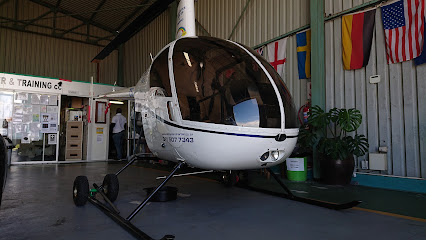
Helicopter Charter & Training CC is a Flight school establishment in Gqeberha, Eastern Cape, South Africa
Gqeberha
Eastern Cape
South Africa
Sorry, no records were found. Please adjust your search criteria and try again.
Sorry, unable to load the Maps API.
Flight School Services in Gqeberha, Eastern Cape
Flight training establishments in Gqeberha (Port Elizabeth) specialise in guiding aspiring pilots through the processes required to obtain civil aviation qualifications. Local flight schools typically offer a range of programmes designed to accommodate varying ambitions, from recreational flying licences to professional pilot certificates. The Eastern Cape’s coastal weather patterns, airspace structure, and regional aerodromes influence the day-to-day pace and emphasis of practical training.
Core offerings generally include introductory experiences, private pilot training, and more advanced courses for those pursuing commercial aviation or specialised flying roles. An introductory flight provides a first-hand sense of aircraft handling, navigation basics, and a feel for the cockpit environment. Basic training often focuses on flight theory, aerodynamics, weather interpretation, and radio procedures, complemented by supervised in-air practice sessions to build foundational piloting skills.
As training progresses, students typically undertake a structured programme that combines ground school with flight hours. Ground instruction covers aviation regulations, airspace classifications, aircraft systems, meteorology, and decision-making under pressure. Flight instruction centres on stick-and-fly drills, circuit patterns at local aerodromes, and progressively more demanding manoeuvres. The aim is to develop situational awareness, precise control, and discipline in adhering to standard operating procedures. Instructors frequently emphasise safety, risk management, and the importance of consistent practice routines.
Practical considerations for prospective pupils include the choice of aircraft fleet, the availability of flight simulators, and access to well-maintained training airframes. Most schools operate a schedule that blends morning and early afternoon flights to align with regional weather windows. Students should anticipate variable training tempos influenced by weather, aerodrome traffic, and aircraft availability. Commitments typically involve a combination of self-study, simulator sessions, and hands-on flight hours, with regular assessments to gauge progress and readiness for examinations.
Assessment and progression are usually linked to milestones such as minimum flight hours, competency demonstrations, and theoretical examinations. Examinations may be administered by recognised aviation authorities, with theory tests often conducted under controlled conditions. The learning environment is expected to be supportive yet rigorous, designed to ensure that graduates meet acceptable standards of competency for entry-level piloting or further study.
Facilities and services frequently available at flight schools in Gqeberha include:
- Structured training programmes covering both initial licences and advanced ratings
- Ground school and theory instruction aligned with local aviation requirements
- In-air coaching, simulated scenarios, and practical evaluations
- Aircraft availability across a small fleet suitable for training, with routine maintenance checks
- Access to airfield operations, radio communications practice, and flight planning sessions
- Deployment of safety systems, pre-flight briefings, and post-flight debriefs
For potential students, practical planning involves assessing travel arrangements to the chosen aerodrome, understanding ongoing costs, and preparing for the time commitments required to complete a programme. Prospective trainees should investigate accreditation, the track record of instructors, and the standard operating procedures followed by the school. Taking an introductory flight or observing a training day can offer valuable insights into the atmosphere, emphasis, and level of attention to safety within the local training community.
Overall, flight school services in Gqeberha provide a practical pathway into aviation, grounded in local climates and airspace realities. The emphasis is on systematic progression, safety-conscious instruction, and the acquisition of flying competence that aligns with regional opportunities and the broader South African aviation framework.