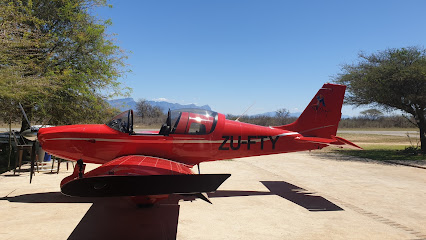
Hoedspruit Civil Airfield is a Airstrip establishment in Hoedspruit, Limpopo, South Africa
Hoedspruit
Limpopo
South Africa
Sorry, no records were found. Please adjust your search criteria and try again.
Sorry, unable to load the Maps API.
Airstrip Services in Hoedspruit, Limpopo
Hoedspruit in Limpopo offers a range of airstrip services tailored to private travellers, safari operators and remote lodges. Visitors can expect facilities and procedures that accommodate small and mid‑sized aircraft, with a focus on efficiency, safety and ease of access to the surrounding wilderness and wildlife experiences. The airstrip network in this region is typically designed to support frequent, flexible transfers, scenic flights and fly‑in safaris that connect guests with lodges and reserves near Kruger National Park and the Greater Limpopo Transfrontier Conservation Area.
Typical offerings include private charter flights to a local airstrip or to nearby rural airfields, enabling rapid transit from major hubs to the heart of the Lowveld. Scenic aerial tours are common, highlighting dramatic landscapes, river systems and wildlife habitats. For travellers seeking to combine game drives with aerial movement, airstrip services often act as a convenient hub, coordinating arrival times with lodge transfers and on‑the‑ground activities. Where there is a lodge or camp nearby, guests may receive seamless connections from the airstrip to waiting vehicles, with transfer routes designed to minimise delays between landing and a first wildlife encounter.
Ground handling and operational support form an important part of the service mix. This can include basic passenger handling, luggage management, and the scheduling of ground transport to ensure timely departures and arrivals. In some cases, limited refuelling facilities or arrangements with nearby service providers are available, subject to aircraft type and safety considerations. Accessibility to essential services such as weather updates, communications, and emergency procedures is standard practice, with airstrip staff trained to manage arrivals in varying conditions typical of the region’s climate.
Safety and regulatory compliance are emphasised in daily operations. Pilots are expected to conduct pre‑flight checks, observe local airspace notices, and adhere to speed, altitude and approach procedures appropriate for small airstrips in semi‑rural environments. Runway surfaces, lighting (where applicable), wind‑direction indicators, and ground markings are maintained to meet standard aviation norms. Wildlife presence near runways is a recurring consideration, guiding operational practices and frequency of inspections to safeguard both aircraft and animals. Guests are advised to follow on‑site guidance regarding movement around the airstrip and to keep to marked pathways during ground transfers.
Practical considerations for travellers include timing flexibility, particularly in the dry winter season and the wet summer months when weather patterns can influence visibility and flight plans. Vehicle transfer routes are usually arranged in advance, with itineraries aligned to lodge check‑in times and safari activity windows. Degreed manners of payment, insurance and documentation are typically discussed at the planning stage, with guests encouraged to confirm any travel constraints or special requirements well ahead of departure. Accessibility from the main road network and proximity to lodges both shape the experience, with many visitors appreciating the short onward journeys that maximise time in the reserve or park.
In summary, airstrip services in Hoedspruit provide a practical gateway for visitors to the Limpopo wilderness, combining efficient airborne access with careful ground arrangements. The emphasis remains on safe operations, clear communication and smooth transitions between air and land, enabling memorable wildlife adventures without undue complication.