Luv2Fly is a Aviation training institute establishment in Cape Town, Western Cape, South Africa
Luv2Fly: Aviation Training Institute in Cape Town, Western Cape
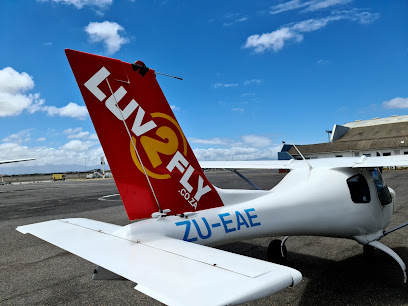
Situated at Cape Town International Airport, Luv2Fly operates as an approved SACAA and ICAO training organisation focused on developing safe and capable pilots across a range of licences and ratings. The school emphasises affordability alongside serious training, with instructors who bring substantial flying time and industry experience to each lesson. The location within a major international airport environment provides students with early exposure to air traffic control (ATC) and controlled airspace, contributing to practical, real-world flight experience from the first lesson.
The core offerings span three broad strands: flight training programmes (licences and ratings), practical flight experiences for non-students (scenic and intro flights), and aircraft hire for pilots looking to fly locally. This combination supports both aspiring commercial aviators and enthusiasts seeking an affordable, hands-on flying experience in the Cape Town area.
Main services offered
- <strongLicences: Luv2Fly provides training for Private Pilot Licence (PPL), Commercial Pilot Licence (CPL), and Airline Transport Pilot Licence (ATPL), along with related practical requirements and examinations. The programme emphasises progress through clearly defined milestones, including required flight hours, radiotelephony, medical certificates, and language proficiency.
- <strongRatings: A comprehensive ratings track includes Instrument Rating, Night Rating, Multi-Engine Rating, Agricultural Rating, and Instructor Rating. The ratings are designed to broaden piloting capabilities and enable continued progression beyond basic licences.
- <strongGround School: Developed by highly experienced instructors, the Ground School courses cover essential topics such as Air Law, Meteorology, Navigation, and flight planning. The resources include books and e-books, with practical guidance drawn from extensive operational experience.
- <strongHire2Fly: An objective and affordable aircraft hire service enabling pilots to fly the Cape Town region and surrounding areas. The fleet is maintained with care, and hire rates are positioned as some of the most competitive in the country.
- <strongScenic Flights: Scenic flights offer panoramic views of the Cape Town area and beyond, either as a passenger experience or a guided flight for enthusiasts seeking memorable aerial views of the region.
- <strongRent & Fly: A block-purchase option for pilots wishing to fly longer legs or multiple sessions, combined with access to a select fleet including Jabiru and Cessna aircraft.
- <strongCare2Fly: A community-focused initiative within the Luv2Fly network that supports urgent transport needs and charitable aviation endeavours, while noting that this is not an air ambulance service and safety remains the priority in evaluating every request.
Typical job types and training pathways
For individuals aiming to become professional pilots, the school outlines clear licensing and rating pathways. The Private Pilots Licence is framed as a foundational credential, requiring minimum age, medical qualifications, radiotelephony certification, and flight hours before advancing to examinations in core subjects. The CPL/IF (instruments) and Multi-Engine pathways are described in conjunction with instrument ratings to enable flying in IFR conditions and across more complex aircraft. In addition, instructor and grade-specific ratings (e.g., Grade III Instructor) offer routes into training the next generation of aviators.
Beyond licences, the ratings programme supports specialised capabilities such as instrument training and night operations, while the ground school content complements practical flight training with theory and mock examinations. This structure is suitable for both full-time students seeking a fast-track progression and part-time learners building hours alongside other commitments.
How requests usually work
Prospective students and customers are guided through a decision process on the website’s Learn2Fly section, which directs visitors to relevant licence and rating pages. For hire and scenic experiences, prospective pilots or passengers contact the team to discuss aircraft availability, pricing, and itinerary preferences. The Hire2Fly section communicates a straightforward pricing framework for both individual flights and scenic or photo flights, with a focus on affordability and transparent operating terms. The Care2Fly initiative operates on case-by-case assessments, ensuring safety remains the priority in every arrangement.
Practical tips for customers
- Consider the real-world value of training at an international airport site: early immersion in controlled airspace and communication with ATC can aid practical competence from the outset.
- Budget planning is important: pricing varies with time commitment (part-time vs full-time) and aircraft selection, so use the instant estimate tools and discuss schedules with instructors.
- If pursuing a CPL or ATPL, plan a pathway that includes a PPL first to build fundamentals before advancing to more complex ratings and simulations.
- Review the range of aircraft in the Hire2Fly fleet (notably Jabiru and Cessna variants) to understand hourly rates and choose equipment aligned with training or scenic objectives.
- Explore the Care2Fly option only after assessing safety considerations and the specific needs of an urgent transport scenario.
Hours, location and area served
The centre is located at 2 Douglas Street, General Aviation Area, Cape Town International Airport, Western Cape. The site serves Cape Town and the surrounding Western Cape region, with training and flight experiences designed to integrate into the local aviation ecosystem and airspace structure. Specific business hours are not stated on the website; attention to local weather and ATC schedules is advisable when planning visits or flights.
Customer experience and perceptions
Visitor feedback highlights a friendly, welcoming atmosphere, competitive pricing, and supportive staff who assist learners from initial flight through to hour-building for CPL. Several reviews emphasise the professional yet relaxed environment and the strong sense of community among instructors and students, reinforcing the school’s reputation for approachable, thorough aviation training.
Cape Town
Western Cape
South Africa
Sorry, no records were found. Please adjust your search criteria and try again.
Sorry, unable to load the Maps API.
Aviation Training Institutes in Cape Town: Services and Practical Considerations
Around Cape Town, aviation training institutes provide a range of programmes designed to support aspiring pilots, aviation professionals, and organisations seeking specialised expertise. The offerings commonly cover flight instruction, theoretical knowledge, and operational skills essential for safe and efficient aviation activity in the Western Cape and beyond. These centres typically align with national regulatory standards while drawing on regional aviation ecosystems that include busy international routes, coastal airspace, and diverse weather patterns.
Core training streams generally include ground school and practical flight instruction. Ground school covers aviation theory topics such as meteorology, navigation, air law, aviation physiology, and aircraft systems. The aim is to build a solid knowledge base that supports safe decision-making in real-world scenarios. Practical training follows, featuring supervised flight sessions in light aircraft and, where appropriate, simulator sessions. Instructors emphasise checklist discipline, radio communication, aircraft handling, stall awareness, weight and balance principles, and standard operating procedures. The combination of classroom study and hands-on flight exposure is intended to foster confidence and procedural fluency.
Typical programmes offered by these institutes include introductory pilot courses, general aviation licences, and more advanced qualifications. Prospective students may pursue a private pilot licence (PPL), a CPL (commercial pilot licence), or a completed ATPL (air transport pilot licence) pathway through modular training. Some centres also provide specialised tracks in aeronautical engineering support, aviation management, and flight operations logistics. Additionally, drone or unmanned aerial vehicle (UAV) training programmes are increasingly common, reflecting evolving regulatory frameworks and commercial opportunities in the region.
Beyond flight and theory, many institutes offer tailored courses for aviation industry staff. These may cover safety management systems, risk assessment, aviation maintenance planning, regulatory compliance, and incident investigation fundamentals. Courses focused on airworthiness, maintenance practices, and quality assurance are typically designed to complement engineering and maintenance teams within airlines, maintenance organisations, and corporate fleets. Instruction often combines classroom seminars with practical demonstrations and, where feasible, site visits to maintenance facilities or control centres.
Facilities and resources are a key consideration for prospective learners. Reputable institutes usually provide dedicated classrooms, study areas, briefing rooms, and access to training aircraft or simulators. Modern simulators may range from basic handling units to full-motion or high-fidelity platforms that mimic cockpit environments. Availability of aerodrome access or proximity to Cape Town International Airport can enhance realism during training, especially for approaches, departures, and air traffic control aerodrome sequencing practice. Safety standards, maintenance of aircraft, and instructor qualifications are important indicators of programme quality.
Practical considerations for students include prerequisites such as medical fitness requirements, age limits, language proficiency, and commitment to a structured training programme. The duration and cost of courses depend on the chosen licence or certificate, the scheduling of lessons, weather conditions, and regulatory examinations. Prospective entrants are advised to verify that providers hold appropriate authorisations from the national aviation authority and to understand the licence progression framework, examination processes, and currency requirements that apply to pilots and operations personnel in South Africa.
Typical questions a learner might consider when selecting an aviation training institute include: the track record of pass rates and instructor qualifications, the balance between theoretical and practical hours, access to modern simulators or synthetic training devices, and support services such as career guidance, mentoring, and exam preparation. While specific features and prices vary, the overarching aim remains consistent: to equip individuals and organisations with the knowledge, practical skills, and professional discipline necessary to operate safely within South Africa’s aviation environment and the broader Southern African region.
- Ground school and theory instruction
- Flight training in light aircraft and simulators
- Licence and certificate programmes (PPL, CPL, ATPL pathways)
- Specialised aviation management and safety courses
- Drone/UAV training and regulatory compliance
- Maintenance, operations planning, and quality assurance modules