MY LED Lights for RED LED Aviation Lights is a Telecommunications equipment supplier establishment in Akasia, Gauteng, South Africa
MY LED Lights for RED LED Aviation Lights – Company Summary
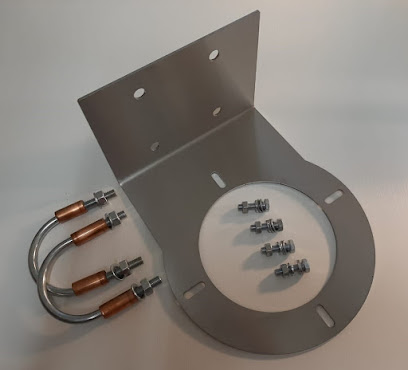
MY LED Lights for RED LED Aviation Lights operates as a supplier specialising in aviation obstruction lighting for the South African market, with a focus on red LED solutions designed to mark tall structures, telecom sites and other potential aerial obstacles. Based in Akasia, Gauteng, the business presents a range of both locally manufactured and imported aviation lights, with typical supply voltages centred on 230 VAC LED globes and E27 fittings. A notable feature of the offering is the inclusion of mounting hardware with every light, aimed at simplifying installation for installers and site managers alike.
The product line emphasises LED technology to deliver long lifetimes and low maintenance requirements. In particular, the lights provide either 10 candela or 32 candela illumination, categorised as Type A and Type B low-intensity markings in accordance with civil aviation guidelines. The 32cd and 10cd options are positioned to accommodate different structural heights and to meet regulatory specifications for obstruction lighting at various elevations. An option for built-in photo sensors is available, especially for solar-powered lights, enabling operation that responds to ambient light levels without manual intervention.
Two main power configurations are highlighted in the offerings: 230 VAC and solar-powered systems. The solar lights are described as having built-in components suitable for remote or off-grid installations, while the 230 VAC variants are compatible with standard electrical supply arrangements found on numerous towers and structures in the region. The inclusion of solar-powered models aligns with practical needs in remote sites and remote infrastructure where grid power is less reliable or unavailable.
Compliance and regulatory alignment are emphasised in the company’s communications. The lights are described as complying with ICAO (International Civil Aviation Organization) standards and SA Civil Aviation Authority specifications, with references to relevant American standards via the FFA in the US where applicable. Local compliance is reinforced through mention of SABS testing and SA CAA approval, positioning the products as suitable for use on airports, tall structures, and a range of telecom and industrial installations in South Africa.
In terms of typical applications, the lights are portrayed as suitable for telecom towers, BTS and cellular/microwave sites, multi-legged towers, monopoles, airports, chimneys and smoke stacks, radio towers, construction cranes, tall buildings, wind turbines, and transmission lines. This breadth suggests the capability to serve both the telecom sector and broader civil aviation safety needs across a variety of construction, energy, and infrastructure projects.
Customer terms indicate a standard 12-month guarantee on the lights, subject to limitations for misuse or lightning damage. While intact warranties are offered, the policy appears to exclude free replacement in cases of damage caused by external events beyond normal use. The business outlines arrangements for international orders, including the option to organise pickup or provide a prepaid return label within South Africa; however, for international destinations, customers would need to cover return shipping costs themselves. This information signals a practical approach to cross-border transactions and after-sales logistics.
From an operational perspective, the supplier’s communications emphasise practical installation support by supplying comprehensive mounting hardware with each unit. The range of accessories listed includes 32cd and 10cd lighting options, replacement globes in both 230 VAC and 48 V DC configurations, and photo cells to automate lighting control. Additional components such as outdoor controllers and hardware for mounting—along with items like U-bolts and brackets—appear to support the full lifecycle of installation, operation, and maintenance for obstruction lighting projects.
Typical job types and service expectations
- Supplying red LED obstruction lights for telecom towers, wind turbines, chimneys and similar structures.
- Providing solar-powered options for remote sites, including built-in photo sensors and long-life battery systems.
- Assisting with compliance to ICAO, SA CAA and SABS standards through product design and testing alignment.
- Delivering complete installation kits with mounting hardware for straightforward site mounting.
Practical tips for customers
- Confirm the height and location of the structure to determine whether the 10cd (Type A) or 32cd (Type B) option is appropriate.
- Consider solar-powered lights for off-grid sites to reduce dependency on grid power and simplify maintenance.
- Check regulatory requirements for the site to ensure chosen lights comply with ICAO and local aviation authority rules.
- Plan for a 12-month light-to-asset warranty, and clarify terms relating to damage from lightning or misuse before finalising a purchase.
- Prepare for international orders by reviewing return shipping responsibilities and ensuring accurate delivery details to avoid costly returns.
Overall, MY LED Lights for RED LED Aviation Lights presents itself as a focused supplier offering LED-based red obstruction lighting solutions with regulatory compliance, practical installation support, and a warranty framework designed to cover standard use cases within South Africa’s aviation and infrastructure sectors.
Gauteng
South Africa
Sorry, no records were found. Please adjust your search criteria and try again.
Sorry, unable to load the Maps API.
Telecommunications equipment supplier services in Akasia, Gauteng
In Akasia, a neighbourhood within Gauteng, telecommunications equipment suppliers offer a range of services designed to support businesses across sectors—from small offices to larger operations requiring robust connectivity. The focus tends to be on reliability, modularity, and practical support that helps organisations design, deploy, and maintain efficient communications networks. Clients typically encounter a blend of product sourcing, technical guidance, and after‑sales services arranged to fit local requirements and timelines.
Procurement and product range form the foundation of these services. Suppliers stock an assortment of interconnect devices, cabling, passive components, and active equipment suitable for office and industrial environments. Equipment commonly available includes switches, routers, access points, modems, cabling solutions, antennas, and basic telecom peripherals. The emphasis is usually on compatibility, scalability, and the ability to service varying bandwidth needs, from simple voice and data setups to more demanding data networks. Where fibre, broadband, or wireless solutions are involved, the aim is to match the right technology with the customer’s current needs and anticipated growth.
Consultation and design support are typical accompaniments to product supply. Experienced advisers help translate business requirements into practical network topologies. This may involve assessing premises, identifying suitable routing and switching configurations, planning cable routes, and considering future expansion. The process often includes a site survey, a rough bill of materials, and an outline of installation steps. The goal is to provide clear guidance that enables informed decisions about what equipment is necessary, and what can be deferred or phased in over time.
Installation and deployment services are commonly offered, either directly or through trusted partners. This encompasses on-site cable laying, rack mounting, equipment mounting, and initial configuration of devices. When fibre or wireless links are involved, technicians may coordinate with local network providers or service teams to establish the connection, test performance, and optimise settings. Quality of installation is tied to reliability, minimal disruption to daily operations, and adherence to local health and safety practices during works on site.
Maintenance, support, and repairs constitute a core aspect of ongoing value. Regular monitoring, firmware updates, and proactive checks help sustain network performance. Many suppliers provide guidance on maintenance schedules and may handle warranty exchanges or repairs where applicable. In environments such as offices or light industrial settings, practical support typically includes guidance on spare parts, best practices for cable management, and updates to documentation for network diagrams and asset registers.
- Product sourcing and order fulfilment
- Technical design advice and site assessments
- On-site installation, configuration, and testing
- Maintenance planning, monitoring, and support
- Spare parts recommendations and after-sales assistance
Customers in Akasia can expect a service approach that respects practical realities: local transport routes, access to emergency support, and reasonable lead times for delivery and installation. Practical considerations often include ensuring compatibility with existing equipment, assessing the need for future scalability, and confirming that installations align with organisational IT policies and security practices. While the regional market may present variability in pricing and availability, the overarching objective remains to supply reliable components and competent technical support that minimise downtime and enable steady daily operations.
Overall, telecommunications equipment suppliers in Akasia offer a balanced mix of products and services designed to help businesses achieve dependable connectivity. By combining knowledgeable assistance, practical installation capabilities, and ongoing support, these suppliers support organisations as they build and maintain effective communication networks across Gauteng.