Petit Airfield – FARA is a Airstrip establishment in Benoni, Gauteng, South Africa
Petit Airfield – FARA: Summary of Services, Experience and Access
Petit Airfield, situated in Benoni, Gauteng, lies approximately 20 minutes from OR Tambo International, offering a private airfield environment that hosts two noted aviation entities: KFA Aircraft (Kitplanes for Africa) and Bushflying Africa. The airfield is privately owned and registered, with access and use governed by specific permissions and local rules. Its designation as a private facility means that non‑commercial operations require prior authorisation and adherence to the established indemnity provisions and local regulations.
The airfield operates with a grass runway, extending to about 1000 metres, aligned to 03/21, at an elevation of roughly 5,400 feet. The field is fenced and access controlled, with main gate hours typically from 08:00 to 17:00 on weekdays; after‑hours access is restricted to Petit tenants and must be arranged through management via email or WhatsApp prior to arrival, after completion of an indemnity form. This arrangement underscores the private, low‑traffic character of the site, emphasising careful coordination for any visit outside normal hours.
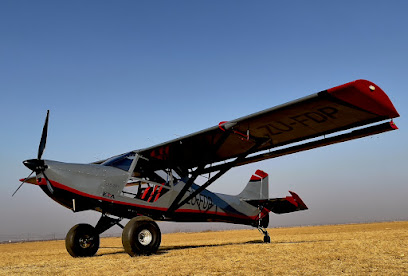
In terms of services and activity, Petit Airfield functions primarily as a base for Kitplanes for Africa and bushflying operations, rather than as a public or commercial flight facility. The site is presented as a home for aviation enterprises and for training activities related to NPL (Non‑Pilot Licence) training, with explicit notes that no hangarage is available. The published guidance highlights safety and operational considerations such as ongoing airfield maintenance in the summer, caution for tractors and farming equipment using the runway and taxiways, and the need for pilots to conduct circuits in a specific pattern to avoid encroaching on nearby airspace and residential areas.
Operational procedures emphasise safety and situational awareness. Pilots are instructed to avoid infringing on OR Tambo International airspace by conducting all circuits to the east of the airfield; right hand circuits should be used for Runway 03, and left hand circuits for Runway 21. The site specifically cautions against flying over surrounding residential areas to the south and advises caution after rainfall when the runway may be affected. A notable safety feature is the advisory to perform a low pass to alert any tractor operator if ground support is active on the runway, then proceed with standard joining and landing procedures. A power line approximately 300 metres from the threshold of Runway 21 is also flagged as a potential hazard.
From the visitor experience perspective, reviews portray Petit Airfield as a well‑maintained, welcoming, and community‑oriented space. Well‑regarded attributes include the quality of the grass runway and the overall upkeep, with several reviewers noting that the airfield presents a “private airfield with lots of heart.” Comments also highlight the accessibility to aircraft enthusiasts and the presence of friendly staff through the associated aviation organisations. Pilots have mentioned positive experiences practising emergency techniques, including simulated slides and emergency landings, facilitated by the neat, grassed runway and the supportive environment. The sentiments from recent visitors describe the airfield as peaceful, well‑kept, and conducive to enjoyable pilot training and activity.
Typical activities associated with Petit Airfield centre on support for two principal aviation entities, KFA Aircraft and Bushflying Africa, along with NPL training. The site is not configured to support commercial flight operations, but it serves as a focal point for kitplane development, bushflying preparation, and private pilot activity within a controlled and carefully managed private field context.
Practical tips for customers planning a visit or activity at Petit Airfield include: ensuring prior permission is secured before use, reviewing the Local Rules and indemnity documentation in advance, and acknowledging the seasonal maintenance and farm activity on the airfield that may affect operations. Prospective visitors should check the access arrangements for after‑hours entry and prepare for a restricted, accessed workflow that requires liaison with Petit management. Given the grass runway and field conditions, pilots should plan for potential short‑notice changes in surface quality, especially after rain or during periods of summer maintenance.
Locationally, the airfield occupies a strategic position near Johannesburg’s international gateway, offering a private, low‑volume environment within reach of the broader Gauteng aviation network. The surrounding area and the operational rules emphasise privacy, security, and a controlled aviation culture suitable for kitplane builders, bushfliers, and pilot training groups seeking a tranquil, well‑maintained private airstrip.
- Main services: private airfield use for KFA Aircraft and Bushflying Africa, NPL training activities, grass runway operations, non‑commercial private aviation management.
- Typical activities: kitplane work, bushflying preparation, pilot training on grass runway, private flying in a controlled airfield environment.
- Request workflow: permission required, indemnity completion, review of Local Rules, gate access arranged with management for after‑hours or weekend access.
- Practical considerations: avoid night flying, follow East‑side circuit pattern, monitor husbanding of the runway during farming activity, prepare for seasonal maintenance and tractors on the airfield, ensure safety around power lines near Runway 21.
- Hours and access: gate hours 08:00–17:00 on weekdays; after‑hours access by prior arrangement; no hangarage; privately owned and controlled.
Overall, Petit Airfield is perceived as a well‑maintained, private aviation facility with a dedicated community ethos, offering a focused environment for kitplane and bushflying activities, along with practical safety protocols tailored to the site’s grass runway and surrounding operational landscape.
Benoni
Gauteng
South Africa
Sorry, no records were found. Please adjust your search criteria and try again.
Sorry, unable to load the Maps API.
Airstrip Services in Benoni, Gauteng
In Benoni, a town on the eastern edge of Gauteng, airstrip operations commonly provide essential support for general aviation. These facilities characteristically serve private pilots, air charter operators, maintenance organisations, and visiting aircraft, delivering a compact set of services tailored to the needs of light aircraft and business aviation. While each site has its own particulars, the general pattern emphasises safety, fuel supply, storage, and straightforward access to runway facilities.
Typical offerings at airstrips in the Benoni area include hangaring and tiedown spaces, where aircraft can be stored securely on a short- or long-term basis. Security measures are prioritised to protect aircraft and equipment, with controlled access and on-site management. Ground handling and ramp services are commonly available, enabling routine tasks such as pushbacks, tie-down checks, and basic refuelling under approved procedures. For many operators, disciplined ground handling is complemented by efficient arrival and departure sequencing to minimise delays for light aircraft and small charter operations.
Fuel services represent a core component of the logistics at airstrips in this region. Avgas and, where permitted, avtur or alternative jet fuels may be offered to meet the needs of single-engine piston aircraft or light twin-engine operations. Availability can vary by site, and customers are typically advised to verify fuel types, pricing, and payment arrangements in advance. Refuelling procedures emphasise safety, environmental considerations, and fuel integrity management to reduce the risk of contamination or misfueling.
Maintenance and technical support are frequently available either on the airstrip itself or through nearby facilities. Services may span routine inspections, annual airworthiness checks where appropriately certified, avionics servicing, and minor airframe tasks. For more extensive work, pilots and operators often coordinate with established maintenance providers in the broader Gauteng region, ensuring that applicable certifications and regulatory requirements are met before any planned flight.
Flight training and charter operations form another important dimension of airstrip activities. Some sites support pilot training activities through authorised instructors, training aircraft, and classroom facilities. Charter services, where offered, enable travellers and business users to access regional destinations or hard-to-reach airfields with relatively flexible scheduling. However, specific offerings depend on the individual airstrip and its approved operating licences.
Operational considerations for visitors to airstrips in Benoni include basic navigation and weather awareness, adherence to local air traffic control rules where applicable, and the need for prior notification for spot landing areas or transient stays. Ground transport arrangements, local amenities, and nearby aircraft recovery services may influence planning, particularly for longer layovers or when arranging onward travel to Johannesburg’s international gateways.
- Hangaring and tie-down facilities
- Aircraft refuelling and fuel management
- Ground handling and ramp services
- Aircraft maintenance and technical support
- Flight training and light charter operations
- Security, safety procedures, and regulatory compliance
Prospective users are encouraged to verify operating hours, access arrangements, and any site-specific requirements before visiting. While airstrip services in Benoni share common features with other regional aviation facilities, each site maintains its own operational nuances, reflecting local regulations, safety practices, and community considerations. The result is a practical, efficient layer of aviation infrastructure that supports routine flying, aviation maintenance, and small-scale charter activity within Gauteng.