Progress Flight Academy is a Flight school establishment in Gqeberha, Eastern Cape, South Africa
Progress Flight Academy: Flight Training Excellence at a Private Aerodrome on the Eastern Cape
Progress Flight Academy operates as a private, world-class flight school based at a dedicated aerodrome on the Eastern Cape coast, serving students from South Africa and beyond. The institution emphasises professional pilot development and operational capability, offering a pathway to the Commercial Pilot Licence (CPL) with a Multi-Engine Instrument Rating (MEIR). The programme is designed to foster competent, conscientious, confident pilots who can pursue private or commercial aviation careers.
The core offering is Integrated Flight Training, complemented by a spectrum of courses aimed at building a solid aviation foundation and a smooth progression to jet orientation and airline operations. The school highlights its emphasis on structured, internationally aligned training with a syllabus that blends European standards (JAA-FCL for theory) with South Africa’s regulatory framework for theory training, positioning graduates for broader career opportunities within Africa and beyond.
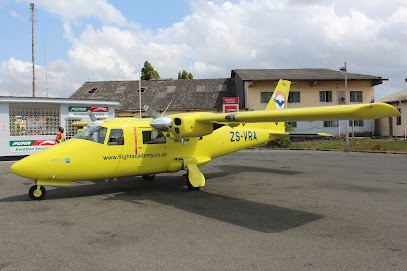
Training is delivered using a privately owned and well-maintained fleet, with all aircraft and simulators owned, maintained, and operated by the Academy. This in-house ownership is presented as a means to maximise aircraft availability, consistency in training quality, and timely progression for students. The aircraft fleet includes late-model Piper Warrior III (PA28-161) aircraft for elementary training and a Vulcanair P68R for multi-engine training, both selected for stable handling and suitability for early flight instruction. A customised fleet strategy supports the school’s goal of efficient, high-standard training in a reduced timeframe and at a potentially reduced cost compared to broader-market offerings.
Ground- and simulator-based training are integral to Progress Flight Academy’s approach. The school operates purpose-built flight simulators—FNPT II devices that replicate the Vulcanair P68R cockpit to a high fidelity and are used to support instrument training and procedural practise. Notably, the simulators utilise Garmin G1000 avionics, aligning with modern cockpit layouts and instrument procedures encountered in contemporary aviation. The simulator suite is presented as a critical component of instrument flight training, with recognised hours credit on integrated courses, and is complemented by on-aircraft instruction in both single- and multi-engine contexts.
Residential facilities are highlighted as part of the student experience. Progress Flight Academy provides on-site accommodation within its aerodrome campus, described as providing a comfortable, dedicated environment free from typical airfield congestion. This arrangement is positioned as aiding focus and efficiency during the course, with easy access to aerodrome facilities and training airspace nearby. The private aerodrome location is also presented as offering proximity to the General Flying Area and instrument training facilities, contributing to time-efficient training days.
The school’s team profile presents a cadre of experienced aviation professionals, including a Chief Flight Instructor and multiple instructors with advanced ratings, responsible for progressing learners from initial flight training through instrument and multi-engine training. The roster includes staff with multi-engine qualifications and instructor ratings, underscoring a depth of expertise across both standard and advanced flight training disciplines. The academy’s leadership and instructional team are portrayed as dedicated to developing pilots with professional attitudes and genuine operational capability.
Part of the student journey at Progress Flight Academy involves industry connections and post-training pathways. The academy notes that graduates have progressed to turbine aircraft and found opportunities with regional operators and international carriers. The emphasis on multi-engine training and instrument competencies is connected with transitions to airline-type operations, as described in the site’s career-focused narratives and student success stories.
Visitor feedback on the academy’s courses tends to be positive, with reviewers praising professional staff, the quality of training, and the supportive environment. Several testimonials highlight a friendly, diverse, and constructive learning culture, along with acknowledgements of a solid training foundation that students continue to rely on in their aviation careers. While specific details about pricing or certification listings are not central in the user feedback, the sentiment supports a reputation for strong training standards and value for money.
Typical services and features
- Commercial Pilot Licence with Multi-Engine Instrument Rating (CPL/IR-ME) training
- Integrated Flight Training pathway with consolidated, intensive modules
- Single-engine and multi-engine flight training using Piper Warrior III and Vulcanair P68R
- On-site flight simulators (FNPT II) with Garmin G1000 equipment
- Private aerodrome facilities and on-site student residence
- In-house Aircraft Maintenance Organisation (AMO) support and direct fleet maintenance oversight
- Residential and classroom facilities designed to support focused study and practical training
Practical tips for prospective students and customers include considering a stay on campus to maximise training hours, taking advantage of the FNPT II simulators for early immersion in instrument procedures, and planning flying with the private aerodrome’s relaxed airspace environment to optimise learning time. Prospective students may also wish to review the school’s team profiles to understand the instructors’ backgrounds and experience levels and consider the potential for industry placement or airline-style booster experiences as part of the programme structure.
Progress Flight Academy serves the Gqeberha region and the broader Eastern Cape, with the private aerodrome situated to support efficient flight training in a controlled environment. The campus location and facilities are positioned as supportive of focused pilot development, with the option for international and regional students to engage in a comprehensive training experience aligned with modern aviation practice.
Gqeberha
Eastern Cape
South Africa
Sorry, no records were found. Please adjust your search criteria and try again.
Sorry, unable to load the Maps API.
Flight School Services in Gqeberha, Eastern Cape
Flight schools in Gqeberha—also known locally as Port Elizabeth—provide a range of aviation training geared towards aspiring pilots, professional pilots seeking licence upgrades, and individuals pursuing personal flying ambitions. Located along the eastern seaboard of South Africa, these facilities typically operate from regional aerodromes or general aviation airfields with access to controlled and uncontrolled airspace, level runways, and nearby training corridors. The training environment emphasises practical flight experience alongside essential theory, with instruction designed to develop confidence, aeronautical decision making, and adherence to safety standards.
Core offerings generally begin with introductory experiences and progress through a structured progression of certificates and licences recognised within South Africa’s aviation framework. Trainees commonly start with a private pilot’s licence (PPL), which provides a broad foundation for solo and supervised flight. For those pursuing a commercial trajectory, a commercial pilot’s licence (CPL) follows, often coupled with a type rating or single-engine rating as required by career goals. The pathway may further extend to instrument rating (IR) for flight under instrument meteorological conditions, and multi-engine rating (ME) for operations beyond single- engine aircraft. Several schools also accommodate crew resource management training, aviation safety programmes, and recurrent training to maintain currency and competence.
Practical instruction is structured around a blend of ground school and flight hours. Ground theory commonly covers flight principles, meteorology, navigation, air law, aircraft systems, and human factors. Flight training involves staged flights that build from basic handling and controls to more complex tasks such as cross‑country navigation, emergency procedures, and adherence to air traffic control instructions. In the South African context, lesson plans are aligned with national aviation authority requirements, ensuring that progression between licences is coherent and auditable. Practical sessions are conducted with qualified instructors who monitor progress, provide feedback, and tailor tuition to individual learning styles while maintaining strict safety standards.
Customers can expect access to a range of aircraft suited to initial training. These may include single‑engine trainers and, where relevant, light multi‑engine aircraft. Ground equipment typically spans flight simulators (where available), navigation calculators, plots, and manuals. Maintenance schedules and pre‑flight checks form an integral part of the learning process, reinforcing safe operating practices and familiarisation with typical in‑aircraft systems. The aviation environment in Gqeberha offers exposure to local weather patterns, coastal breezes, and terrain considerations that influence training planning and flight planning exercises.
Practical considerations for prospective trainees include travel arrangements to the aerodrome, availability of tuition slots, and access to study materials. Some flight schools offer structured cadet programmes or progression plans that outline the expected duration of each licence stage and the number of flight hours required. For those balancing work or studies, flexible scheduling, weekend blocks, and part‑time options are common features. Training facilities may also provide ground study rooms, study groups, and occasional theory exams at registered examination centres. Insurance, medical examinations, and student visa considerations are typically managed through the school or collaborating aviation partners.
In evaluating flight schools in Gqeberha, potential students are advised to consider factors such as safety records, the calibre of instructors, aircraft availability and maintenance standards, training curricula, and the transparency of progression requirements. Prospective enquirers may wish to observe a sample lesson, discuss weather handling practices, and assess the logistical ease of flying from nearby airfields. While the precise services and pricing structures vary between organisations, the overarching model remains consistent: a careful integration of theory, supervised flight time, and ongoing assessment to enable safe and proficient pilots to emerge from the Eastern Cape aviation community.
- Introductory trial flights and aviation familiarisation
- Private pilot’s licence (PPL) training
- Commercial pilot’s licence (CPL) pathway
- Instrument and multi‑engine rating options
- Ground school and theory examinations
- Cross‑country and navigation practice
- Safety and recurrent training requirements