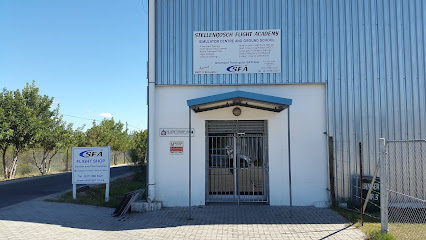
Stellenbosch Flight Academy is a Training centre establishment in Stellenbosch, Western Cape, South Africa
Stellenbosch Flight Academy: Specialist Simulator Flight and Ground Training Centre
Stellenbosch Flight Academy operates as a specialist simulator flight and ground training institution based in Stellenbosch, in the Western Cape of South Africa. The centre emphasises practical, simulator-led instruction designed to support professional pilots through key career milestones and currency requirements. Its core offering centres on structured preparation and refresher programmes that align with SACAA standards, using a dedicated FNPT II flight simulation and training device (FSTD) to deliver realistic, cost‑effective training that complements live flying experience.
The academyˈs primary training portfolio covers several critical competence areas for professional aviators. Notable services include preparation for the initial Airline Transport Pilot (ATP) and Skills Test, which aims to equip candidates with the required knowledge and proficiency to undertake certification assessments. In addition, it provides refresher training for Instrument Rating (IR) revalidation, covering single- as well as multi‑engine operations, and offers annual ATP or CPL IR revalidation skills testing. This combination supports pilots who need to maintain currency, renew approvals, or refresh decision‑making and flight‑planning capabilities before returning to air operations.
Beyond individual pilot currency, the academy delivers training designed to enhance crew resource management and operational reliability. The Multi Crew Coordination (MCC) training and certification module helps crews operate cohesively in modern airline environments. Complementary programmes include GNSS/RNAV (Global Navigation Satellite System / Area Navigation) training and certification, focusing on modern navigation patterns and performance-based routing. The centre also conducts practical Radiotelephony Operator Certificate testing, covering both general and restricted radiotelephone operations, which are essential for communications competence across aviation contexts.
Official recognition is a feature of the facility, with the SACAA‑approved FNPT II (MCC) FSTD described as having extensive training accreditations. The simulators provide a cost‑effective alternative to higher‑level Level D simulators, enabling trainees to complete important checks and practice scenarios without the expense of the most advanced devices. The emphasis appears to be on practical, accessible training that supports licence maintenance and revalidation, as well as skills development for career progression.
In terms of customer experience, visitors have described the academy as highly professional and helpful, with several reviews highlighting the quality of the instructors and the DFE (Designated Flight Examiner) experience. The feedback portrays a centre where staff are attentive to learner needs and where the learning environment supports focused, efficient progress through required assessments and refresher modules. The reviews collectively suggest a strong reputation for reliability and practical instruction within the local aviation community.
Typical pathways and how requests operate are framed around clear institutional processes. Interested candidates or employers would typically pursue the relevant course or revalidation pathway, schedule sessions on the FNPT II FSTD, and complete the necessary assessments under SACAA oversight. The facility invites prospective clients to initiate contact via telephone or email to discuss available programmes, accreditation details, and scheduling options. While specific hours are not stated in the available information, the emphasis remains on facilitating access to required training when licence revalidation, currency, or qualifications demand attention.
Geographically, the academy serves Stellenbosch and the surrounding Western Cape region, positioning itself as a local hub for pilot training and revalidation needs. The centre’s approach combines technical accuracy with practical flight‑deck familiarity, aiming to support pilots who wish to maintain or refresh their competencies without incurring the higher costs associated with premium Level D simulators. The provision of radiotelephony testing in addition to core flight training broadens the centre’s appeal to aspiring and practising aviators seeking consolidated, route‑map style progression through regulatory requirements.
Practical tips for prospective students include ensuring an understanding of the specific revalidation or certification requirements before booking sessions, confirming what documentation and medical prerequisites are necessary, and checking whether licence lapsed scenarios are eligible for revalidation via the FSTD after refresher training. Prospective clients should also establish a clear plan for the desired outcomes, such as MCC certification, GNSS/RNAV competencies, or radiotelephony qualifications, to align with the centreˈs structured modules and assessment timelines. For those operating within the local aviation ecosystem, the academy presents a well‑regarded option that complements field training with disciplined simulator‑based practice.
Operating within Stellenbosch, the centre positions itself as a practical, professional training venue for pilots seeking to advance or refresh their qualifications, maintain currency, and prepare for key licensing or certification milestones through SACAA‑accepted simulators and accredited instruction.
Stellenbosch
Western Cape
South Africa
Sorry, no records were found. Please adjust your search criteria and try again.
Sorry, unable to load the Maps API.
Training Centre Services in Stellenbosch, Western Cape
Staff development and vocational training facilities in Stellenbosch offer a range of programmes designed to equip individuals with practical skills for the workplace. Typical services include short courses, certificate programmes, professional development workshops, and more structured learnerships aimed at aligning learners with sector-specific requirements. Providers frequently tailor offerings to the local economy, where hospitality, tourism, viticulture, wine production, and related services play a significant role.
Learning programmes are commonly delivered through a mix of classroom-based sessions, hands-on workshops, and guided practicals. Classrooms are often complemented by dedicated laboratories, demonstration areas, and simulated work environments to mirror real-life scenarios. For those pursuing vocational qualifications, training centres may provide access to industry-standard equipment, enabling hands-on practice in areas such as food and beverage service, cellar operations, winemaking processes, information technology applications, and business administration. Support services typically include career guidance, study skills coaching, and assistance with employer-engagement opportunities.
Delivery models vary to suit learners and organisations. Public and private centres collaborate with employers to offer customisations that address workplace needs, including management seminars, customer service training, safety and compliance updates, and technical skill refreshers. Blended learning options, combining in-person sessions with online resources and self-paced tasks, are increasingly common, allowing participants to balance work commitments with training goals.
Assessment and progression are generally aligned with recognised standards, though specifics differ by programme. Students may complete practical assessments, written examinations, or portfolio submissions to demonstrate competence. Certificates or accreditation are typically awarded upon successful completion, recognised by industry bodies or sector regulators where applicable. In many cases, centres also provide guidance on and assistance with recognition of prior learning (RPL), enabling experienced workers to have prior competencies acknowledged towards formal qualifications.
Facilities in Stellenbosch training venues are often purpose-built for practical instruction. Expect well-equipped kitchens and service areas for hospitality training, wine and cellar spaces for viticulture and enology-related courses, and dedicated computer labs for IT and business programmes. Some centres may offer on-site dining experiences or tasting sessions as part of hospitality and tourism modules, reflecting the town’s renowned culinary and wine sectors. The surrounding region’s scenery is frequently integrated into outdoor teaching events, particularly for team-building and leadership development activities.
When planning participation, several practical considerations arise. Location accessibility is important for commuters and workers near university campuses or industrial areas. Timetables are typically arranged in cohorts, with options for daytime, evening, or weekend sessions to fit busy schedules. Costs vary by programme length, delivery mode, and the inclusion of materials or assessments; many centres provide information on funding avenues or subsidised rates through local or national schemes. It is common to encounter bespoke proposals for corporate clients seeking to upskill their staff, with consultants or coordinators guiding the bespoke training journey from needs analysis through to assessment and certification.
- What to expect: a structured pathway from introductory topics to specialised competencies, qualified instructors, practical exercises, and formal assessment.
- Practical considerations: accessible facilities, flexible scheduling, clear competencies and outcomes, and a transparent approach to certification and progression.