The Academy of Aviation is a Aviation training institute establishment in Roodepoort, Gauteng, South Africa
The Academy of Aviation – Overview of Services and Customer Experience
The Academy of Aviation, established in 2008, operates as a specialised aviation training organisation with a focus on upskilling professionals across the aviation sector. Historically based at Lanseria International Airport, the provider has since moved premises to create facilities that accommodate students and their immersion in aviation for the duration of training. The organisation describes its philosophy through catchphrases such as “Training Excellence With A Difference” and “We Do Not Negotiate Safety,” underscoring a safety-driven approach to education and practical learning.
As an independent training establishment, the Academy offers a range of core services designed to support both aspiring aviation professionals and seasoned personnel seeking recurrent or specialised education. The training portfolio spans ground operations, cabin crew preparation, drone piloting, and flight-deck or safety-related soft skills. In addition, the Academy presents programmes that enable students to obtain SACAA-regulated qualifications, including cabin crew qualifications with SACAA licensing and drone-related certifications.
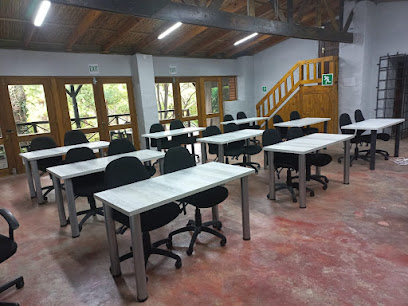
In terms of practical delivery, the Academy emphasises immersive on-site learning. It notes that facilities are designed so that students “live, eat and breathe aviation” during their training. The premises include a mock-up aircraft, purpose-built classrooms, and dedicated spaces intended to replicate operational environments. In keeping with its emphasis on life-long professional development, the Academy also offers soft skills training that complements technical aviation knowledge. These soft skills modules cover areas such as Crew Resource Management (CRM), safety and emergency procedures (SEPT), and related topics intended to improve decision-making, teamwork, communication, and regulatory awareness.
The Academy’s training spectrum includes:
- Cabin Crew / Airline Ground Crew Qualification Courses – Preparing aviation personnel for safety, customer service and operational requirements on the ground and in the cabin. Courses focus on emergency procedures, passenger handling, communication and regulatory compliance.
- RPAS (Drones) Courses – Theory and practical instruction for safe and lawful unmanned aircraft operation, with additional ratings to enable advanced operations such as BVLOS. The programmes encompass multi-rotor, fixed-wing, and instructor components, with SACAA-licensed on-site components.
- Pilot Soft Skills – Initial & Recurrent – Enhancing non-technical competencies including communication, decision-making, teamwork, situational awareness, and risk management to support safe and compliant aviation practice.
- Cabin Crew Recurrent Training – Ongoing refresher programmes to maintain current safety procedures, regulatory knowledge, and customer service standards.
- Aviation Courses – A broader offering that includes aviation security (AVSEC), general safety awareness, and regulatory-compliant competencies aligned with SACAA and ICAO expectations.
The Academy presents itself as a registered ATO (Aviation Training Organisation) with SACAA accreditation, aligning its courses with relevant national and international standards. Visitor reviews describe the training environment as engaging and supportive, with emphatic emphasis on practical, hands-on instruction and a strong sense of camaraderie among cohorts. Testimonials frequently highlight successful outcomes, with graduates progressing to roles in cabin crew, remote piloting, and other aviation capacities.
Customer requests and inquiries are managed through multiple channels. Prospective students and professionals can reach the Academy via WhatsApp, several mobile numbers, and a landline. Online registration and course information are available through the website, with a process that includes a registration/enrolment workflow accompanied by terms and conditions, and a requirement to pay a non-refundable registration fee to secure a place. Communications indicate that responses are provided during office hours, reflecting a structured service model that combines digital and direct contact for information and enrolment.
Visitors can expect an emphasis on practical readiness and professional development, reinforced by a range of amenities at the premises. The on-site facilities are described as modern and well-equipped, including computer-aided learning environments, a mock-up aircraft for hands-on practice, comfortable accommodation-style spaces, and access to recreational and study-friendly areas. The gallery and testimonials depict a positive training culture with high engagement, real-world readiness, and celebratory graduations from various cohorts.
Practical tips for prospective students and employers include verifying SACAA accreditation for relevant courses, understanding registration fees and timing for enrolment, and noting the on-site facilities that support simulated operational environments. It is also advisable to confirm the specific module options and scheduling for RPAS, cabin crew, and soft-skills programmes to align with career goals and timing. Since the Academy states a commitment to safety and quality, requesting sample curricula or speaking with former students can provide additional insight into the learning experience.
Location and reach indicate a Gauteng focus, with operational bases historically connected to the Johannesburg area and surrounding aviation hubs. Prospective learners visiting the campus should consider checking opening hours and best times to visit during office hours to liaise with the sales team and course coordinators for personalised guidance.
Roodepoort
Gauteng
South Africa
Sorry, no records were found. Please adjust your search criteria and try again.
Sorry, unable to load the Maps API.
Aviation Training Institute Services in Roodepoort, Gauteng
Across Roodepoort and the wider Gauteng region, aviation training institutes provide a range of programmes designed to prepare aspiring pilots, aviation engineers, and aviation support staff for professional roles. These institutions recognise the practical needs of the industry, emphasising both theoretical knowledge and hands-on experience to help learners progress toward licensing, ratings, and recognised skill sets.
Core offerings commonly include ground school and theoretical courses that cover air law, navigation, meteorology, aircraft performance, and human factors. These programmes lay the groundwork for examinations required by national authorities and industry bodies. In addition to theory, many institutes integrate practical classroom sessions, allowing students to develop problem-solving capabilities and situational awareness before stepping into flight or maintenance environments.
Flight training is a central component for those pursuing piloting disciplines. Prospective pilots can expect a progression from introductory or basic flying instruction to more advanced phases, which may culminate in validated flight hours and the pursuit of license qualifications. Training often takes place with certified instructors, in coordinated blocks designed to build confidence, discipline, and a measured approach to decision-making in real-world airspace and simulated environments.
Simulator and practical training facilities feature prominently, offering a controlled setting to practise procedures, cockpit resource management, and emergency scenarios. This approach supports safer, more efficient skill development by enabling repetitive drills and performance feedback before actual flight time is allocated. Where on-site resources permit, training providers may utilise locally available aircraft and equipment to mirror operational realities encountered in commercial, general aviation, or specialised sectors.
Ground handling, airport operations, and safety programmes are also integral to aviation education. Learners can encounter modules focused on air traffic control principles, passenger handling, security, and emergency response. These elements help prepare individuals for roles in airlines, private operators, training organisations, or aviation maintenance facilities, where robust safety culture and compliance are essential.
Maintenance engineering and avionics-related training form another important strand. Courses in aircraft systems, inspection techniques, and diagnostic methods enable learners to understand the lifecycle of aircraft and the fundamental requirements of airworthiness. Practical workshops and laboratory sessions support the development of meticulous workmanship, attention to detail, and adherence to industry standards.
Students considering Roodepoort as a training locale will find environments that balance theoretical study with practical application. Practical considerations include access to suitable training aircraft or simulators, suitable weather patterns for flight training, and connections with local aviation stakeholders for internships, placements, or mentorship opportunities. Many institutes also provide guidance on the regulatory framework, progress tracking, and progression pathways toward professional qualifications within South Africa’s aviation sector.
Prospective attendees should evaluate factors such as accreditation, instructor experience, and the availability of support services, including study resources, career guidance, and placement assistance. The duration of programmes will vary according to scope—ranging from introductory certificates to more comprehensive diplomas or Bachelors-level options—while costs and funding opportunities differ between providers and course types. Learners are advised to verify licensing prerequisites, medical requirements for pilots, and any language or aptitude standards relevant to the chosen field.
In summary, aviation training institutes in Roodepoort offer a spectrum of educational pathways designed to equip individuals with the knowledge, practical skills, and professional outlook necessary for a career in South Africa’s dynamic aviation sector. The emphasis remains on safe operations, regulatory compliance, and continuous professional development to meet industry demand in Gauteng and beyond.