YNOT FLY Paramotor School is a Flight school establishment in Bronkhorstspruit, Gauteng, South Africa
YNOT FLY Paramotor School – Summary of Services and Customer Experience
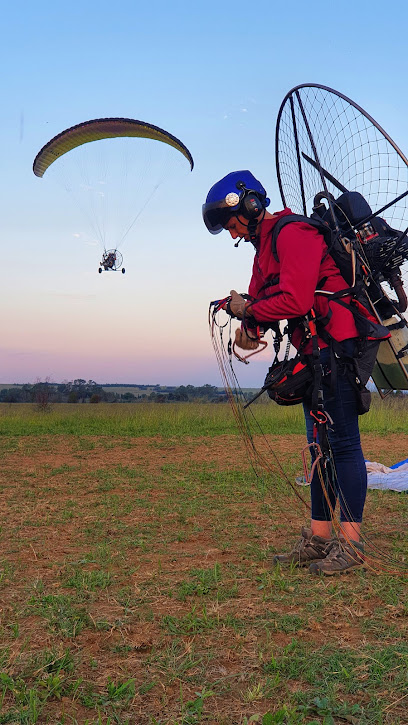
YNOT FLY Paramotor School is listed as a paramotoring operator once based in Pretoria, South Africa, with the broader geographic reference of Gauteng. The site communicates that the school no longer offers training and that the business is closed. Despite the change in service availability, the online presence references former offerings related to paramotoring, including training as well as the sale of paramotors, wings, and accessories. The information provides a snapshot of a business that previously operated within the flight school category and served enthusiasts in Gauteng, including the Pretoria area.
Formerly, the core focus of YNOT FLY appeared to be paramotoring training, supplementary equipment, and relevant gear. The site indicates that training services are no longer available, which implies that prospective learners would need to seek alternatives elsewhere for instruction. The product side of the business appears to have included equipment such as paramotors, wings, and related accessories, suggesting a continuity of involvement in the paramotoring ecosystem beyond formal training.
Customer feedback, as reflected in visitor reviews, has highlighted positive experiences from past participants and spectators. Review snippets commend the facilities and describe an instructor as professional and world-class. These comments indicate that when the school was active, customers valued the quality of instruction and the support environment. While current operational status suggests the school is not accepting new learners, the reviews offer a sense of the high standards that were previously associated with the establishment.
In terms of service delivery, the site outlines the main offerings as: home base in Pretoria for paramotoring-related activities, availability of paramotors, wings, and accessories for purchase, and training services that are no longer provided. The information does not indicate ongoing courses, certifications, or formal partnerships, and there is no mention of specific equipment brands, warranties, or testing facilities on the public page. For a customer seeking historical context, the page signals that the business once functioned as a flight‑school within the paramotoring sector and as a source for equipment and accessories.
Typical job types or client needs historically associated with the business would have revolved around paramotoring training, practice flights, and equipment procurement. However, current status communicates that training is not offered and the school is closed, so prospective clients should not expect to initiate new training programmes through YNOT FLY at present. Those looking for active instruction or field-based pilot training in Flight School services in Bronkhorstspruit or the greater Gauteng region are advised to explore alternative providers that are actively operating.
How requests typically worked historically (based on the available content) can be inferred as follows: clients would engage with the school for training services or to purchase paramotors, wings, and accessories, with Pretoria serving as the base of operations. Given the closure, this process is unlikely to be available at the moment. Prospective customers should verify the current status through updated figures or alternative channels before arranging any visits or purchases.
Practical tips for customers considering YNOT FLY, given the present information:
- Note the current status: the school is indicated as closed with no training offered. Do not expect to enrol for courses through this provider at this time.
- If seeking training, contact or research other flight schools in Gauteng or nearby areas to locate active paramotoring instruction and recognised certifications.
- For equipment purchases, verify whether the Pretoria-based operation or any partner remains active in supplying paramotors, wings, and accessories, and confirm current stock, warranties, and after-sales support.
- Consult the testimonials section for historical impressions of the experience, noting that positive remarks referenced professional instruction and quality facilities during the period when training was available.
- Consider the geographical context: the site places the business in Pretoria, Gauteng, which situates it within the greater Johannesburg area for those researching regional providers.
Business hours and best times to visit are not stated on the site, and there is no explicit information about ongoing services, certifications, or affiliations. For potential visitors or local enthusiasts in Bronkhorstspruit and the wider Gauteng region, the best approach is to verify the current operating status through up-to-date local listings or alternative training providers before planning any visits or making purchases.
In summary, YNOT FLY Paramotor School is documented as a closed operation that previously offered paramotor training, along with the sale of related equipment in Pretoria. The available visitor reviews cast the former operation in a highly positive light, emphasising professional instruction and solid facilities. At present, prospective students and customers should seek current offerings from active flight schools and equipment suppliers in the area.
Bronkhorstspruit
Gauteng
South Africa
Sorry, no records were found. Please adjust your search criteria and try again.
Sorry, unable to load the Maps API.
Flight School Services in Bronkhorstspruit, Gauteng
Within the Gauteng region, flight schools in and around Bronkhorstspruit provide a range of aviation training and related services designed to prepare aspiring pilots for licencing, as well as for professional and recreational flying. The focus is typically on safety, foundational aircraft handling, and stationary and airborne familiarity that enables progression to higher ratings and licences. The surrounding airspace, local weather patterns, and the accessibility of nearby airfields influence the structure and cadence of training courses available to students and enthusiasts alike.
Typical offerings encompass introductory or discovery flights, ground theory instruction, and hands‑on flight instruction conducted by qualified instructors. Initial experiences often allow prospective pilots to understand aircraft controls, basic manoeuvres, and the discipline required for safe flight. From there, attention turns to formal flight training programmes aligned with South Africa’s aviation authority standards, ensuring that appropriate theoretical knowledge and practical competencies are demonstrated at each stage of learning.
Flight schools commonly organise training around progressive licence paths. For many learners, the journey begins with a Private Pilot Licence (PPL), which combines classroom study with practical flight hours, followed by flights that reinforce decision‑making, navigation, radio communications, and navigation planning. As experience grows, some students pursue ratings for specific aircraft categories or instrument flight rules (IFR), subject to applicable medical and regulatory requirements. Additionally, commercial pilot training may be offered, introducing more extensive flight hours, advanced aeronautical decision‑making, and crew resource management concepts.
Ground school and theory classes are typically an integral part of the curriculum. Subjects may include air law, meteorology, navigation, aircraft technical knowledge, and human factors. The emphasis is on building a solid knowledge base that complements practical flying skills, enabling safe and compliant operation in diverse conditions. Theoretical instruction is often paired with simulator sessions or classroom demonstrations to reinforce learning outcomes before real‑world flights are undertaken.
Practical training covers a range of aircraft handling competencies, from basic take‑offs and landings to more complex procedures such as cross‑country navigation, weight and balance calculations, and emergency procedures. Instructors provide ongoing feedback to help students develop situational awareness, disciplined pre‑flight planning, and adherence to regulatory requirements. The operational cadence can be influenced by local air traffic services, weather, and the availability of aircraft and instructors, which means progression times may vary between learners.
Facilities and logistics commonly found at flight schools in Bronkhorstspruit include on‑site briefing rooms, aircraft hangars, and maintenance support arrangements. Practical considerations for prospective students often involve scheduling flexibility, access to training aircraft, and guidance on medical examinations required for licencing. Safety is a consistent priority, with standard operating procedures, pre‑flight checks, and equipment familiarisation designed to minimise risk and promote professional standards across all training activities.
When evaluating a flight training option in this area, prospective enquirers may consider factors such as the school’s accreditation status, instructor qualifications, fleet diversity, and the transparency of progression pathways. It is prudent to inquire about theoretical and practical assessment processes, weather contingency arrangements, and the availability of mentoring or progression planning services to support steady advancement through the various licensing milestones. The indigenous aviation infrastructure surrounding Bronkhorstspruit, combined with Gauteng’s accessibility, offers potential for efficient training journeys that align with local careers in aviation, charter flying, or private aviation pursuits.
Typical services on offer
- Introductory flights and discovery sessions
- Ground school and theory instruction for licencing requirements
- Private Pilot Licence (PPL) training, including practical and theoretical components
- Instrument and advanced rating training as applicable
- Commercial pilot training pathways and crew resource management basics
- Simulator sessions and cross‑country navigation practice
- Aircraft familiarisation, maintenance coordination, and safety briefings
- Medical examination guidance and regulatory compliance support