FlyH2 Aerospace is a Aircraft manufacturer establishment in Cape Town, Western Cape, South Africa
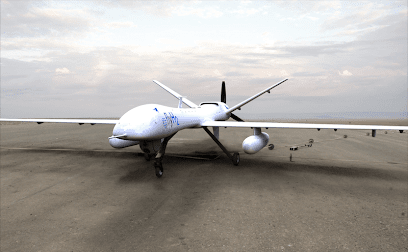
FlyH2 Aerospace operates in the Aircraft manufacturer category from Cape Town, Western Cape, South Africa, offering a specialised hydrogen-electric unmanned aerial system (UAS) platform designed for long-endurance missions. The core product highlighted is Dragonfly V, a hydrogen-electric propulsion aircraft that enables near-zero-emission flight with substantial endurance and modular sensor capabilities. The platform is presented as purpose-built for South African conditions, aiming to extend aerial awareness for infrastructure protection, border and critical infrastructure monitoring, wildlife management, and other enduring surveillance tasks, while keeping operating costs comparatively low against manned assets.
The Dragonfly V combines a hydrogen-electric power system with options for battery-electric operation, delivering two distinct endurance configurations. In its hydrogen-electric configuration, the aircraft provides up to 22 hours of continuous flight, supplemented by an 8-hour capability on a battery-only setup. This design supports day-and-night missions with reduced maintenance requirements and a quiet operating profile that minimises disruption to sensitive environments and costly sensors. The propulsion system is described as modular, with underwing pods that can accommodate different multi-sensor payload configurations in modular arrangements, enabling rapid adaptation to evolving mission needs.
In terms of performance, Dragonfly V is described as deliberately overpowered, capable of bursts up to 9.6 kW and climbing at up to 2,800 feet per minute. The aircraft is designed for reliability and resilience, incorporating dual-redundant fuel cell stacks, each with its own hydrogen cylinder, along with redundant control surfaces. These design choices are presented as enabling dependable operations even under challenging conditions such as gusty winds, high payloads, or unexpected turbulence. The platform supports a range of mission profiles by combining endurance with flexible sensor integration, delivering continuous situational awareness across geographic areas of interest.
Typical applications emphasised by FlyH2 focus on security and continuity of essential operations. The company frames its mission around protecting infrastructure, logistics routes, and critical public services by reducing blind spots and enabling proactive response. The Dragonfly V is highlighted as a cost-efficient means to deter crime, prevent losses, and extend operational reach for teams safeguarding power lines, rail networks, roads, and other critical assets. The service model emphasises long-endurance coverage, reduced operating costs relative to manned aircraft, and modular data fusion capabilities that combine multi-spectral sensing with machine learning and computer vision to detect anomalies, intrusions, and points of interest.
The technical foundation includes robust networking to keep the aircraft fleet connected. Dragonfly V employs a self-forming, self-healing radio mesh for high-definition video and telemetry across extended ranges, supported by dual-channel MIMO and multi-node networking. Features such as spectrum dominance, anti-jamming capabilities, and self-sensing interference are presented as essential components for reliable long-range operation in diverse environments. This emphasis on resilient communications underpins the platform’s ability to maintain continuous operations and real-time situational awareness for mission-critical tasks.
Requests and project initiation are described as straightforward through the FlyH2 site, with a simple path to engagement via the contact section to book a meeting. This aligns with the brand approach of presenting a clear route from inquiry to deployment, enabling organisations to discuss mission requirements and adjust power system configurations, sensor payloads, and endurance needs according to operational priorities.
Visitors to the site are exposed to FlyH2’s broader values, including a focus on decarbonising aviation in Africa and building regional capability through local manufacturing and fuel-cell integration. The FlyH2 vision emphasises making flight cleaner and more affordable while creating skilled employment, with a mission to commercialise Dragonfly V as Africa’s first production hydrogen-electric aircraft and to localise fuel-cell manufacturing to support regional capacity building.
Practical tips for potential customers include considering the hydrogen-electric option for sustained operations where continuous coverage is required, and acknowledging the modular payload approach to tailor sensor suites to specific deployments such as perimeter surveillance, infrastructure protection, or wildlife monitoring. If setting up a field deployment, it is prudent to discuss mission duration, payload weight, regulatory considerations, and maintenance planning in the initial consultation to ensure the power system and sensor suite align with operational expectations.
Location and service reach: FlyH2 operates from Cape Town and targets South Africa and the wider African region, with emphasis on enduring aerial awareness for critical infrastructure and public safety. While specific business hours are not published on the site, the emphasis is on accessible engagement through the online contact channel for mission discussions and planning.
- Main services offered: development and deployment of hydrogen-electric UAS (Dragonfly V), modular sensor integration, and endurance-focused aerial surveillance for security and infrastructure protection.
- Typical job types or industries: infrastructure protection, perimeter surveillance, wildlife monitoring, logistics route safeguarding, and other security-focused aviation applications.
- How requests usually work: initial inquiry via the website contact page, followed by a meeting to discuss mission requirements and power/sensor configurations, then planning and deployment.
Overall, FlyH2 Aerospace presents a specialised capability in hydrogen-electric propulsion designed to deliver long-endurance, low-maintenance aerial surveillance with flexible payloads, aimed at enhancing security, resilience, and decarbonisation in Africa's aviation landscape.
Cape Town
Western Cape
South Africa
Sorry, no records were found. Please adjust your search criteria and try again.
Sorry, unable to load the Maps API.
Aircraft Manufacturer Services in Cape Town, Western Cape
In the Western Cape, Cape Town stands as a gateways hub for aviation manufacturing activities that support both regional operators and international supply chains. The sector encompasses a range of services designed to assist aircraft builders, maintenance organisations, and related engineering firms in realising design, production, testing and post-manufacture requirements. Clients seeking these services can expect a combination of local craftsmanship, engineering capability and access to a growing ecosystem that includes advanced materials, precision machining and specialised aviation expertise.
Core offerings typically include design support, tooling and fixture development, and the manufacture of structural components. Aircraft manufacturers in the region often engage in aero-structural work such as airframe components, skins, ribs and reinforcements, alongside assemblies that integrate with propulsion, hydraulics, electrical systems and avionics. The emphasis tends to be on quality, traceability and adherence to recognised industry practices, even when operating within a diverse landscape of clients and project scopes.
Manufacturing services are usually complemented by prototype development and rapid iteration capabilities. This enables customers to test new configurations, validate performance, and refine designs before committing to larger production runs. With access to skilled technicians, including machinists, welders and composite specialists, the sector supports both small-batch production for customised aircraft and larger-scale manufacturing for routine components. In many cases, collaboration with local suppliers and material vendors helps to ensure that materials meet safety and performance requirements while maintaining competitive lead times.
Integrated engineering services are commonly offered to address the full lifecycle of a project. Engineering teams may provide structural analysis, weight and balance optimisation, aerodynamic assessment, and durability testing planning. These activities contribute to more reliable designs and informed decision-making during the development process. Quality assurance is emphasised through documentation and inspection regimes that align with industry standards, ensuring traceability from raw material to finished parts.
Clients can expect practical considerations related to the Cape Town environment. Proximity to maritime routes and international markets makes the region attractive for export-oriented production, while local regulatory and safety requirements shape compliance programmes. Availability of a skilled workforce benefits from regional training initiatives and partnerships with technical institutions. However, potential customers should recognise that lead times can be influenced by factors such as demand cycles, supplier capacity, and the need for careful regulatory alignment with aviation authorities. Planning for downtime and contingency measures is prudent in projects that span several months or more.
Service delivery in this sector often centres on collaboration rather than isolated workstreams. Project teams may coordinate design reviews, fabrication milestones, and commissioning plans through structured programmes. Clear communication about scopes, milestones and acceptance criteria supports smoother transitions between engineering, manufacturing and quality assurance phases. While the precise arrangements vary by project, the overarching objective remains the production of robust, aerodynamically sound components or assemblies that meet specified performance targets.
Clients evaluating aircraft manufacturing services in Cape Town are advised to consider factors such as safety culture, compliance practices, and the capability to adapt to evolving requirements. Exploring track records in related sectors, understanding the capacity for on-site inspections, and confirming alignment with environmental and workplace standards can provide additional assurance. The regional landscape supports a pragmatic approach to aircraft manufacturing, blending technical proficiency with a collaborative, problem-solving ethos that suits both bespoke development work and incremental improvements to existing platforms.
Overall, aircraft manufacturer services in Cape Town, Western Cape, offer a practical pathway for agencies and operators seeking local access to essential fabrication, assembly and engineering capabilities. The combination of skilled labour, proximity to markets and an expanding aviation ecosystem enables projects to progress from concept to concrete components with attention to quality and safety at every stage.